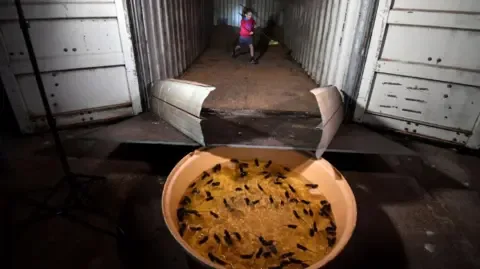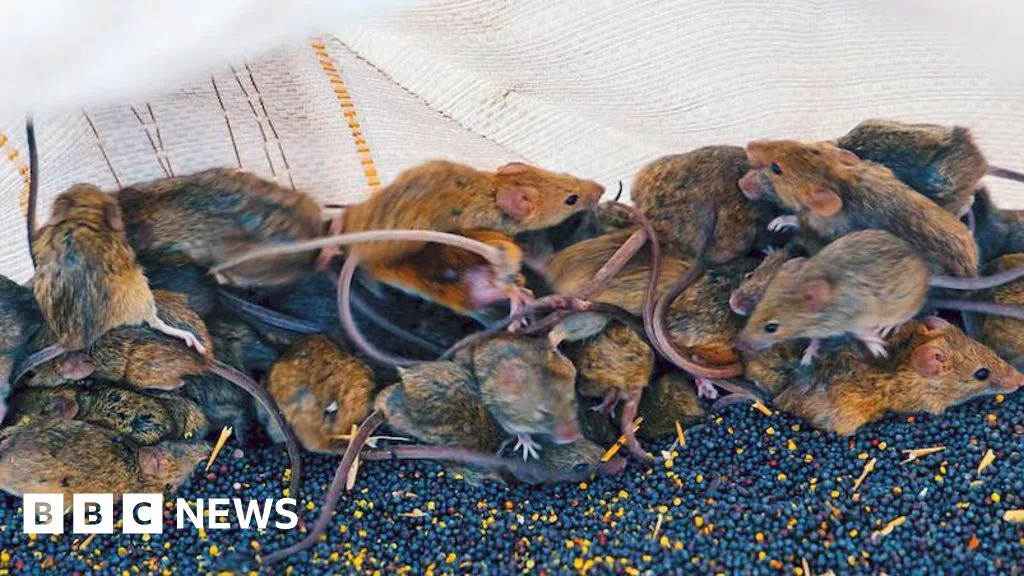
A mouse plague has been devastating farms across Western Australia since March 2026, severely damaging crops such as wheat, canola, lupin, and barley [1, 2]. Some canola paddocks have seen an estimated 8,000 to 10,000 mice per hectare, far exceeding the usual plague threshold of 800 mice per hectare [1, 2]. Researchers have found 30 to 40 mouse holes in a 100-meter stretch in some areas [2].
Farmers like Geoff Cosgrove, whose 14,000-hectare farm is near Mingenew, have spent hundreds of thousands of dollars on replanting and mouse poison bait to control the rodent population [1, 2]. Cosgrove said the damage is more than financial: "It's a big cost and it's not just the price of the bait. They do play with your mind - running around at night, in the ceiling, the air conditioning units. You can hear them and you can smell them - it's like a decaying body" [1].
Belinda Eastough, managing 5,500 hectares near Geraldton, explained the plague's cause, noting last year's record-breaking harvest spilled grain in the paddocks, which combined with summer rains created an ideal environment for rapid mouse growth: "Last year, we had a record-breaking harvest so that gives the mice a lot of food. Then we got some summer rain. So instead of just steak, they got steak and salad. Basically, the mice were in absolute mouse heaven" [1].
Mice reproduce quickly, with 6 to 10 pups per litter and a pregnancy cycle of 19 to 21 days, allowing the population to explode [2]. Steve Henry pointed out the extreme density: "Usually, a plague is defined as 800 mice per hectare. But in Western Australia, they talk about thousands per hectare clustered mainly in northern and southern cropping areas" [2].
The high mouse numbers have caused activity in homes, roof spaces, and around air conditioning units, increasing mental stress among farmers [1, 2]. Farmers now have access to a newly approved stronger, high-concentration mouse bait as of August 2026 to aid control efforts [2]. Rising fuel and fertilizer prices amid global conflicts add to farmers' challenges [2].
With winter approaching, cooler weather and rainfall may reduce the plague's intensity, offering some relief [2].