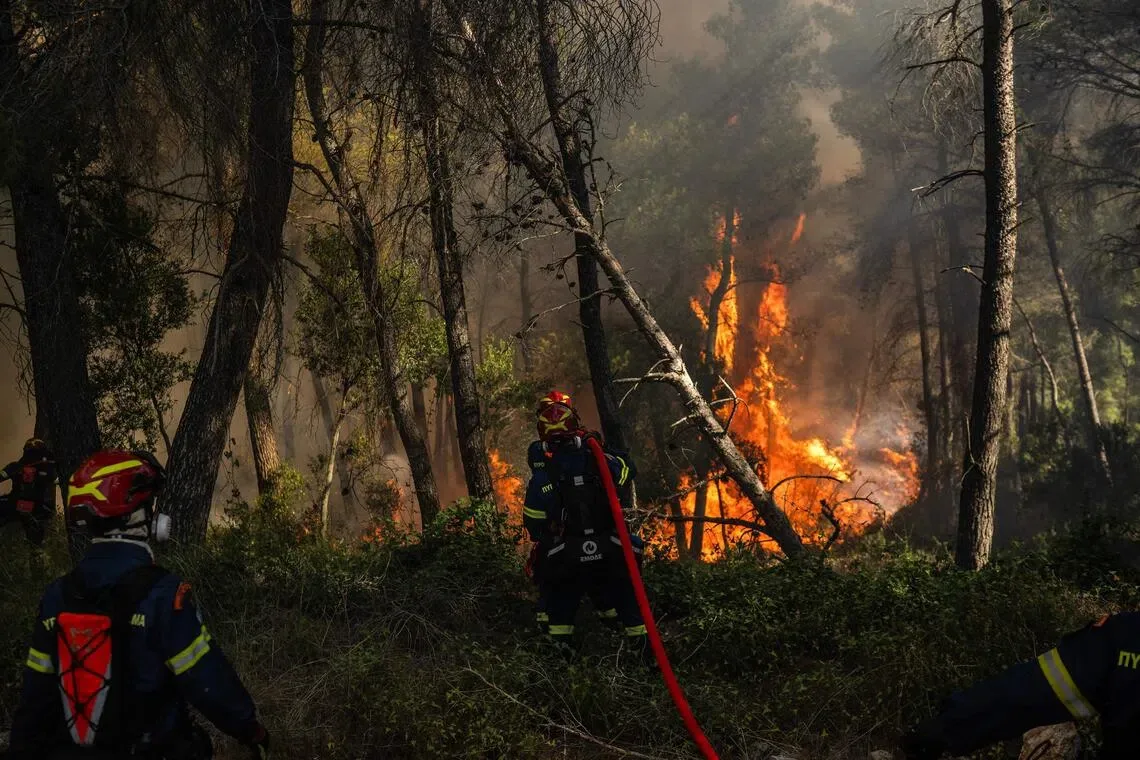
Wildfires broke out around July 31 near Athens, including the suburbs of Haidari and the coastal village Porto Germeno about 70 km northwest of the city, in the Boeotia region [1, 2, 3]. Fierce and gale-force winds have hampered firefighting efforts both by air and ground, making water bombing difficult or impossible at times, a fire department spokesman said: "The winds are very strong. Aircraft are trying to operate as best they can, but some are unable to and have been transferred to another fire where conditions are milder" [2].
Between 300 and nearly 500 firefighters have been deployed to combat the blazes, supported by approximately 21-23 firefighting aircraft, ground vehicles, and heavy machinery [2, 4, 5, 6, 7]. However, strong and erratic winds in recent days prevented water bombers from drawing seawater, forcing ground forces to fight largely unaided, the Deputy Climate Crisis Minister Kostas Katsafados said [8]. Ioannis Artopoios, Deputy Fire Brigade Spokesperson, added, "We are talking about a fire where we didn't have an aircraft at our disposal for 30 continuous hours, which caused us a lot of difficulties" [9].
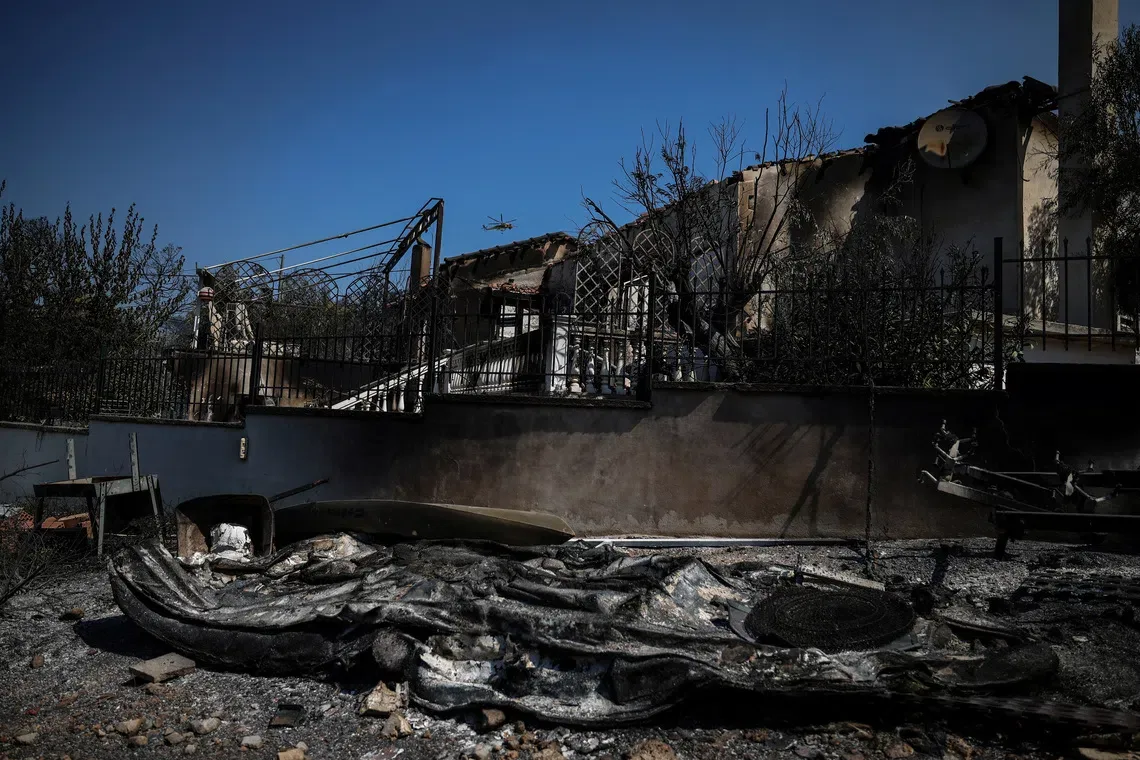
The fires have burned an estimated 4,000 to 10,000 hectares of forest, farmland, and residential areas around Porto Germeno and nearby regions [2, 3, 4, 5]. More than 100 homes were destroyed northwest of Athens, prompting evacuations by both land and sea [2, 4, 5, 6, 9]. Evacuation orders affected suburbs such as Haidari and towns including Agia Paraskevi, Kryo Pigadi, Agios Nektarios, Agios Vasileios, and coastal settlements on the islands of Kefalonia and Paros [1, 2, 10, 5].
The damage was severe, with wildfire meteorologist Theodore Giannaros describing the situation: "The damage to the Porto Germeno area was inconceivable" [2]. Residents like Tasos Tzempelikos of Agios Konstantinos said, "The fire has been burning since last night, it is certain that they cannot have forces everywhere. We as residents are doing everything we can" [5].
The fires are part of a broader pattern across Greece and southern Europe during a hot, dry summer marked by record-breaking heatwaves worsened by climate change [2, 11, 3, 4, 5, 12, 6, 9]. Earlier in the fire season on July 29, three firefighters died in separate incidents in Crete and the Peloponnese [2, 3, 4, 6]. On August 2, two crew members died in a mid-air collision of firefighting helicopters near Psatha northwest of Athens, while two others survived [6, 8, 9, 7].
French and Romanian firefighting reinforcements have joined Greek crews to help contain the blazes [5, 9]. Greek Prime Minister Kyriakos Mitsotakis warned of "difficult days" ahead as the fire situation worsens [2, 4].
By August 4, wildfires had eased but flare-ups persisted. Residents began returning to damaged homes near Porto Germeno while firefighting aircraft continued to support ground operations despite strong meltemi winds [9].