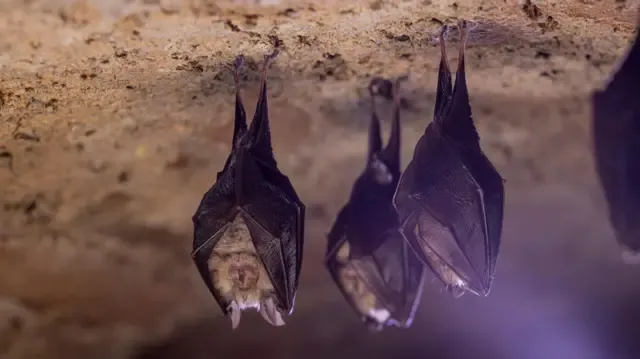
Researchers at the University of Cambridge have developed the world’s first vaccine containing a key component completely designed by artificial intelligence (AI), and reported results from initial human trials today involving 39 healthy volunteers aged 18 to 50 in the UK [1, 2, 3, 4]. The vaccine targets all coronaviruses in the Sarbecovirus subgenus, including SARS-CoV-2 variants and related bat viruses, aiming to provide broad protection even against mutated or new zoonotic viruses [1, 2, 3, 4].
The vaccine uses a specially designed “super-antigen” to train the immune system to recognize a broad family of viruses rather than a single variant. This approach addresses the limitation of traditional vaccines which typically require frequent updates as viruses evolve [1, 2, 3, 4]. AI analyzed genetic sequences of diverse coronaviruses to identify antigens that induce broad immune responses, enabling a proactive vaccine design targeting virus families instead of individual strains [1, 2, 3, 4].
The initial safety trial involved 39 volunteers aged 18-50 years at Southampton and Cambridge, showing a mild impact on the immune system without significant side effects [1, 2, 3, 4]. Professor Jonathan Heeney of Cambridge said, “我們一直都處於落後的狀態…我們的目標是走在病毒變化之前,甚至提前到可以防範未來疫情或新的疾病爆發,” emphasizing the aim to stay ahead of virus changes [1]. He also said, “這關乎打造能保護我們的疫苗,不僅是對抗今天的病毒,也能預防未來可能引發疫情的新病毒” [2].
Experts expressed optimism about the potential of AI in vaccine development. Professor Saul Faust of Southampton called the AI-designed approach “確實具有潛力,並且令人非常振奮” [1]. Oxford’s Professor Andy Pollard described the animal trial data as “非常引人入勝,甚至超出人們原本的預期,” calling AI “將成為疫苗研究的變局者” [1].
Beyond this coronavirus vaccine, the Cambridge AI team is developing universal vaccines for seasonal influenza, H5N1 avian flu, and viral hemorrhagic fevers such as Ebola [1, 2, 4]. A second phase of human trials is planned with about 200 participants to further evaluate the vaccine’s immune training effects [1, 2, 4].