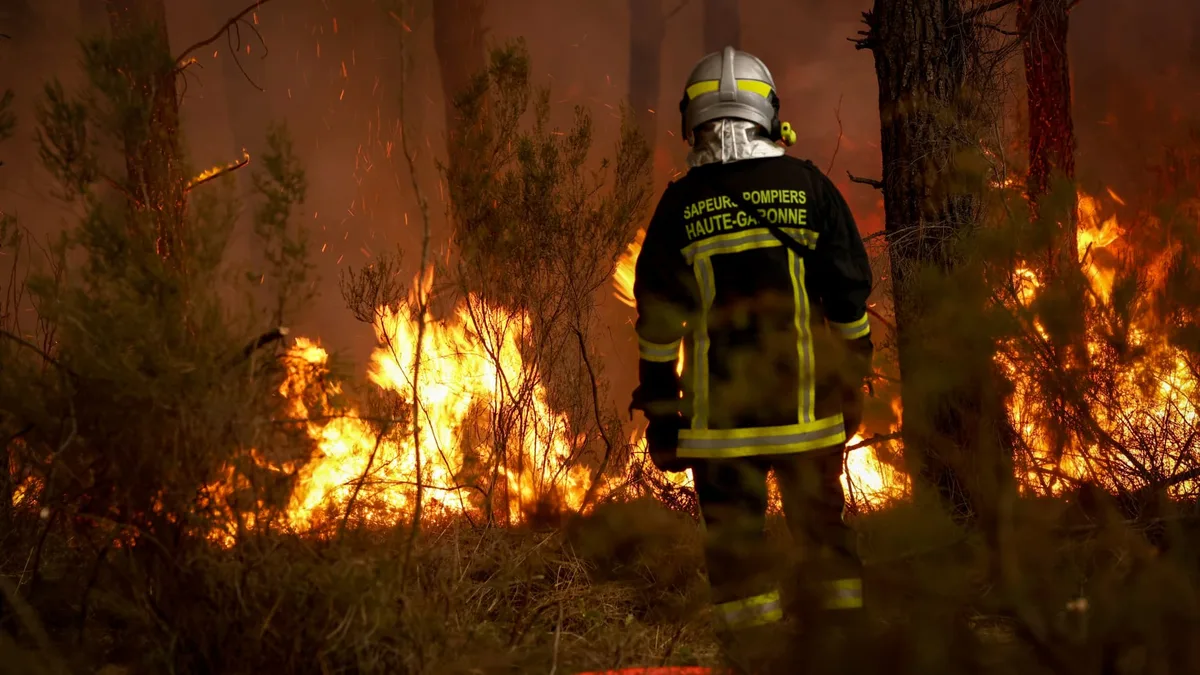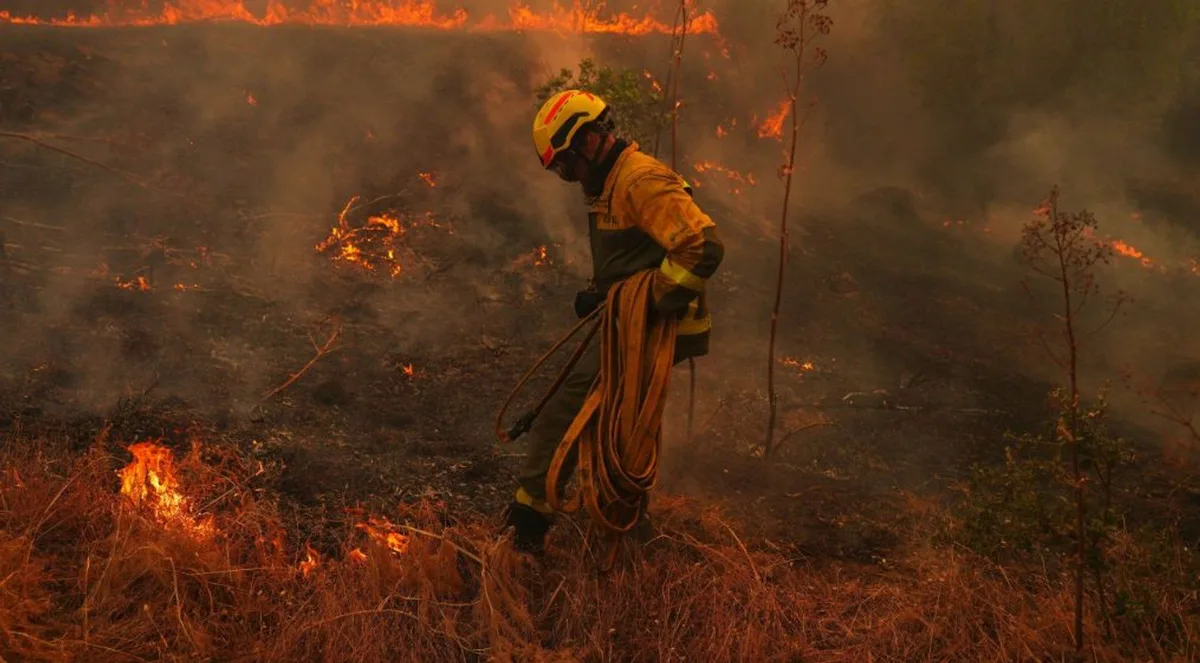
Massive wildfires are ravaging multiple regions across Europe, with France and Spain among the hardest hit, forcing more than 300,000 people to evacuate [1, 2, 3]. In France’s southwest Gironde region, fires have consumed 42,000 hectares, triggering one of the largest evacuations in the country’s history [2]. Authorities ordered fresh evacuations for five communities near Bordeaux after erratic fire behavior and strong winds pushed the blaze toward the city [2, 3]. Laurent Nunez, France's Interior Minister, said, "At the start of the night, in Gironde, the fire became extremely virulent and unpredictable again, generating its own wind and spreading erratically toward the Bordeaux metropolitan area. By the end of the night, it had calmed down somewhat" [2].
The Gironde fire produced a rare pyrocumulonimbus cloud — a fire-generated weather phenomenon creating its own winds and whirlwinds — making the blaze highly unpredictable and dangerous, according to Firefighter Captain Nicolas Braz [2]. Over 2,500 firefighters, 1,500 military personnel, and nearly 1,200 police officers have been deployed to combat the fires in France [2].
In Spain, wildfires have affected 77,000 hectares in the Avila and Toledo areas west of Madrid, with around 60,000 people evacuated [2, 3]. Spanish firefighters are also battling new wildfire fronts near Valencia, forcing the evacuation of at least 15,000 people with international firefighting assistance involved [2, 3]. Juanfran Perez Llorca, Valencia’s regional president, said, "The fire is beyond our capacity to extinguish; it has a perimeter of about 21 kilometres. It is still difficult to determine the number of hectares burned" [3]. Spain declared a national emergency amid the crisis [3].
Spanish Prime Minister Pedro Sanchez visited the fire-affected Valencia region, affirming firefighters' efforts to save lives [2, 3]. On July 22, the Gironde fire began burning uncontrolled; evacuation orders for five communities near Bordeaux followed on July 25 due to overnight winds advancing the blaze [2, 3]. By July 27, French President Emmanuel Macron held a crisis cabinet meeting to address the situation [2]. Sanchez coordinated firefighting efforts in Valencia from July 26 to 27 [2, 3].
The fires have been fueled by record temperatures and successive heatwaves across Europe since May. Parts of Europe, including the Aquitaine region, experienced temperatures 7.3°C above historical July norms [1, 3]. The World Health Organization warned that climate change is increasing the frequency and intensity of such wildfires [1].
One person was reported killed by a separate fire in eastern Spain [3]. The wildfires remain active, with emergency response efforts ongoing in both countries.