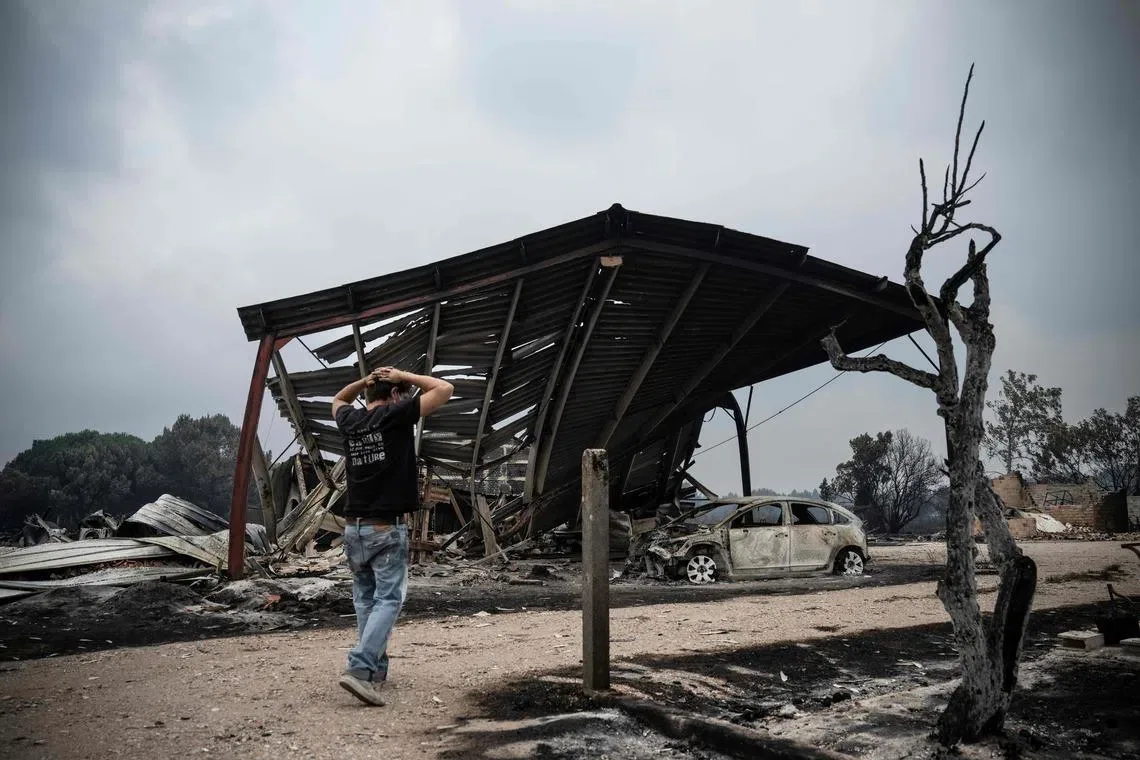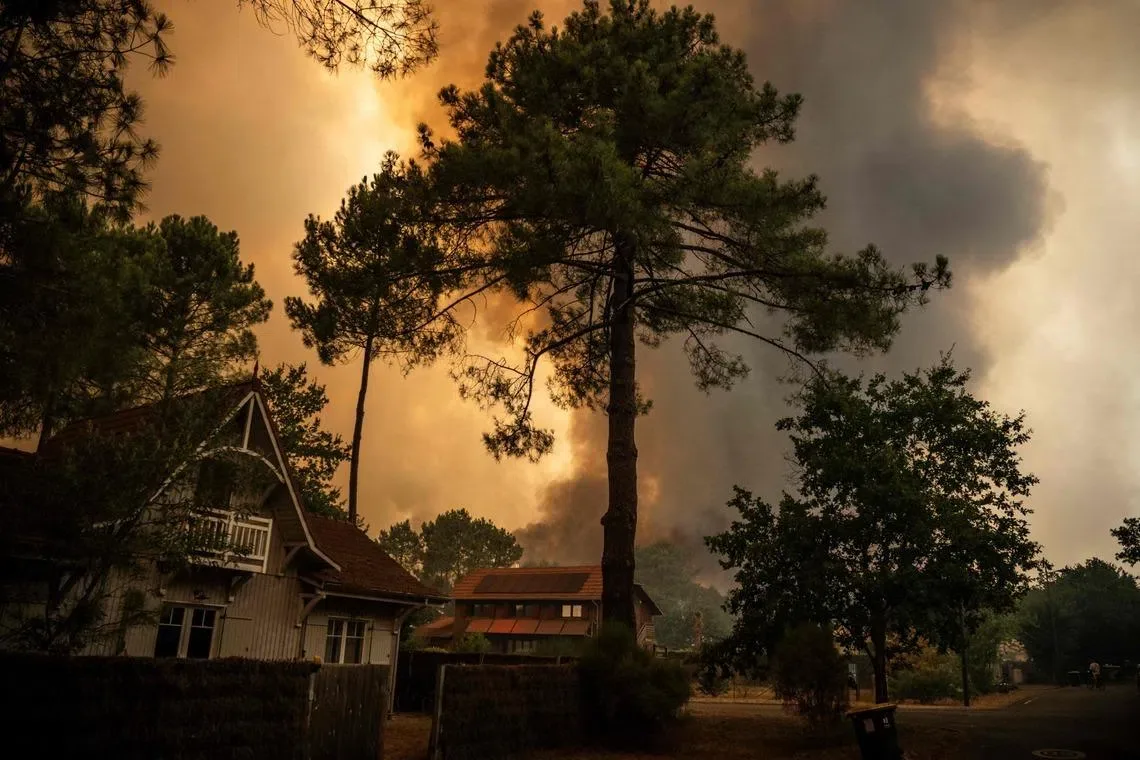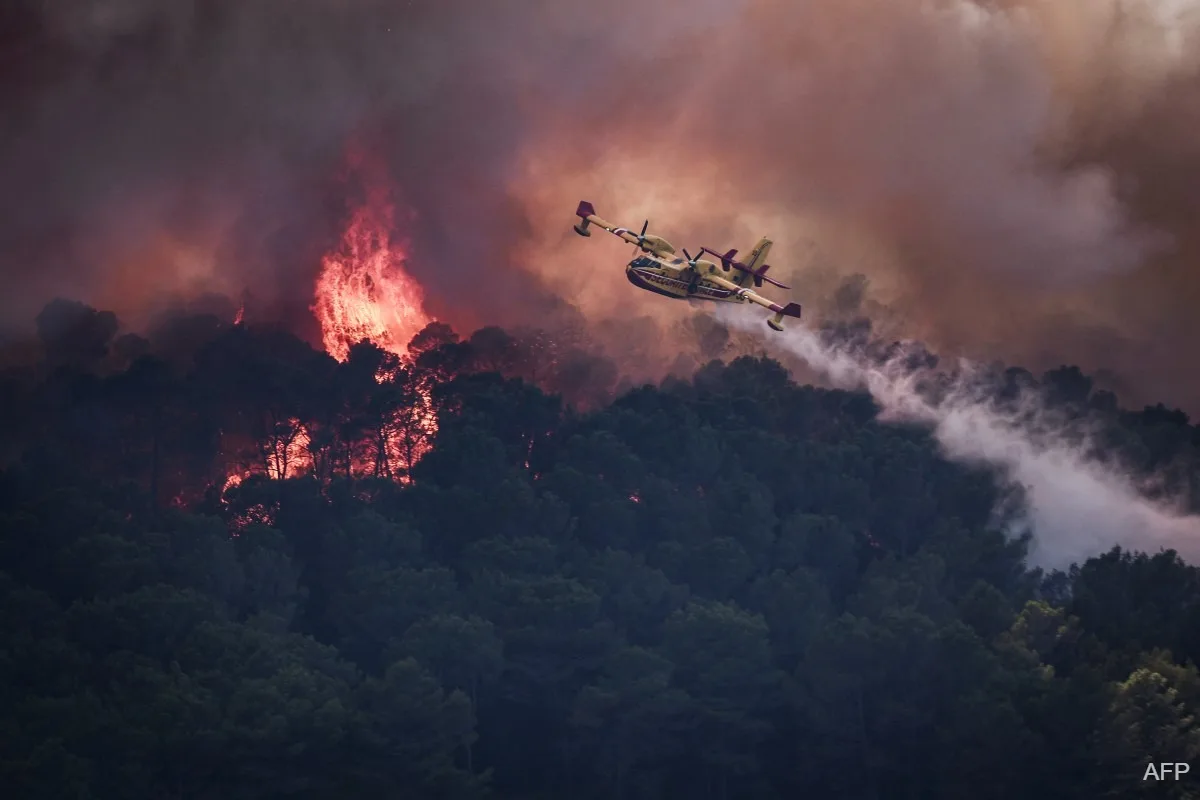
A major wildfire erupted near Saumos village in southwestern France on July 22, 2026, quickly burning dense pine forests and forcing 400 residents to evacuate in the Var department initially [1]. The flames spread rapidly southwest toward Bordeaux, affecting the Gironde and Landes regions, including Le Porge, Lège-Cap-Ferret, and the Cap Ferret peninsula [2, 3, 4, 5, 6, 7, 8].
By July 23, the fire had grown to 2,000-3,100 hectares, prompting overnight evacuations of over 10,000 people near Bordeaux, including tourists and residents [2, 4, 5, 9]. Over the next days, the fire escalated further, burning an estimated 42,000 hectares by July 26, according to the latest reports [10, 11]. Authorities have evacuated more than 220,000 people from the affected areas as of July 26, with residents describing the situation as feeling "like being in a war zone," said Patrick Martineau, a local resident [5, 7, 10, 8, 11].
French officials have deployed over 1,500 firefighters and an additional 500 military personnel to combat the fires. Water-bombing aircraft from multiple EU countries, including heavy fire retardant drops by an A400M military transport plane authorized by Prime Minister Jean Castex, are aiding firefighting efforts [1, 3, 5, 7, 8, 12, 11]. Major highways such as the A63 and rail lines near Bordeaux have been closed due to fire and smoke hazards [11].
Though some houses and caravans have been destroyed—over 53 homes lost as of late July—no fatalities have been reported [3, 5, 6, 10, 12]. Interior Minister Laurent Nunez described the situation as "completely unprecedented" and pledged to protect Bordeaux at all costs [10]. The fire spread overnight faster than officials had anticipated, noted Philippe de Gonneville, Mayor of Lège-Cap Ferret [4].
French authorities attribute the devastating scale of the wildfires to record-breaking heatwaves, prolonged drought, strong winds, and the worsening effects of climate change on Europe [1, 2, 3, 4, 6, 7, 8]. An investigation into the cause near Le Porge suggests the fire may have been sparked by a brush-clearing machine [3, 5, 6].
Evacuations have included tourists from camping sites and holiday accommodations along the Atlantic coast near Bordeaux [2, 3, 4, 5, 7, 8]. President Emmanuel Macron warned that "the fire situation remains extremely severe" especially in the Gironde department [8].
As of August 6, the fires remain uncontained. Officials continue firefighting operations with extensive military and civilian support, while monitoring air and transport disruptions around Bordeaux [11].