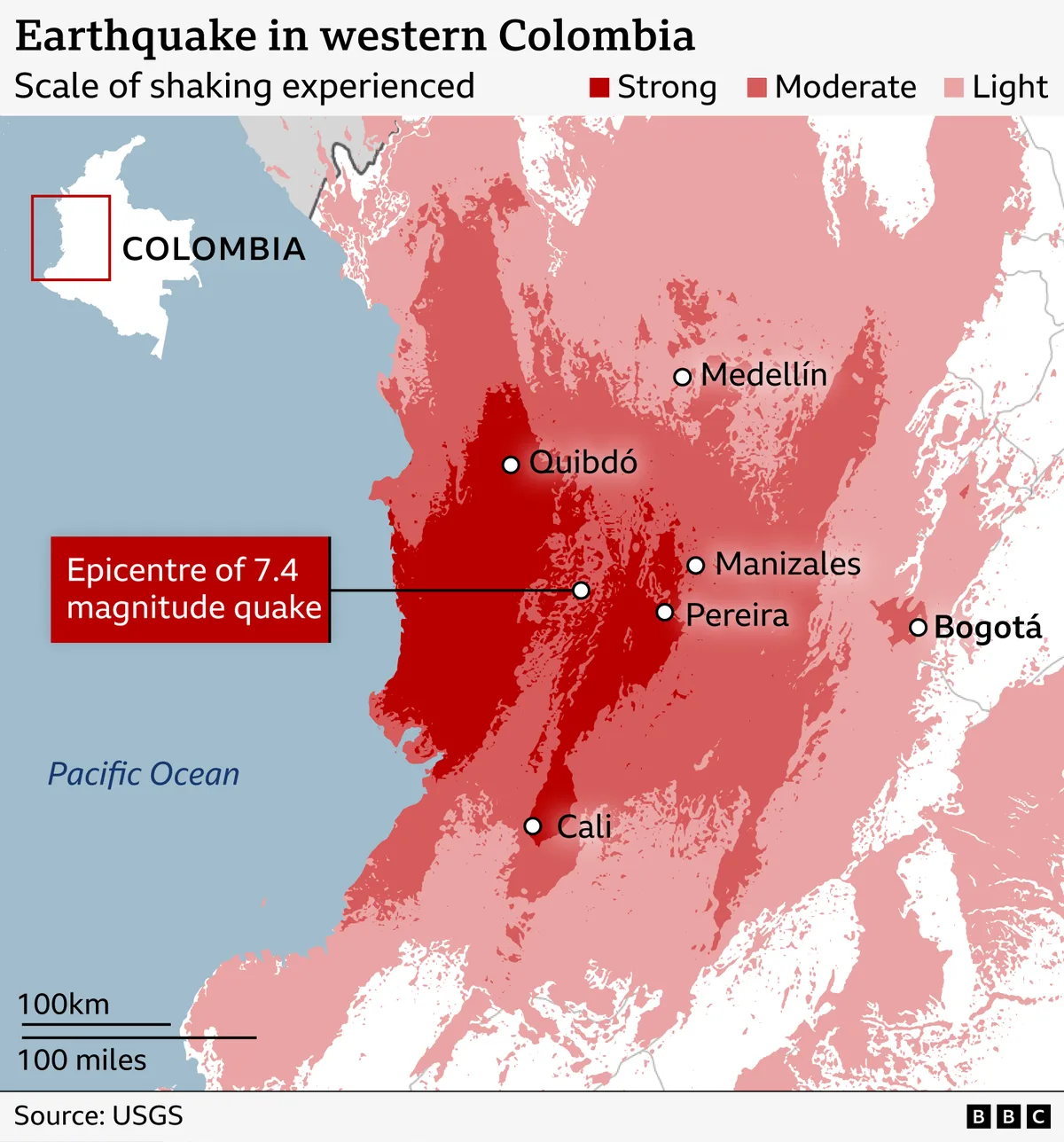
A 7.4 magnitude earthquake struck western Colombia near San José del Palmar in Chocó province on Monday, August 10, at 7:34 a.m. local time. The quake's epicenter was approximately 107 km deep near San José del Palmar, causing strong shaking felt across the region [1, 2, 3].
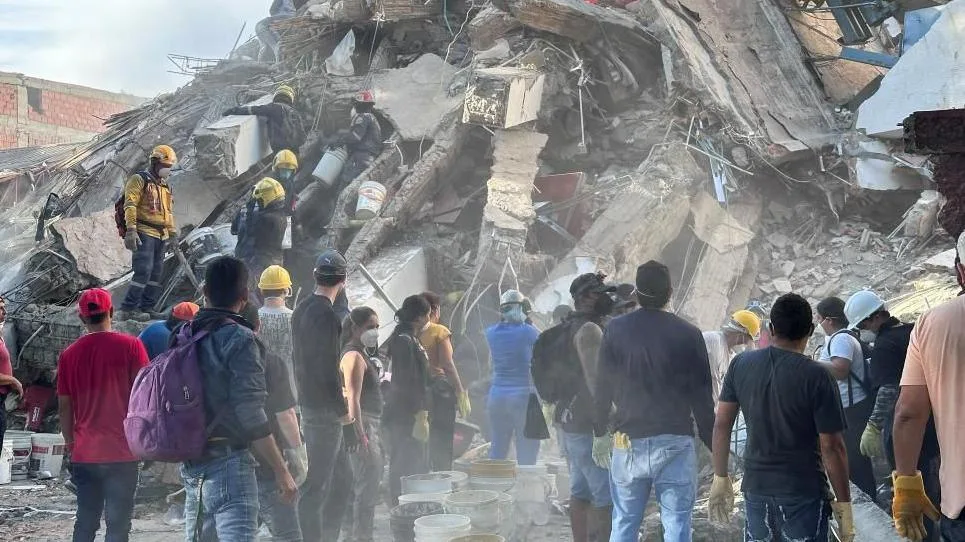
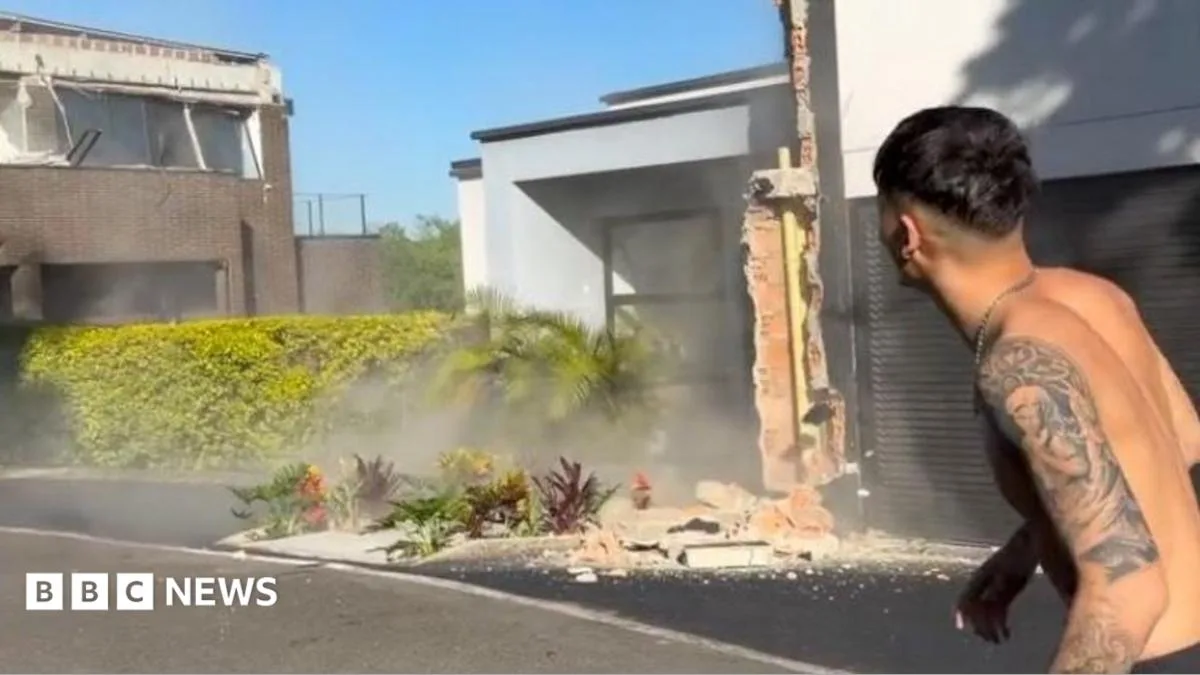
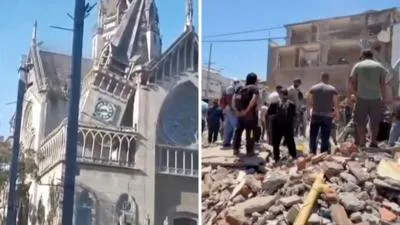
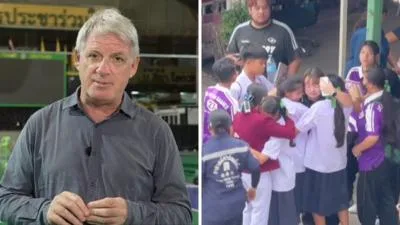
The earthquake caused severe damage in multiple cities, including Cali, Pereira, Manizales, Quibdó, and throughout the Chocó region. Around 1,575 to 5,000 homes were damaged or destroyed, along with hundreds of buildings such as hospitals, schools, health centers, and community facilities. Sixty-one buildings collapsed, and 18 to 24 health facilities were severely impacted [4, 5, 6, 7, 8, 3].
Casualty figures vary by source. Colombia's Geological Service and early official reports state at least 132 people were killed. Other sources report death tolls rising to at least 169 or as many as 224 dead. Injuries range from 570 to 700 people, and more than 2,700 to over 3,000 people remain missing, often in remote or conflict-affected areas [1, 9, 5, 10, 6, 7, 8, 3].
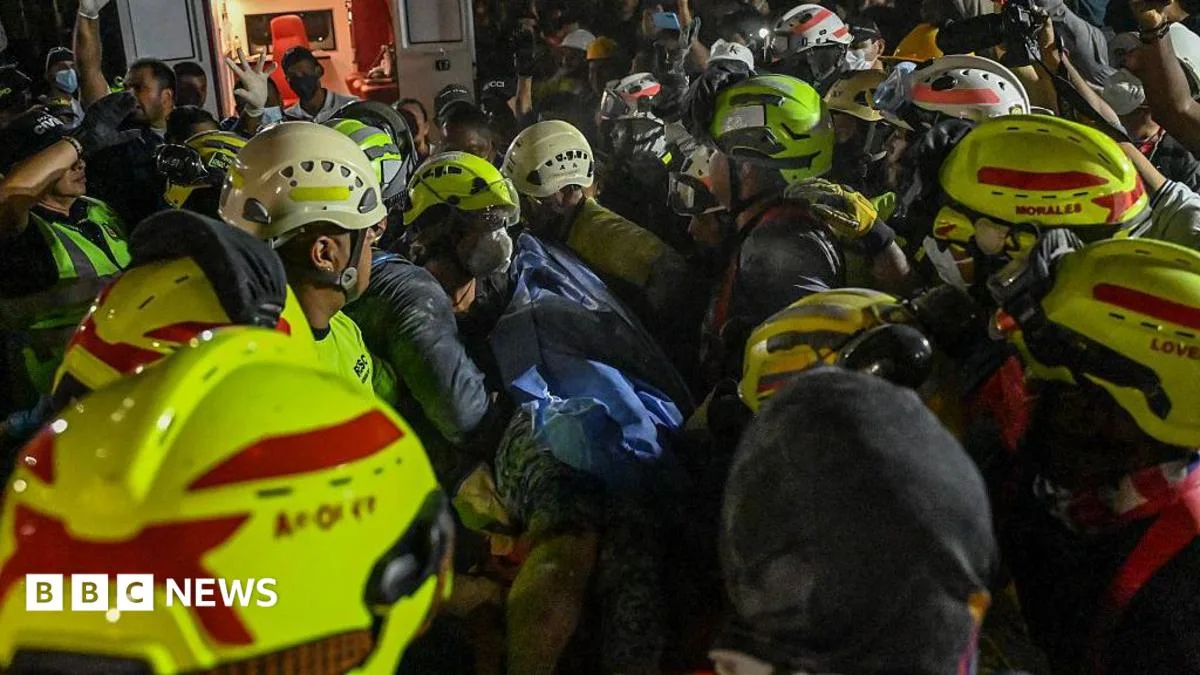
Rescue efforts continue with firefighters, police, military, volunteers, and emergency responders searching rubble for survivors. Signs of life were detected in some collapsed buildings. In Pereira, a woman named Daniela Largo was rescued alive after being trapped for 36 hours, an event Colombian President Abelardo de la Espriella described as "news which fills us with hope" [1, 2, 4, 5, 11, 6, 7, 12].
The president declared a national emergency and deployed soldiers to assist with rescue work and security. A night-time curfew was imposed in Cali to facilitate operations and keep people safe. Essential services such as electricity, water, health care, and communications were disrupted in many affected areas. Some hospitals partially collapsed, forcing treatment outdoors amid rubble [4, 6, 8, 3].
Local residents described the quake as unexpectedly severe. Liliana Pérez Ocampo said, "At first, we thought it was just a mild tremor like the ones that usually happen in Colombia, but when more than 30 seconds passed and everything was shaking harder, we realised it was an earthquake. ... In the end, material things can be replaced. The most important thing is life, and we have that." [1]
The United Nations and other humanitarian groups are involved in response efforts and warned the full impact is unknown, especially in isolated rural zones. UN Resident Coordinator Maria Jose Torres Macho noted, "The effect of the earthquake was bigger than they were expecting. We don’t know exactly what is the impact in the rural, remote areas. There might be much more to report and to respond to." [8, 12]
Rescue operations remain ongoing as authorities and volunteers continue clearing debris and searching for survivors across the affected cities and regions [1, 4, 5].