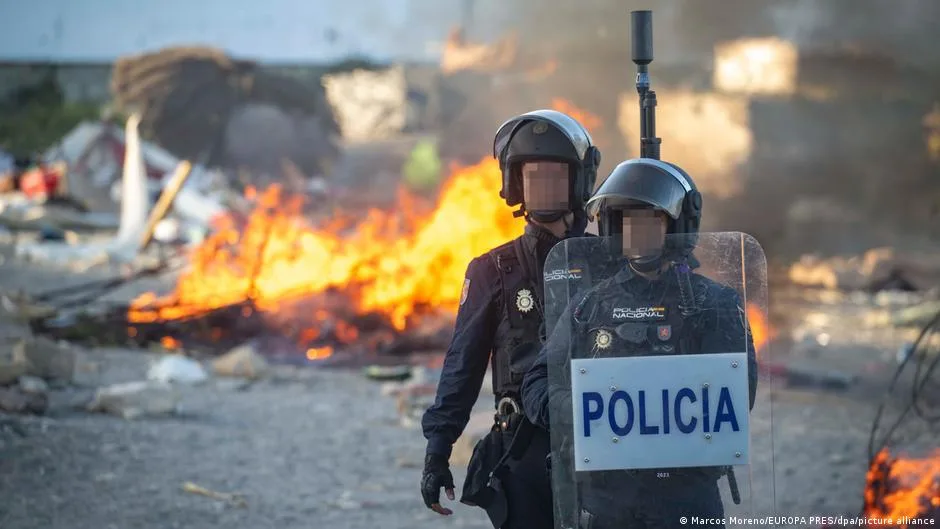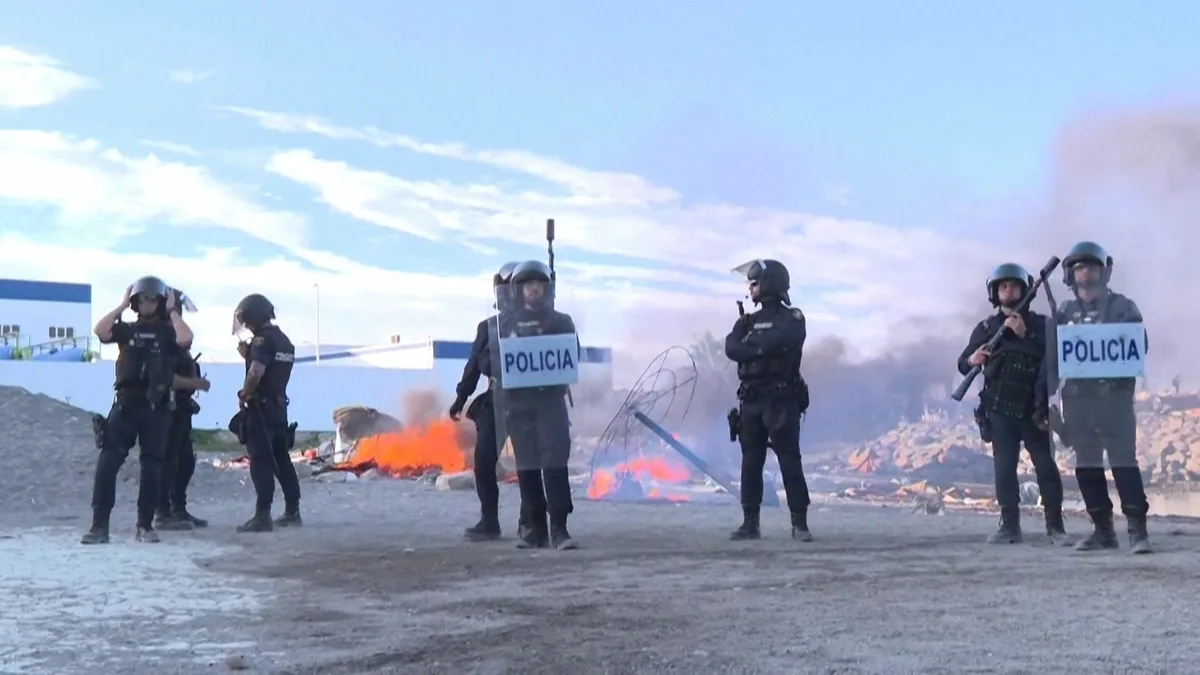
Protesters in the Spanish enclave of Ceuta set fire to migrant shelters and clashed with police on Thursday, August 27, 2026, in a surge of anti-migrant unrest [1, 2, 3]. They blocked Red Cross vehicles delivering food and water to migrants stranded on the beach, preventing aid workers from reaching those in need [1, 2, 3].
The unrest escalated as protesters destroyed makeshift tents and threw migrants’ belongings into the sea, forcing many to flee the area [3]. Police formed cordons and pushed back the protesters to protect migrants and humanitarian workers amid growing tensions [1, 3].
Around 70 people attacked a military vehicle with stones during the clashes. Authorities arrested 12 individuals following the violence, which left four soldiers injured by thrown stones [1, 3]. Territorial Policy Minister Angel Victor Torres called for "non-violence in Ceuta and warned against attacking people because they are migrants" [3].
The unrest follows a massive influx of migrants in late July 2026, when over 70,000 people crossed irregularly into Ceuta from neighboring Morocco. Most migrants were returned, but estimates say between 5,000 and 10,000 remain in the enclave, which has a population of roughly 80,000 to 84,000 people [1, 3]. Ceuta officials claim at least 10,000 remain, while the Spanish government estimates fewer than 7,000; another source places the figure between 5,000 and 8,000 [1, 3].
Youth Minister Sira Rego reported that around 1,500 migrants identified are minors, including 700 girls and many under the age of 13 [3]. The Spanish government has moved to accelerate migrant identification and deportations and has allocated additional funds to assist unaccompanied minors [1].
The protests began on August 26 with thousands demanding migrants be sent back, resulting in police blocking access to migrant areas and clashes involving rubber bullets and destruction of migrants’ property [3]. The violence on August 27 marked a sharp escalation with shelter burnings and direct attacks on aid and security forces.
The unrest has heightened political tensions in Spain and increased pressure on the government ahead of the 2027 general elections [1]. Authorities continue to monitor the situation closely as they balance security concerns with humanitarian aid efforts in Ceuta.