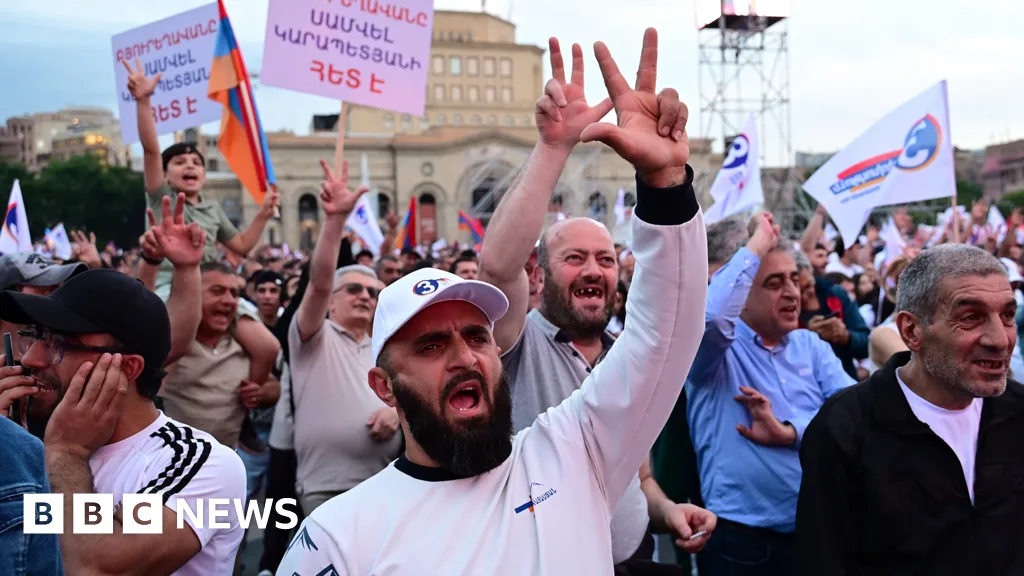
Armenia held parliamentary elections on June 7, 2026, with 18 parties contesting at least 101 seats in the National Assembly under thresholds of 4% for single parties and 8-10% for alliances [1, 2, 3, 4].
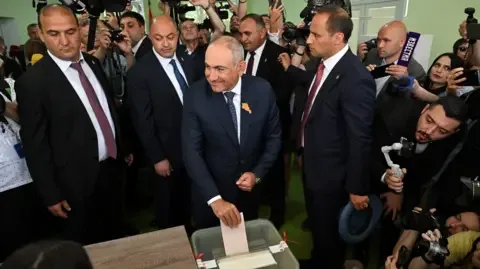
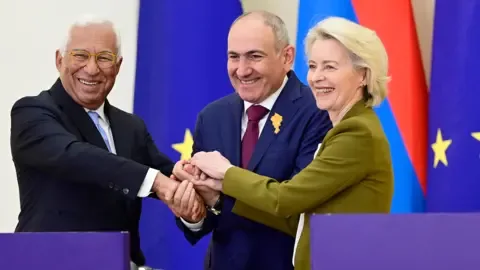
Prime Minister Nikol Pashinyan’s Civil Contract party secured a slim but clear majority, winning approximately 49.8 to 50% of the vote and around half the seats [2, 5]. Pashinyan declared victory on June 8, saying, "The Armenian people voted for peace, regional prosperity and cooperation" and pledging to continue "the course of rapprochement with the West," while maintaining participation in the Eurasian Economic Union [2, 5].
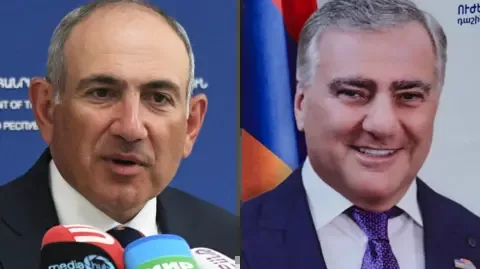
The main opposition alliance Strong Armenia, led by Russian-Armenian billionaire Samvel Karapetyan, who remains under house arrest, finished second with 23-25% of the vote and seats [2, 6, 5]. The pro-Russian Armenia Alliance, led by former President Robert Kocharyan, placed third with 9.9% [2, 3]. Voter turnout was around 59% [2].
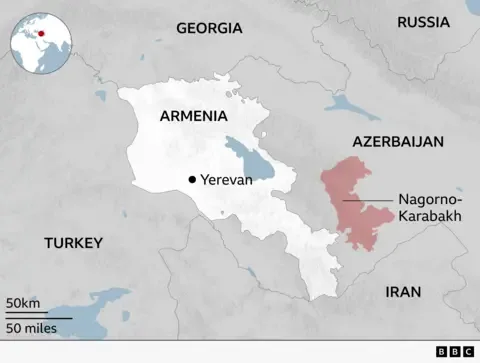
The election was widely seen as a test of Armenia’s pivot from its traditional Russian alliance toward EU integration and Western alignment [1, 7, 8, 6, 5, 9, 4]. Pashinyan has promoted EU membership and deeper Western ties since taking office after the 2018 Velvet Revolution [1, 7, 8, 6, 5]. He framed the vote as a choice between peace with Azerbaijan and renewed conflict following Armenia’s 2023 military defeat and loss of Nagorno-Karabakh [1, 2, 8, 6, 5, 4]. Opponents criticized Pashinyan for alleged concessions over Nagorno-Karabakh and weakening Armenia’s security by distancing from Moscow [1, 8, 6].
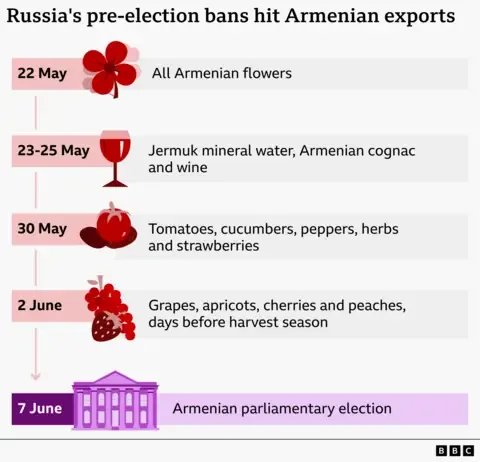
In the weeks leading up to the vote, Russia imposed a series of trade bans on Armenian exports including cognac, flowers, fish, and fruit, widely interpreted as economic pressure over Armenia’s European shift [7, 8, 9, 4]. Russian President Vladimir Putin warned of a "Ukrainian scenario" if Armenia continued strengthening ties with Europe [7, 8, 9, 4]. Samvel Goroyan, director of an Armenian cognac factory, said, "We just hope this all blows over. All our cognac is sold in Russia, 7m bottles a year. We have nowhere else to go" [7].
The election results reflect a split in the opposition vote, allowing Civil Contract to win despite internal polls showing Pashinyan’s domestic popularity at about 30% [1, 2]. Armenian authorities also issued arrest warrants accusing members of the Strong Armenia alliance of vote buying before the election [9].
US President Donald Trump publicly endorsed Pashinyan’s bid for re-election, adding international support for his pro-West stance [1, 2, 6, 5, 4]. European Commission Vice-President Kaja Kallas praised the Armenian people for choosing a European future under difficult conditions, saying, "We are trying to help them as much as possible on their future reforms" [5].
Parliament is set to convene soon to confirm the new government. Pashinyan’s administration will face ongoing challenges managing Russian pressure while pursuing EU integration and resolving the Nagorno-Karabakh dispute.