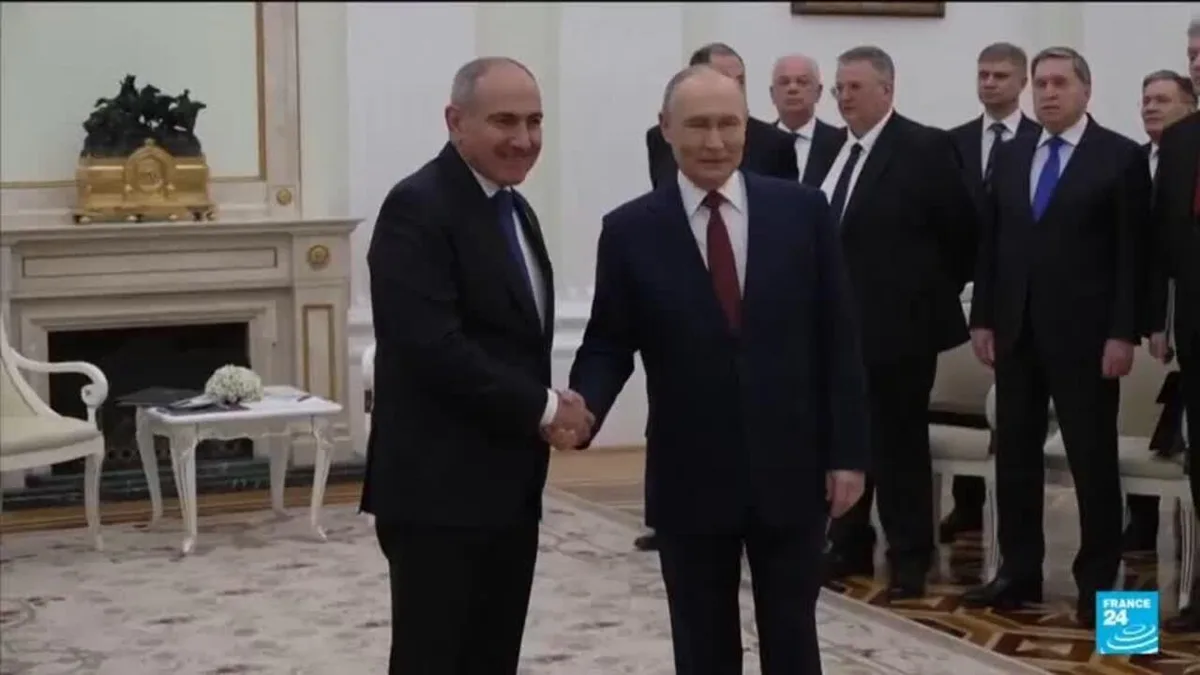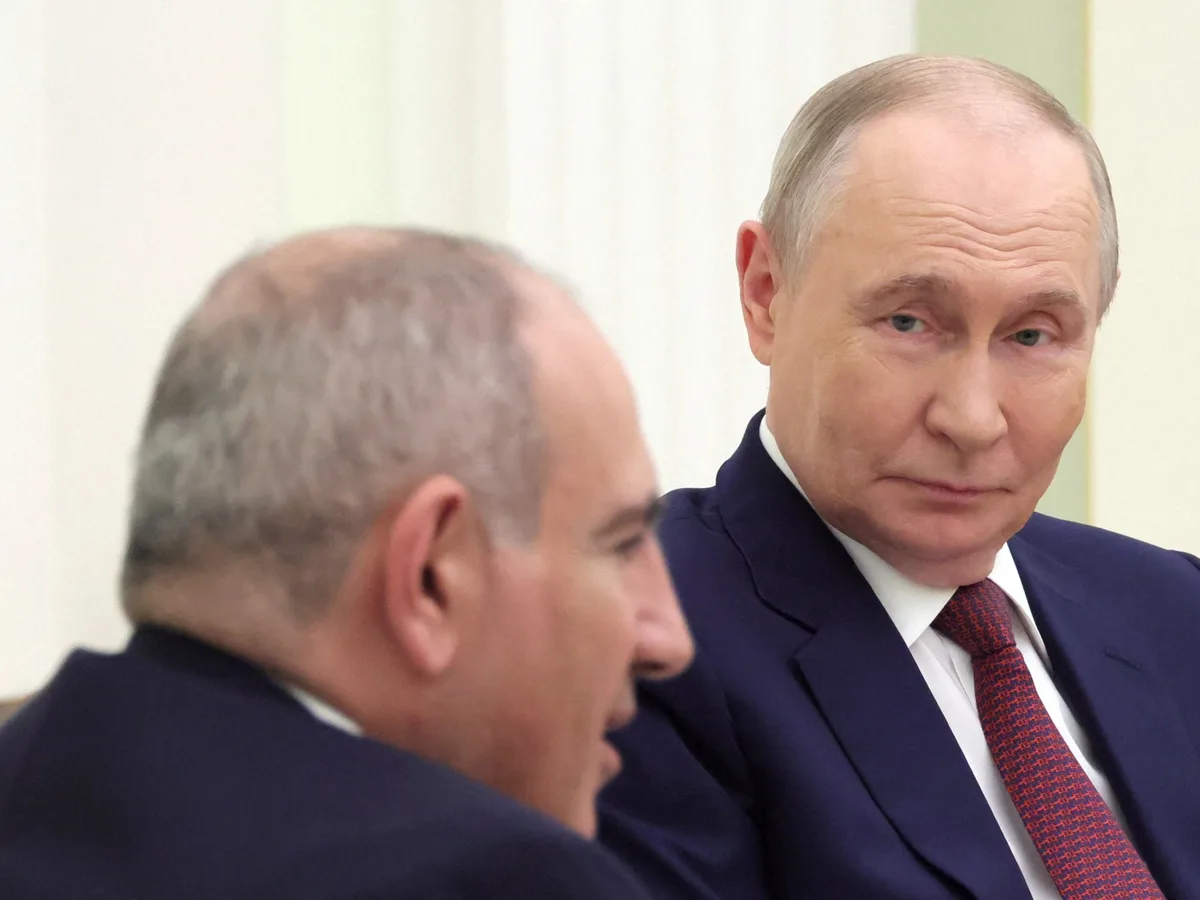
Armenian Prime Minister Nikol Pashinyan rejected Russia’s call to hold an immediate referendum on leaving the Russian-led Eurasian Economic Union (EAEU) to join the European Union on June 1, 2026, following a phone call from Russian President Vladimir Putin [1]. Putin had wished Pashinyan a happy birthday during the call but insisted that Armenia cannot be a member of both the EU and EAEU and warned against pursuing Western ambitions, referencing the “Ukrainian scenario” [1].
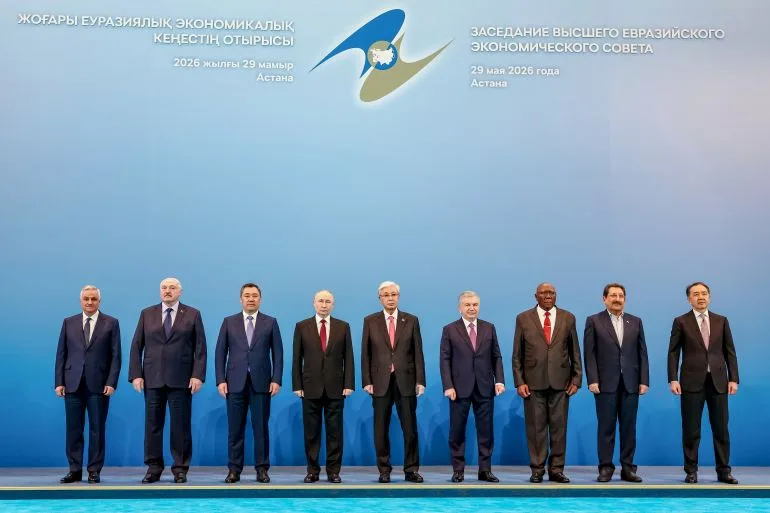
Putin and other EAEU leaders from Belarus, Kazakhstan, and Kyrgyzstan issued a joint statement on May 29 urging Armenia to hold a referendum on EU accession "as soon as possible" [1]. Moscow also recalled its ambassador to Yerevan for consultations amid rising tensions ahead of Armenia’s parliamentary elections scheduled for June 7, 2026 [1].
The Armenian premier said the government in Yerevan would continue working within the EAEU "until a choice between the two blocs becomes unavoidable." He called a referendum before Armenia applies for EU candidate status “neither very sensible nor justified,” describing any vote at this stage as theoretical [1]. Pashinyan added that Yerevan’s ties with Russia are “in a transformation phase” [1].
As part of the pressure campaign, Russia’s agricultural watchdog suspended fish and seafood imports from Armenia on June 1, citing health violations. This affects a key sector, as about 30% of Armenian fish and seafood exports go to Russia [1]. Moscow has previously imposed bans on Armenian produce, flowers, mineral water, and alcohol.
Armenia must hold parliamentary elections next week on June 7 against the backdrop of these escalating diplomatic and economic tensions with Moscow [1].