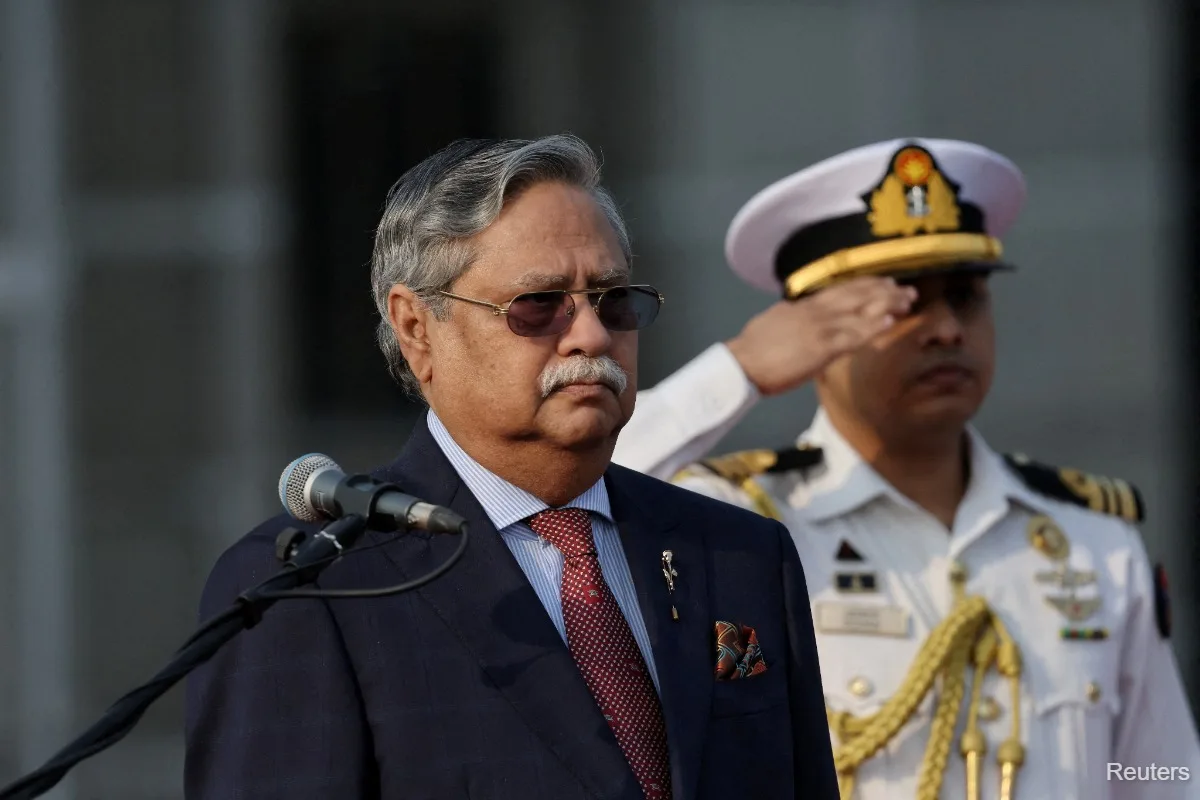
Mohammed Shahabuddin resigned as Bangladesh’s president on July 24, 2026, citing deteriorating health conditions that made it impossible for him to continue in the constitutional role [1, 2, 3, 4, 5, 6]. The 76-year-old leader, who was elected in April 2023 for a five-year term due to end in 2028, submitted his resignation letter outlining ailments including heart disease, hypertension, diabetes, kidney complications, prior coronary artery bypass surgery, and autonomic neuropathy causing occasional loss of consciousness [1, 3, 5, 6]. Shahabuddin told officials, "I am seriously ill … therefore, I am unable to perform my duty of the constitutional post" [3], and later said, "I am suffering from various health complications. I have nothing more to add at this moment" [6].
Following his resignation, Speaker of Parliament Hafiz Uddin Ahmed accepted the letter and assumed the role of acting president [3, 4, 5, 6]. According to Bangladesh’s constitution, a new president must be elected within 90 days [3, 6].
Shahabuddin was close to former Prime Minister Sheikh Hasina and secured his presidency with backing from her Awami League party [1, 4, 6]. Hasina was ousted in August 2024 after a student uprising and currently lives in exile in India, with plans to return to Bangladesh in December 2026 to surrender following a court conviction [2, 3, 4, 6]. Shahabuddin was the last high-ranking official appointed during Hasina’s administration to remain in office after her removal [4, 5].
There were allegations that Shahabuddin had been in contact with Hasina during his medical treatment in London in May 2026, claims he denied [1, 3, 6]. Sarwar Alam, the president’s press secretary, said Shahabuddin "needs treatment and rest" and can no longer fulfill his duties due to illness [2].
President Shahabuddin traveled to London for medical care from May 9 to May 18 this year, underscoring the severity of his condition [3, 6]. The next step will be the election of a new president to replace Shahabuddin within the constitutional 90-day timeframe.