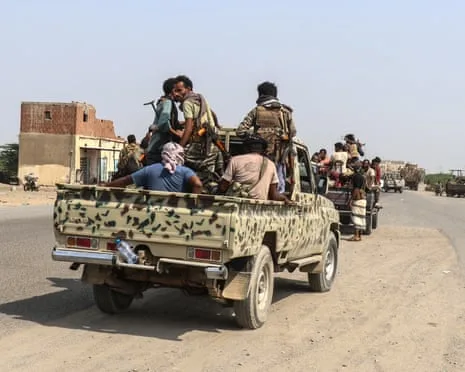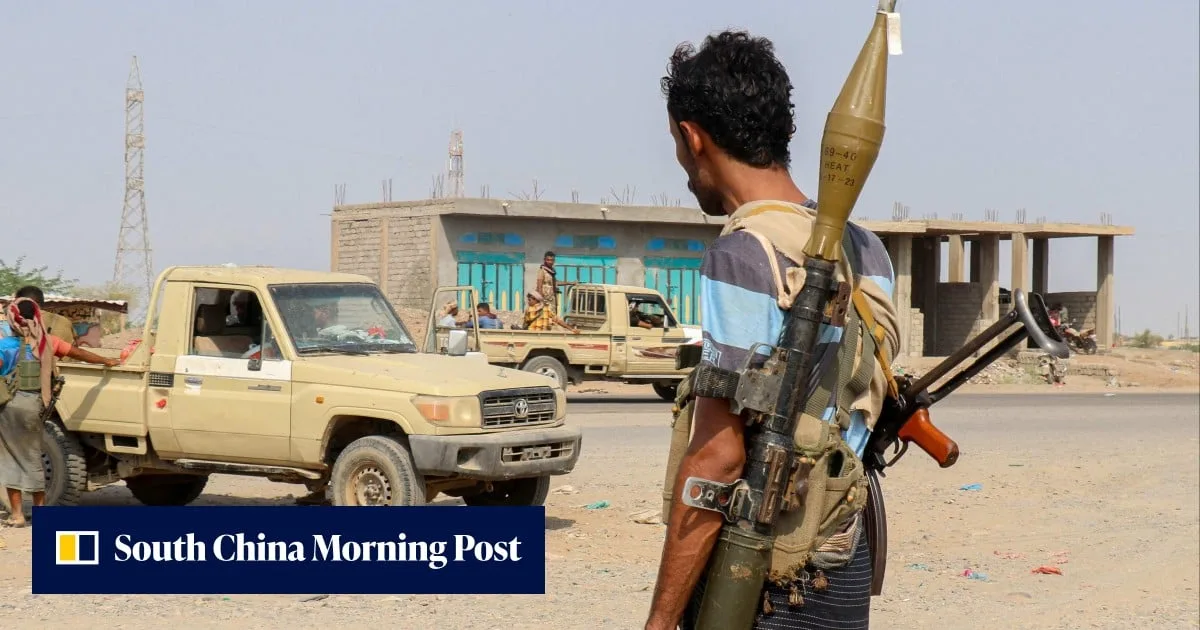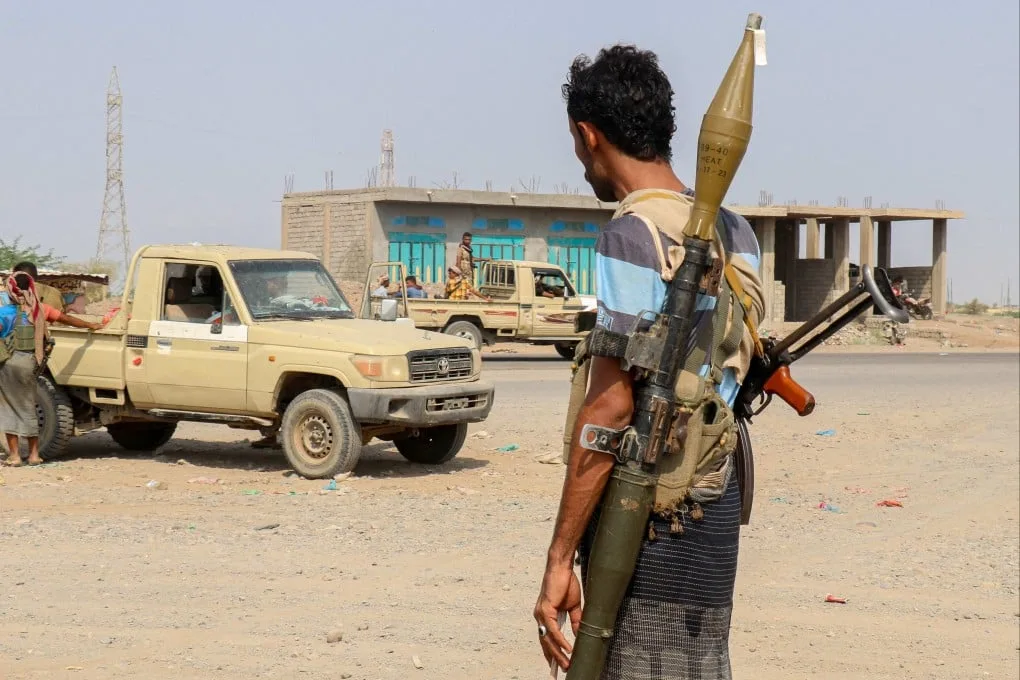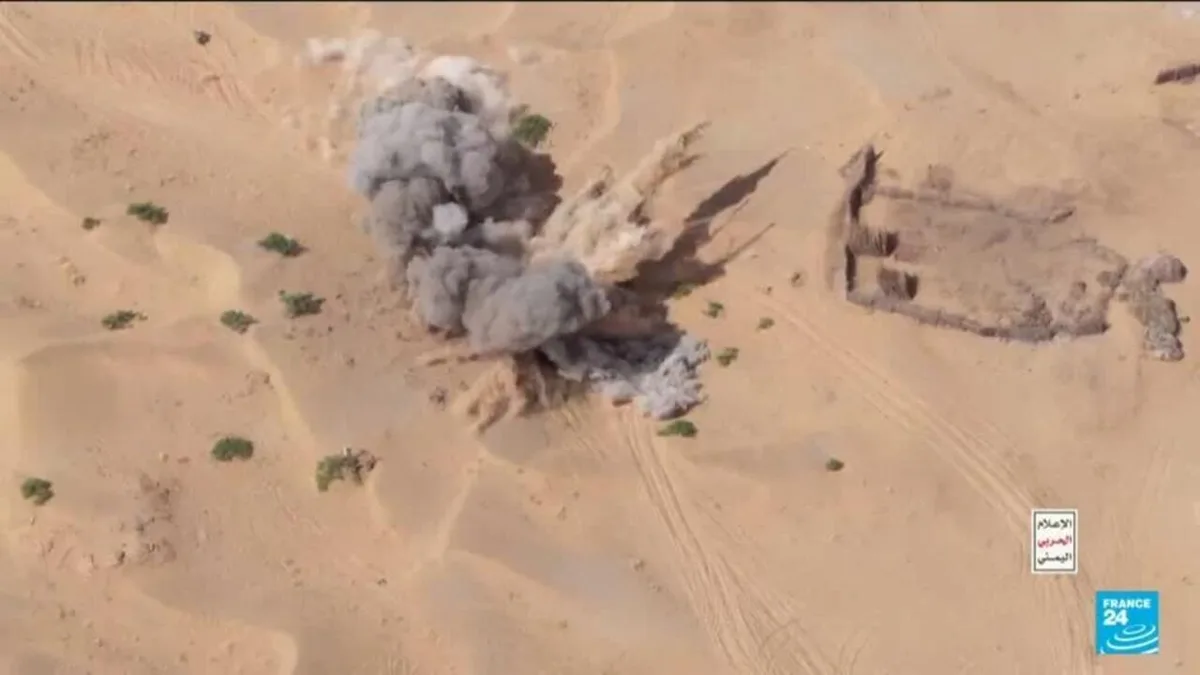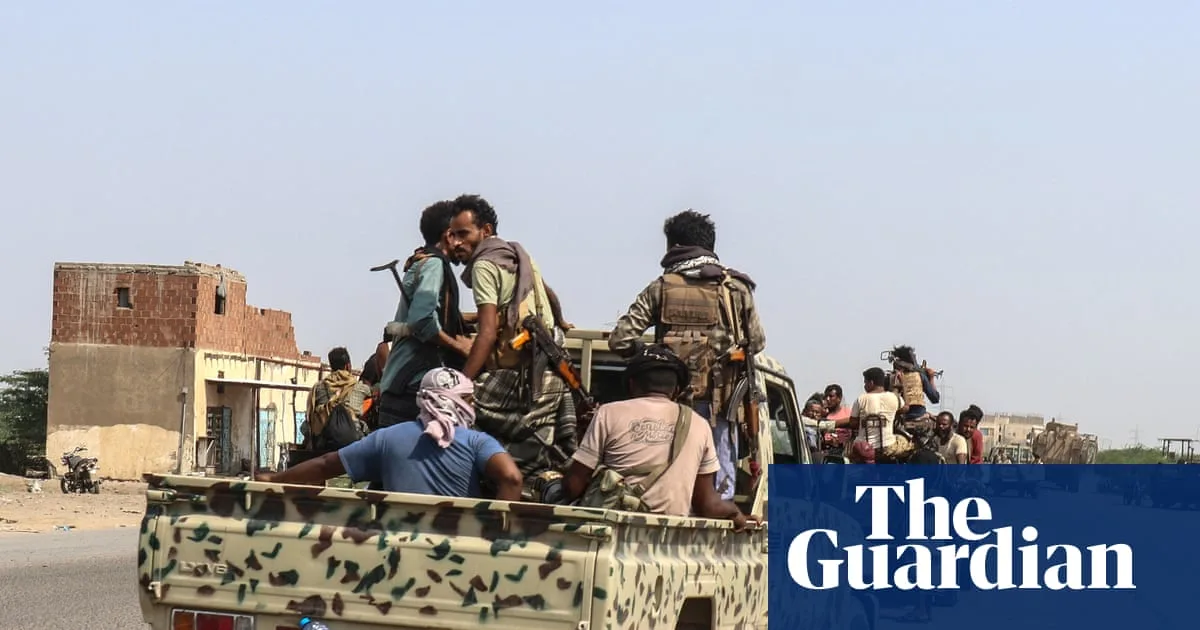
Clashes between Yemen’s government forces and Houthi rebels killed over 300 people as of Sunday amid battles for control of strategic locations near the Red Sea chokepoint Bab al-Mandeb [1]. The fighting, the deadliest since the 2022 ceasefire collapsed in July, intensified on Friday and Saturday in southwest Yemen’s Taiz and Hodeidah regions [2, 1].
On Friday, 129 people died in combat in western Taiz and southern Hodeidah, marking the opening surge of violence this weekend [2]. The following day, heavy fighting killed at least 26 government troops and 31 Houthi fighters, while a missile strike hit a civilian bus in Taiz city, killing six and injuring seven [2]. Between midday Saturday and early Sunday, government sources reported 84 troops killed, mostly by missile attacks, while Houthi sources said 57 rebel fighters died in the same period [1].
The Houthis have pushed offensively along Yemen’s western coast, seeking to capture strategic hills near Bab al-Mandeb to advance toward key port cities [2, 1]. The government forces said they recaptured al-Khazan and al-Makahna hills west of Taiz—important terrain overlooking the area—and expelled Houthis from the contested port city of al-Makha [2].
The Bab al-Mandeb strait connects the Red Sea to the Gulf of Aden and is a vital maritime chokepoint through which about 10% of global trade passes to and from the Suez Canal [2]. Disruptions to shipping here could significantly boost global goods costs, which have already risen following the 2026 closure of the Strait of Hormuz [2].
The intense street and hilltop fighting has displaced hundreds of families, many fleeing Maqbanah and Jabal Habashi in Taiz governorate to seek refuge in camps for internally displaced persons [1]. Rawdhah Hasan, displaced by the violence, described the experience: "The shooting came at us from above and from below" [1].
The current clashes follow the July collapse of the 2022 ceasefire, triggered by an Iranian plane’s attempted landing and subsequent government attacks on Sana'a airport [2]. The recent surge marks the most intense fighting in years, raising concerns over control of the Red Sea gateway.
Further clashes are expected as both sides continue to contest critical terrain around Bab al-Mandeb amid high stakes for regional trade and military dominance [2, 1].