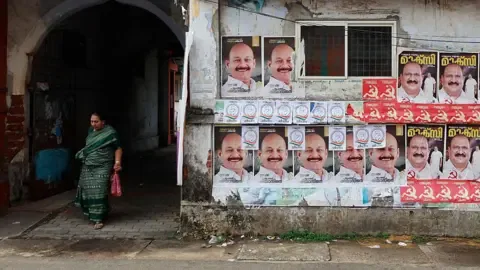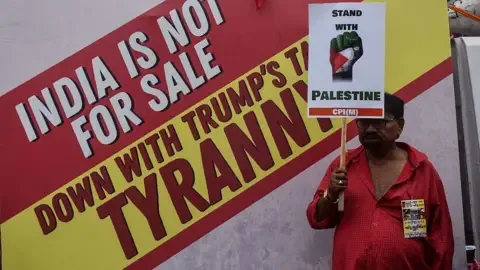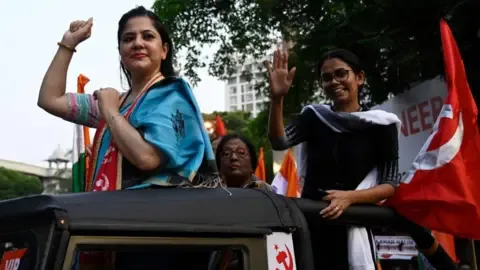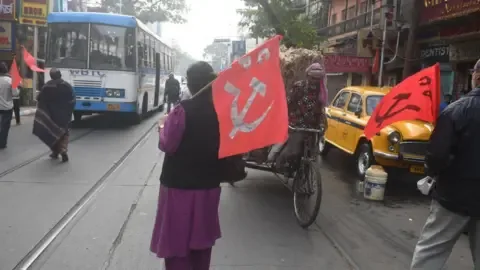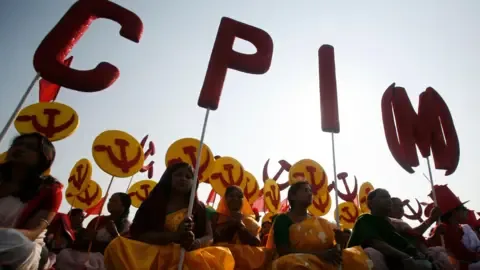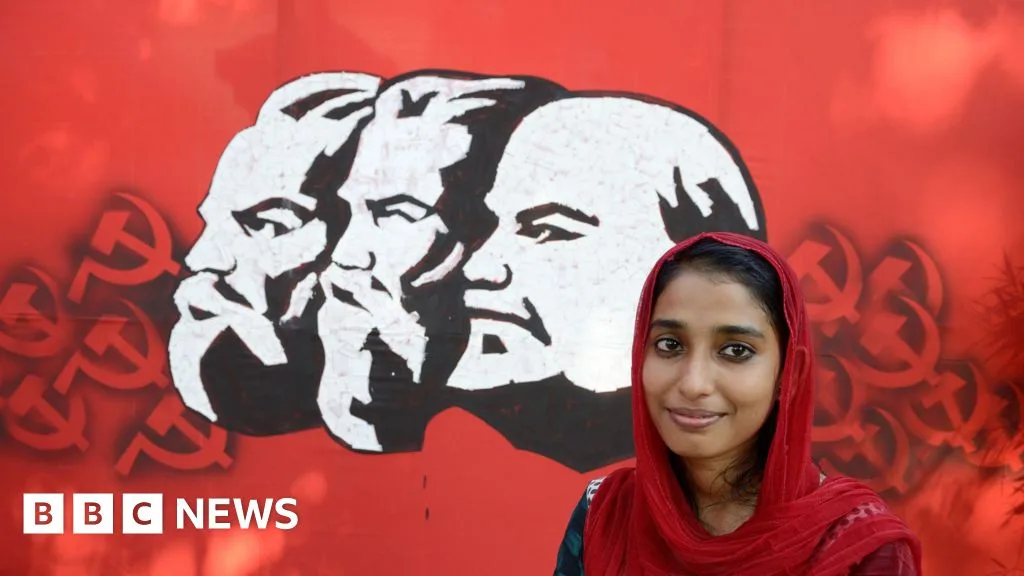
The Communist Party of India (Marxist)-led Left Democratic Front (LDF) lost the Kerala state election in May 2026, bringing an end to their decade-long rule and leaving India with no communist-led state governments for the first time since 1957 [1, 2, 3].
India’s communist parties once governed major states including West Bengal, Kerala, and Tripura. At their peak, they influenced more than 100 million people through a variety of political and mass organizations [1, 2, 3]. The Left Front ruled West Bengal continuously from 1977 to 2011 — one of the world's longest-running elected communist administrations [1, 2, 3]. Tripura was governed by left-wing parties for a total of 35 years, with a 25-year uninterrupted stretch ending in 2018 when the BJP took power [1, 2, 3].
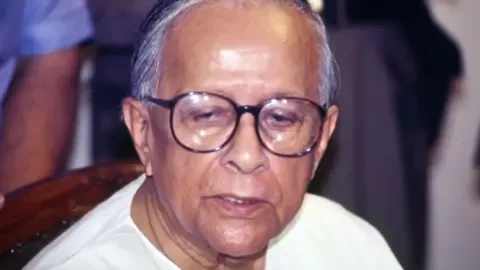
Since 1957, power in Kerala alternated primarily between the Left Democratic Front and the Congress party, making the communists a durable force though never permanently dominant [1, 2, 3]. Former West Bengal chief minister Jyoti Basu nearly became India’s prime minister in 1996 as a coalition leader, but his party rejected the offer — a decision Basu later called a "historic blunder" [1].
In 2008, left parties holding 62 seats in the national lower house withdrew support from Prime Minister Manmohan Singh’s government over the U.S.-India civil nuclear deal, forcing a confidence vote before the agreement was passed [1, 2, 3].
Despite economic stagnation in West Bengal and concerns about education quality under left rule, communists retained significant influence on economic thought, intellectual life, and culture beyond their electoral bases [1, 2, 3]. The left currently survives unevenly: it remains politically relevant in Kerala despite the recent electoral loss; in Tamil Nadu the left participates mainly through alliances; and in Bihar, the CPI (Marxist-Leninist) holds a vibrant presence in some areas [2, 3].
Former strongholds West Bengal and Tripura have seen the communist parties reduced to shadows of their former strength. The CPI(M)’s national vote share has dropped from above 6% in the 1980s to under 2% in recent elections [2, 3]. The decline stems from fading appeal of class struggle rhetoric and mass mobilization, replaced by identity politics, nationalism, populist leaders, and welfare-based politics [2, 3].
Mohammed Salim, CPI(M) West Bengal secretary, attributes the decline in part to a “total assault” from the rise of Hindu nationalism and market liberalization since the 1990s, which squeezed the left politically, economically, and culturally. He said, "中產階級被展示了一片綠色牧場,發展、現代化、基建——你也能分一杯羹。人們開始產生對未來的渴望" and noted "分化政治削弱了階級團結" [2].
Political scientist Sanjay Ruparelia noted that India’s left differs from China or Vietnam’s parties because it governs at the state level in a federal democracy that requires attracting private investment and growth. He said, "印度的特殊之處在於,具有共產主義傳統的政黨竟然能在民主選舉中成功" [2].
Kerala’s model featured decentralized planning, strong social indicators, high literacy, poverty reduction, and robust public healthcare, earning international attention [2, 3]. Still, it faces challenges including heavy reliance on overseas remittances and insufficient youth employment generation [2, 3]. Since at least 2022, Kerala’s CPI(M) has embraced policies it once opposed, including private investment, public-private partnerships, private universities, and global tech services [2, 3].
CPI(M) general secretary MA Baby said state governments “have limited fiscal and administrative power. Real power is in Delhi. We use state power to show that even within capitalism, people-friendly policies and alternatives are possible” [2].
The left’s traditional social base is eroding due to low unionization in India’s large informal economy and welfare politics shifting from class mobilization to direct cash transfers and identity alliances [2, 3]. Large farmer protests in 2020 revealed rural politics where left parties remain involved but no longer lead, replaced by local parties and unions [2, 3]. Analyst Shikha Mukherjee described the left as the “voice of conscience” but no longer the movement’s leader, hampered by ideological confusion [2]. Despite worsening inequality, youth unemployment, and insecurity that seem favorable to Marxist politics, the left struggles to mobilize effectively on the streets [2, 3].
The Kerala election defeat in May 2026 marks the first time since 1957 that India lacks any communist-led state government [1, 2, 3].