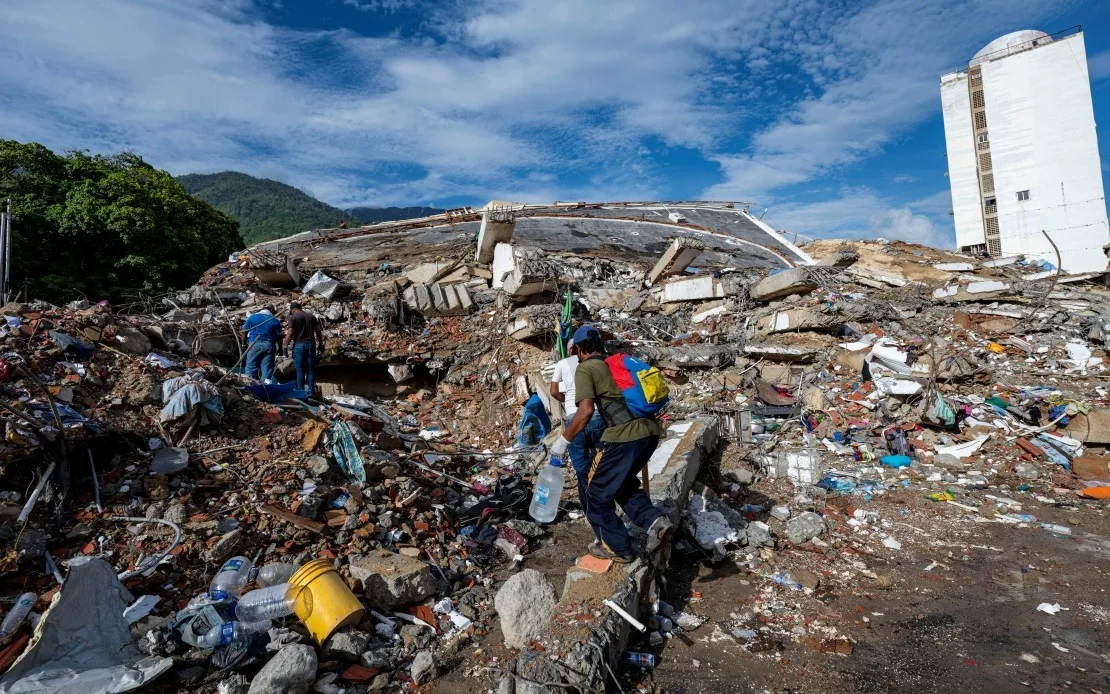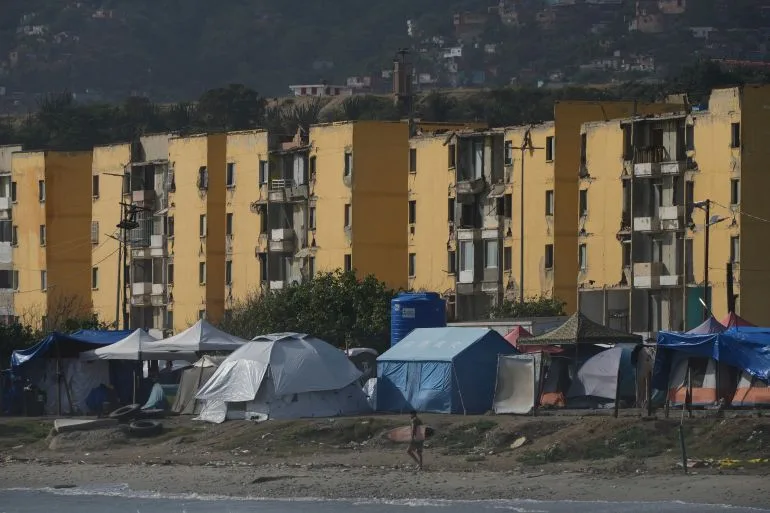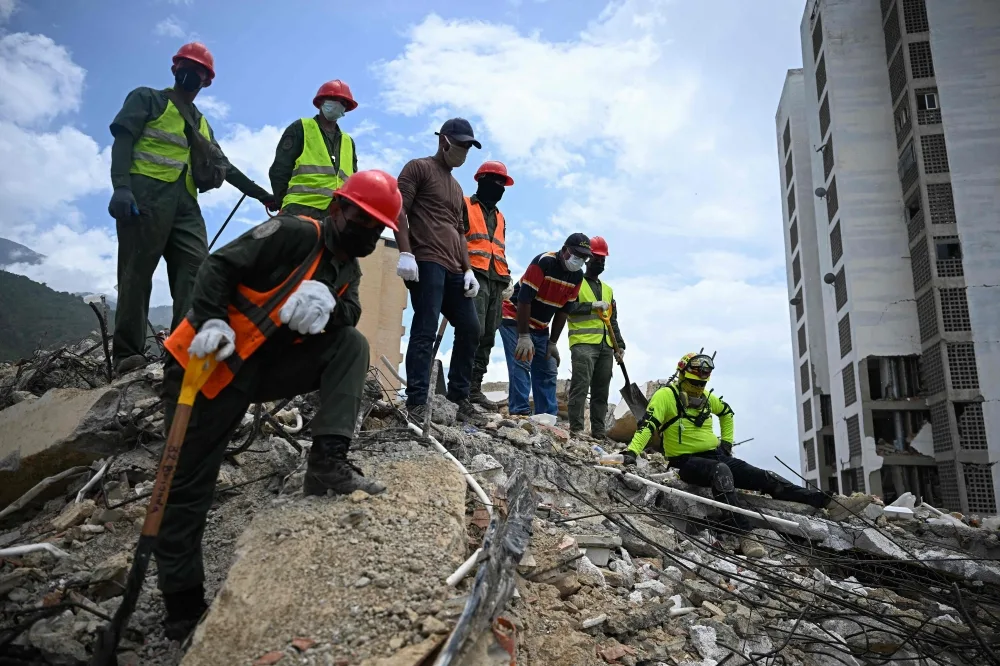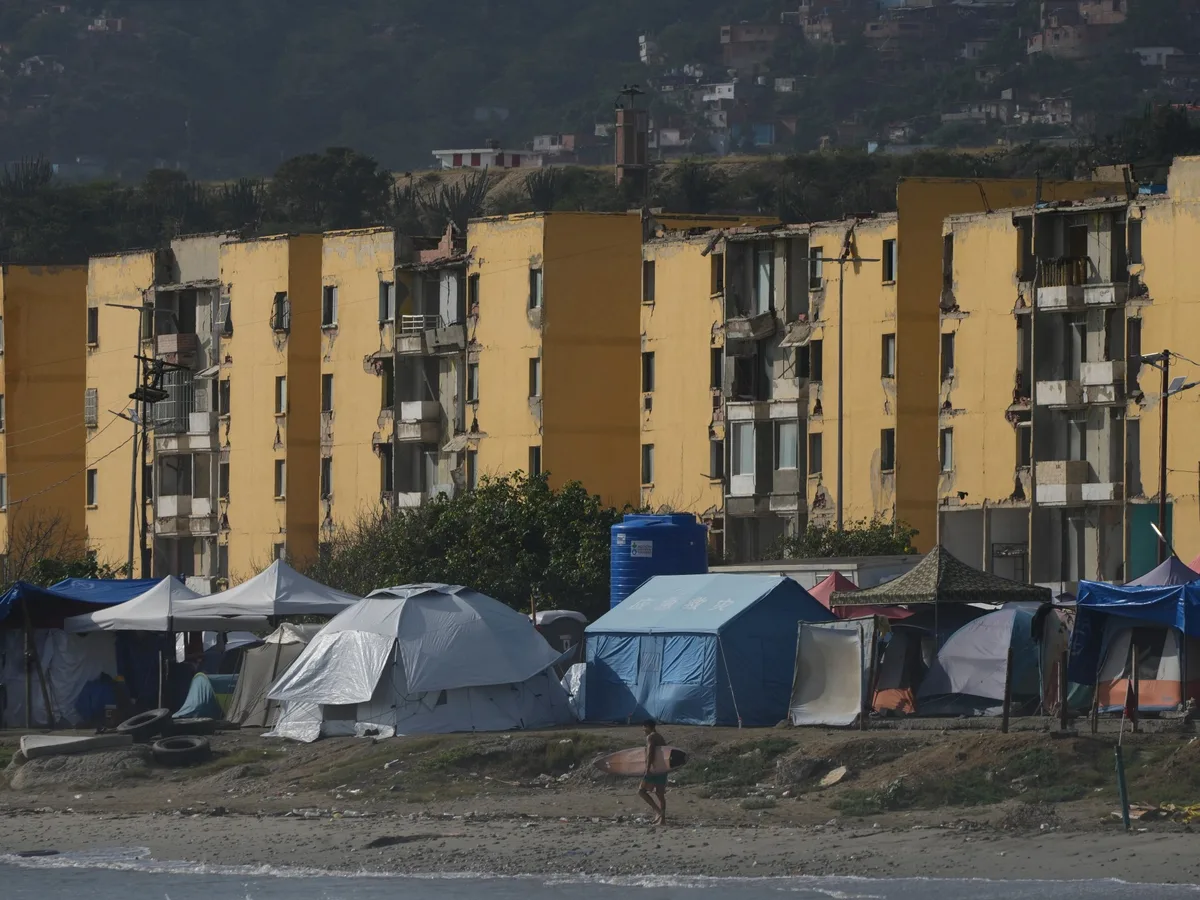
Two powerful earthquakes with magnitudes 7.2 and 7.5 struck Venezuela on June 24, severely affecting La Guaira and Caracas [1, 2, 3, 4]. Authorities have confirmed the death toll now stands at 6,125 [1, 2, 3, 4]. More than 60,990 people received hospital treatment following the quakes [1, 2, 4].
Emergency teams rescued 6,642 individuals in the aftermath [2, 4]. Officials evaluated over 40,000 residences: 25,325 were deemed habitable, 9,866 had restricted use, and 6,433 were classified as high risk [2, 4]. Nearly 200 buildings completely collapsed, and over 16,200 structures were declared unsafe [3]. Approximately 24,000 people currently live in makeshift shelters in the hardest-hit cities [3].
Government cleanup crews have removed about 382,230 tons of debris, roughly 16.5% of the total [1, 2, 4]. So far, the government has provided 287 new homes to displaced families [2, 4]. Interim President Delcy Rodriguez stated the government aims to deliver 4,000 homes by the end of 2026 and over 10,000 in 2027 [3].
On August 7, Venezuela’s lawmakers unanimously approved a law easing rental regulations to assist displaced quake victims, potentially benefiting around 400,000 homes. Rodriguez described it as a "win-win situation for tenants and property owners" [3]. La Guaira’s governor Jose Alejandro Teran said about 1,400 people remain missing, though some expert estimates reach up to 10,000 [3].
The World Bank estimates the physical damage from the earthquakes at nearly $20 billion [1]. Meanwhile, US influence on Venezuela remains significant since ousting Nicolas Maduro in January, with some economic sanctions still in place [1, 3].
The next governmental milestone is the delivery of thousands of new homes to affected families by the end of this year [3].