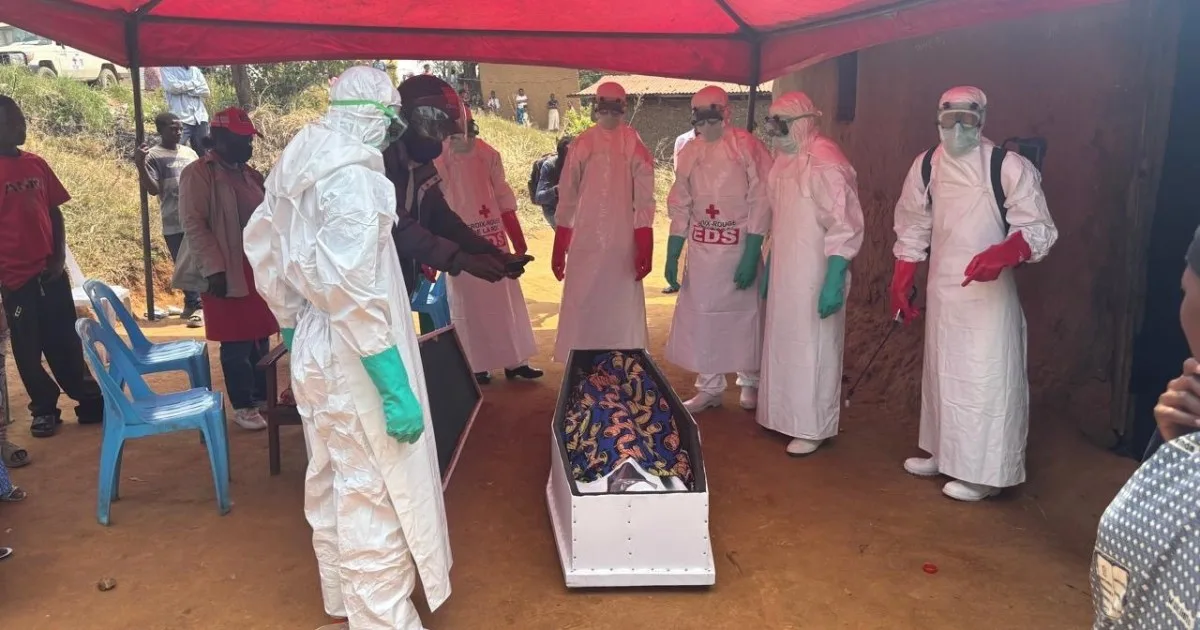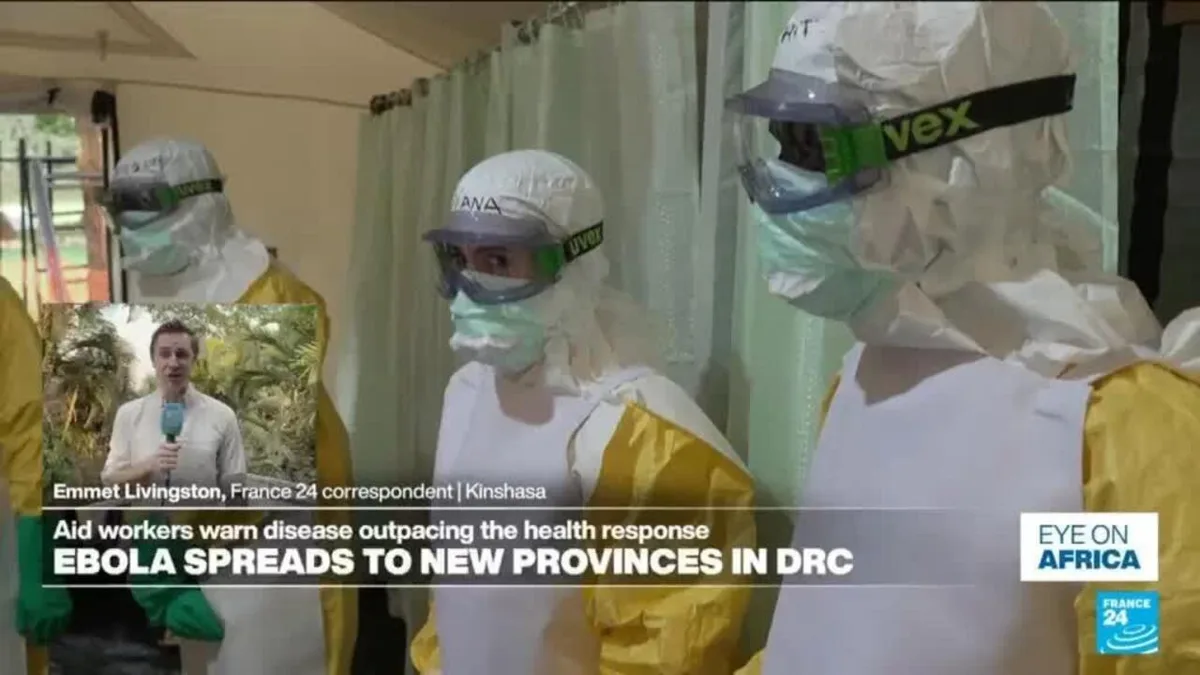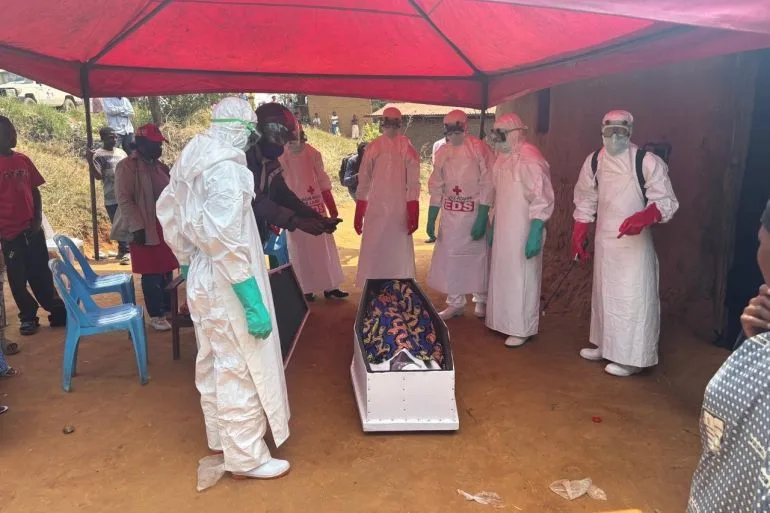
The Ebola outbreak in the Democratic Republic of Congo began in mid-May 2026 and has infected over 2,000 people, with more than 750 deaths reported by mid-July, officials said [1, 2, 3]. The epidemic has spread rapidly across at least 41 to 42 health zones in five provinces: Ituri, Haut-Uele, Nord-Kivu, Sud-Kivu, and Tshopo [1, 2, 3].
WHO Executive Director Chikwe Ihekweazu said "the scale of the outbreak is at least two to four times the number of cases that we have found," citing modeling that shows many infections come from unknown transmission chains [1, 2]. Official counts ranged from around 1,960 to 1,963 confirmed cases with 700 to 719 deaths by mid-July, while Doctors Without Borders (MSF) reported over 2,000 cases and 754 deaths [1, 2, 3].
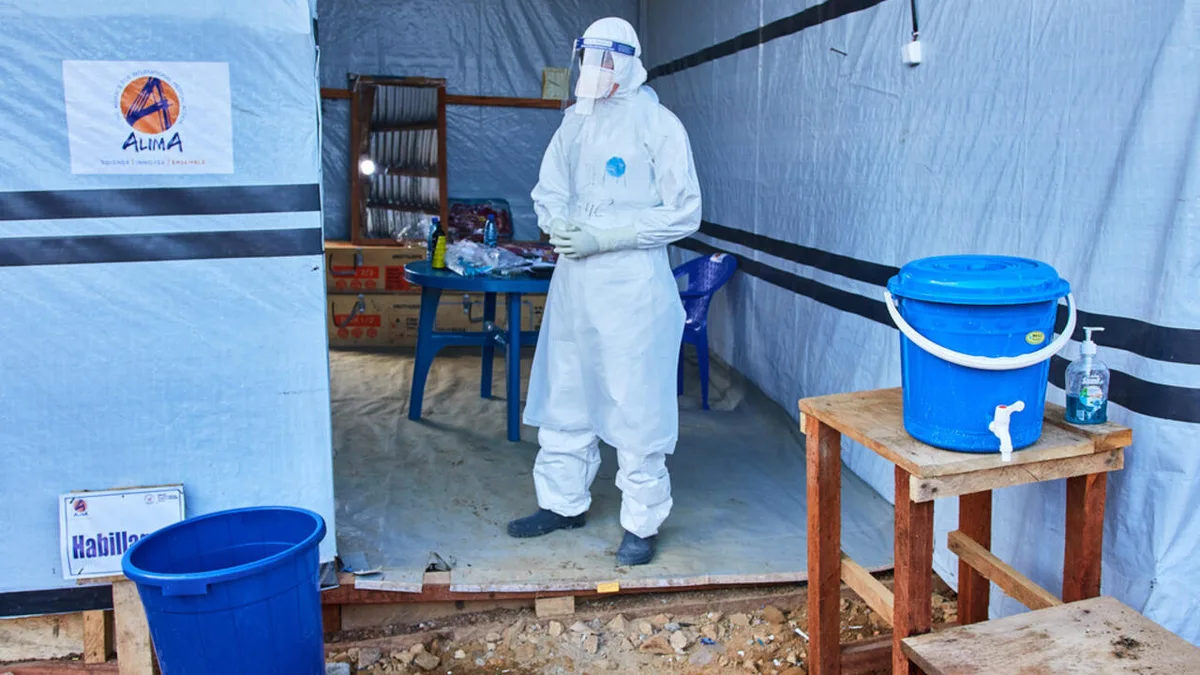
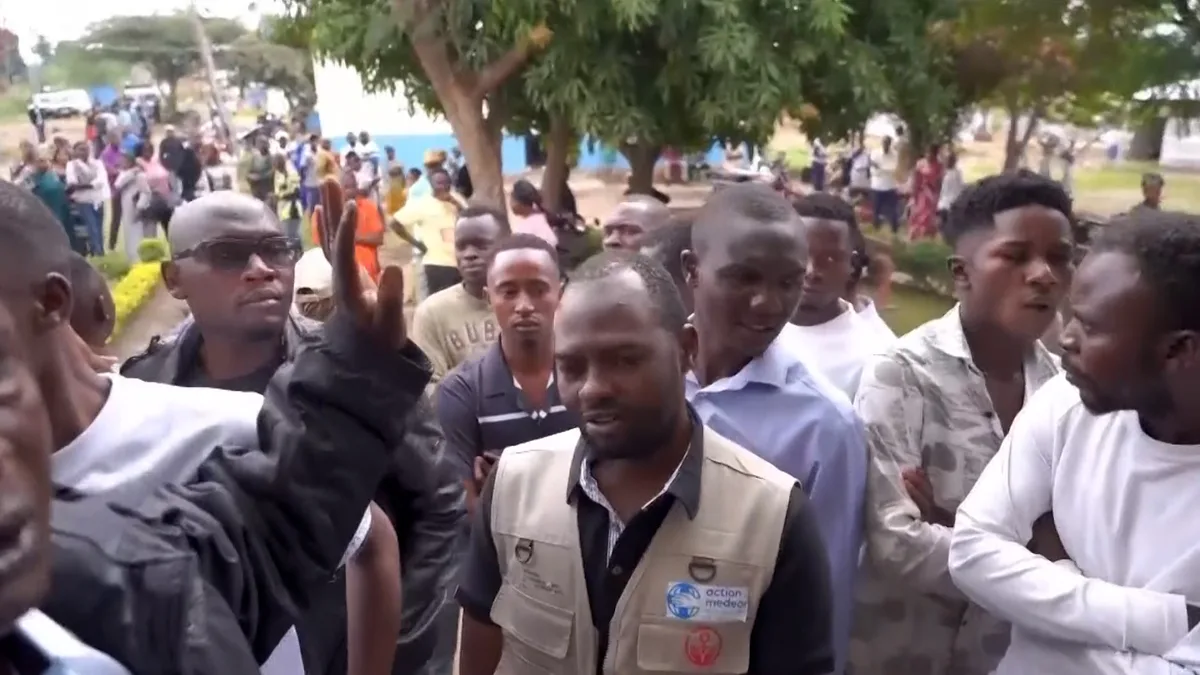
Healthcare workers at Ebola treatment centers have demanded unpaid salaries and protested unsafe conditions. Staff at the Rwampara center in Ituri province, the outbreak's epicenter, burned tires and blocked access roads in strikes between July 13-14 [4, 2]. Physician Pascal Bahoya said, "Since May 15, we have been caring for Ebola patients without pay. We continue to treat them because of our oath, but we are working under very difficult conditions" [2]. Doctor Jeremie Bataga said morale was low but staff remain dedicated to their professional duties [2].
The DRC National Institute of Public Health reported 112 Ebola infections and 35 deaths among healthcare workers by early July [2]. As of July 12, around 727 patients were being treated in Ebola centers across the affected regions [2].
MSF emergency program manager Trish Newport said the outbreak is the third-largest and fastest-growing on record, caused by the Bundibugyo virus. She called for a scale-up of response efforts, stating, "Every delay costs lives. We are still chasing the outbreak instead of staying ahead of it. More people become infected, more families lose loved ones, and the epidemic becomes harder to contain" [3].
The case fatality rate stands at approximately 37.5% according to MSF data [3]. The ongoing strikes and underreporting complicate the response, as healthcare workers face challenges delivering care amid growing caseloads and transmission chains that remain difficult to trace [2, 3].
The outbreak continues to spread as authorities and aid groups assess how to increase containment measures and support frontline workers in the coming weeks.