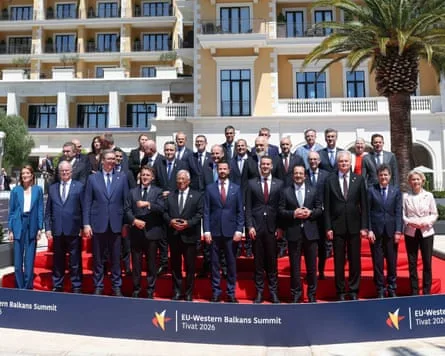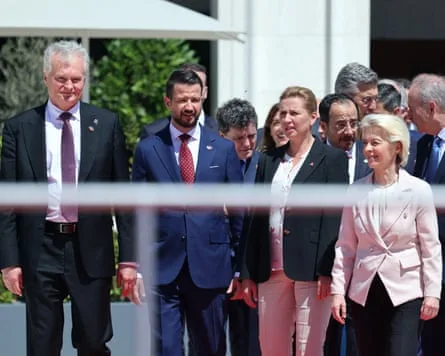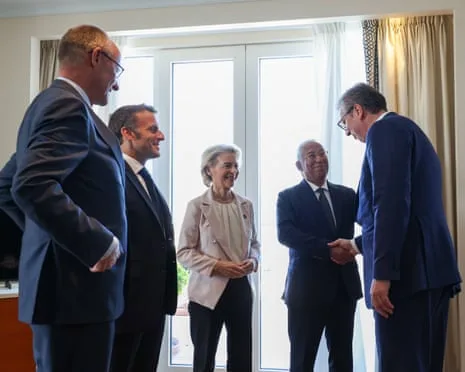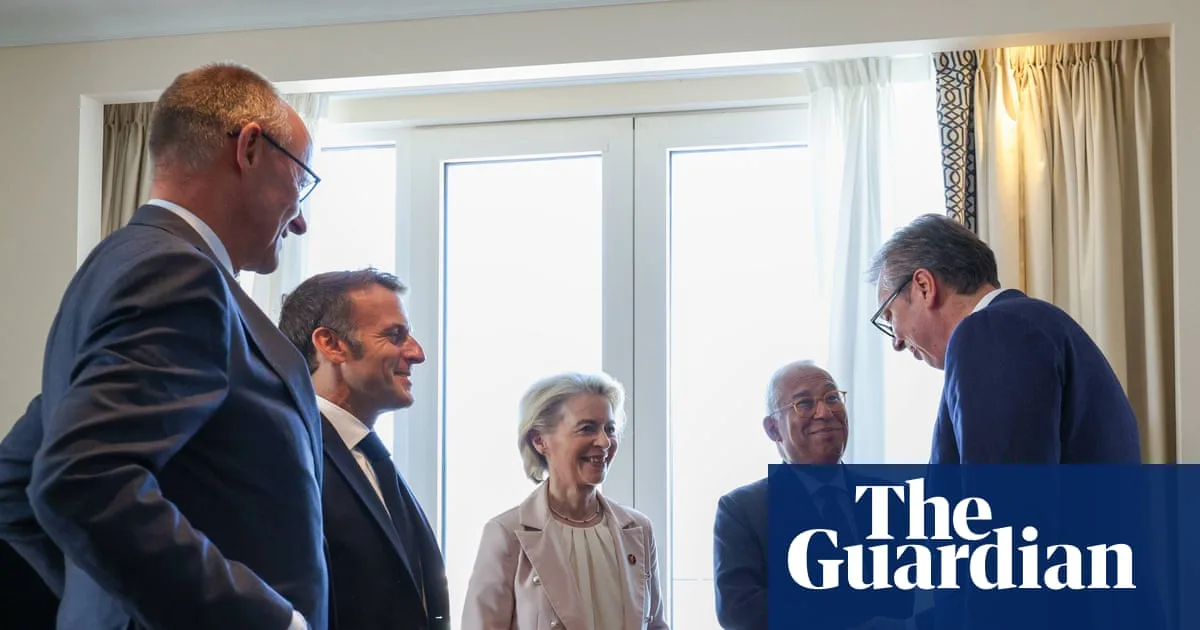
EU leaders and representatives of six Western Balkan countries gathered on June 5, 2026, in Tivat, Montenegro to discuss speeding up the bloc’s enlargement process [1, 2]. The summit stressed the need for the EU to demonstrate both capability and willingness to admit new members, with Germany’s Friedrich Merz saying, "The European Union has to show that it is capable of enlarging and willing to enlarge, and we want to discuss that here" [1].
Montenegro, with a population of 630,000, is the most advanced Western Balkan candidate aiming to join the EU by 2028 [1, 2]. European Council President Antonio Costa said the EU remains committed to enlargement, stating, "Your success is important because it shows that enlargement is becoming real, and we will continue to support you" [2].
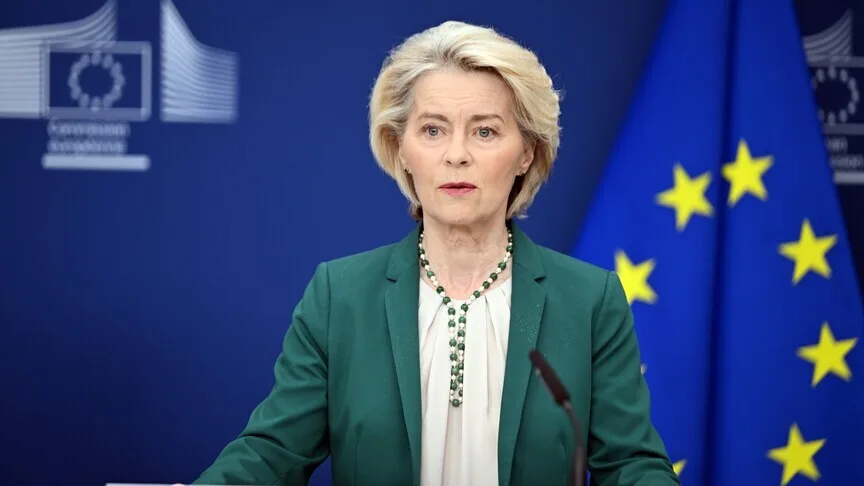
The urgency for enlargement has intensified amid Russia’s war in Ukraine, which also prompts EU consideration of Ukraine and Moldova’s accession [1]. However, the process remains slow and complex, requiring unanimous approval from all 27 member states at each stage [1, 2]. The European Commission’s Ursula von der Leyen emphasized that while enlargement must be merit-based, "merit-based does not mean slow," and called for making the process "faster and more credible." She added that candidate countries moving forward on reforms should see timely progress in opening and closing negotiation chapters [2].
France and Germany have proposed a "gradual integration" model allowing candidate countries limited participation in EU activities before full membership, reflecting an approach to partially bridge the accession process [1]. French President Emmanuel Macron noted, "Together with Germany, we have proposed a strengthened gradual integration process" [1].
Financial support forms a core part of EU engagement in the region. The EU’s Growth Plan for the Western Balkans has committed €675 million with an additional tranche of €540 million forthcoming [2]. The plan links access to single market sectors directly to ongoing reforms and investment by candidate countries [2].
The next key step will be continued implementation of reforms by Western Balkan candidates and follow-up EU decisions on accession chapters, guided by the pledge to make enlargement faster and more credible [2].