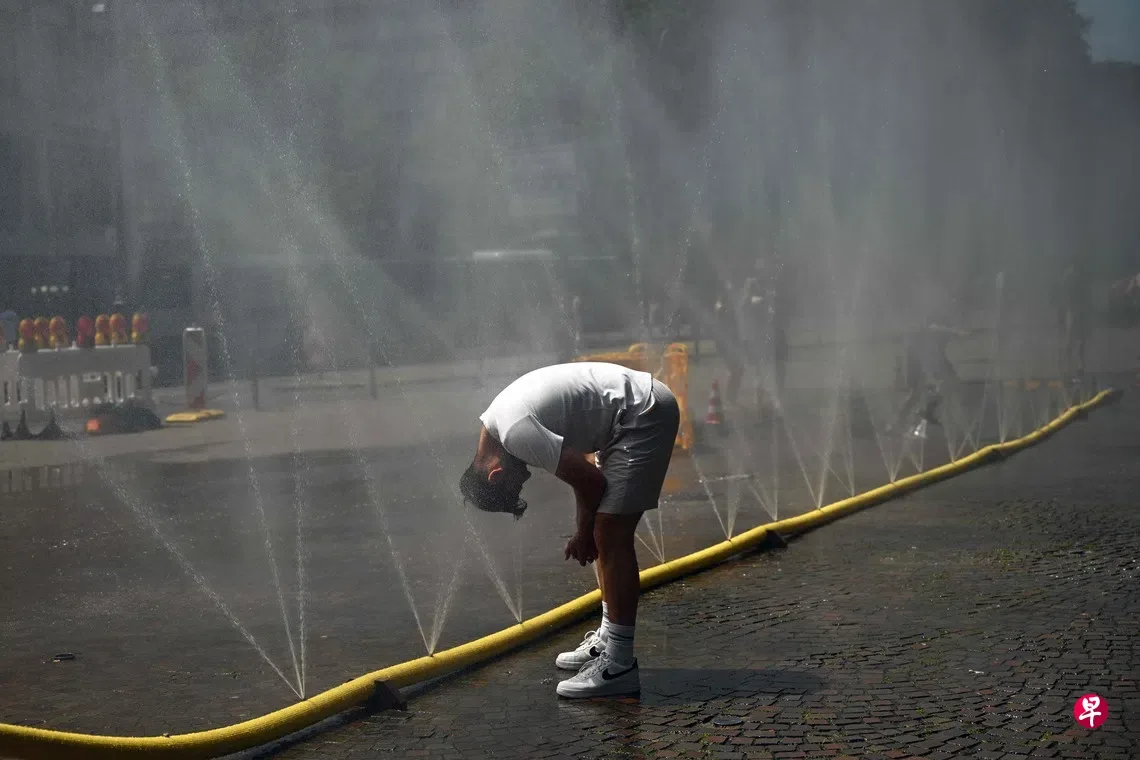
Europe recorded at least 35,000 excess deaths during four consecutive record-breaking heatwaves that began in May 2026, based on incomplete data covering about half the continent [1, 2, 3]. Germany, France, and Spain accounted for more than 25,000 of those deaths. [1, 2, 3]
Germany reported approximately 15,800 heat-related deaths from April through mid-August 2026, marking the deadliest summer in a decade [4, 5, 6, 7, 8]. Nearly 9,600 of those deaths occurred during the last week of June when temperatures surpassed 40°C in many areas [1, 7, 8]. Older adults, especially those 75 and older, were the most affected group in Germany [4, 5, 7, 8]. Medical experts emphasized that many heat-related deaths are not recorded as such, as heat often aggravates pre-existing cardiovascular, respiratory, or kidney conditions rather than appearing as the direct cause on death certificates. Uwe Janssens, medical director of Germany's Interdisciplinary Association for Intensive Care and Emergency Medicine, explained, "Many heat-related deaths are not recorded as such because death certificates list causes like organ failure, even though heat contributed significantly." [1, 4, 2, 3, 7]
Spain reported 4,947 heat-related deaths since May, surpassing its previous record of 4,520 deaths during heatwaves in 2022 [1, 2, 3]. France recorded about 7,300 excess deaths from late May to July 22, though this total covers only 80% of mortality data and excludes August [1, 2, 3]. Other countries affected include England with 2,877 excess deaths, Belgium 1,222, the Netherlands at least 900, Poland about 1,070, and Switzerland around 220 deaths during late June heatwaves [2, 3].
In addition to the human toll, the 2026 summer heatwaves triggered wildfires, severe crop damage, and historically low river water levels across parts of Europe [4, 5, 6, 8].
Germany’s federal government met on August 24-25 to discuss climate change and heat adaptation measures but announced no new policies then [4, 6, 8]. Chancellor Friedrich Merz said, "Germany’s 16 federal states are primarily responsible for heat prevention and will receive 100 billion euros over 12 years from a special climate and infrastructure fund to support related efforts." He added the country’s "relevant plans and funding are not lacking." [6, 8]
Germany’s total heat-related death count was confirmed at about 15,800 as of August 26-27, marking the latest official update [4, 7, 8].