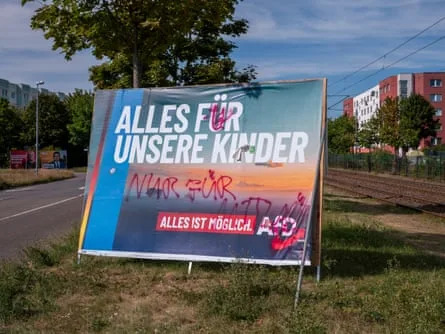
The far-right Alternative für Deutschland (AfD) leads polls with support above 40% ahead of the September 3 state election in Saxony-Anhalt, Germany, positioning it to form the country's first far-right state government since World War II [1, 2, 3].
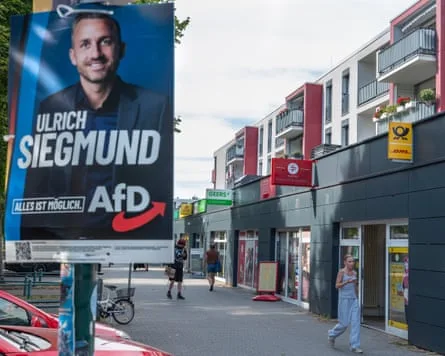
The AfD in Saxony-Anhalt is classified by German domestic intelligence as "firmly rightwing extremist," with many members espousing anti-democratic and far-right extremist views [1, 2, 3]. Its 35-year-old lead candidate, Ulrich Siegmund, a former CDU member, is credited with the party’s surge and is described as "Germany’s most dangerous man" by Der Spiegel [2, 3].
The AfD campaign platform promises a hardline approach on immigration including immediate deportation of all illegal immigrants, abolishing asylum rights, redirecting integration funds to so-called remigration units, and requiring asylum seekers to work under threat of losing benefits [1, 2, 3]. Co-leader Alice Weidel asserted, "We will form the government in Saxony-Anhalt. We will also govern at the federal level" [3].
The main rival, the Christian Democratic Union (CDU) led by Sven Schulze since January 2026, polls just above 20%, while the Left Party, Social Democrats, and Greens trail with approximately 12%, 7%, and 5% support respectively [2, 3]. The AfD’s current polling contrasts with its 20.8% share in the 2021 state election [3].
Minorities and migrants in Saxony-Anhalt express fear and anxiety over the AfD’s likely victory. Fatemeh, an asylum seeker, said, "They might send us back to Iran. As a converted Christian, that could mean the death penalty for me." Undra Dreßler from a migrant umbrella group said, "People are really worried and scared. For those with migrant backgrounds, it feels like this vote is about their right to exist and their security" [1].
Some voters support the AfD for economic and immigration reasons. Mario Jung, a self-described conservative voter, said, "The main reason for me to vote for the (far-right) AfD is the economy. All illegal immigrants... they have to be deported; there is no question about it" [2].
The election is viewed as a bellwether for far-right political influence in Germany and possibly Europe, with potential consequences for Chancellor Friedrich Merz’s coalition government [4, 3]. The state parliamentary vote took place on September 3, with the AfD expected to secure the largest vote share [1, 2, 3].