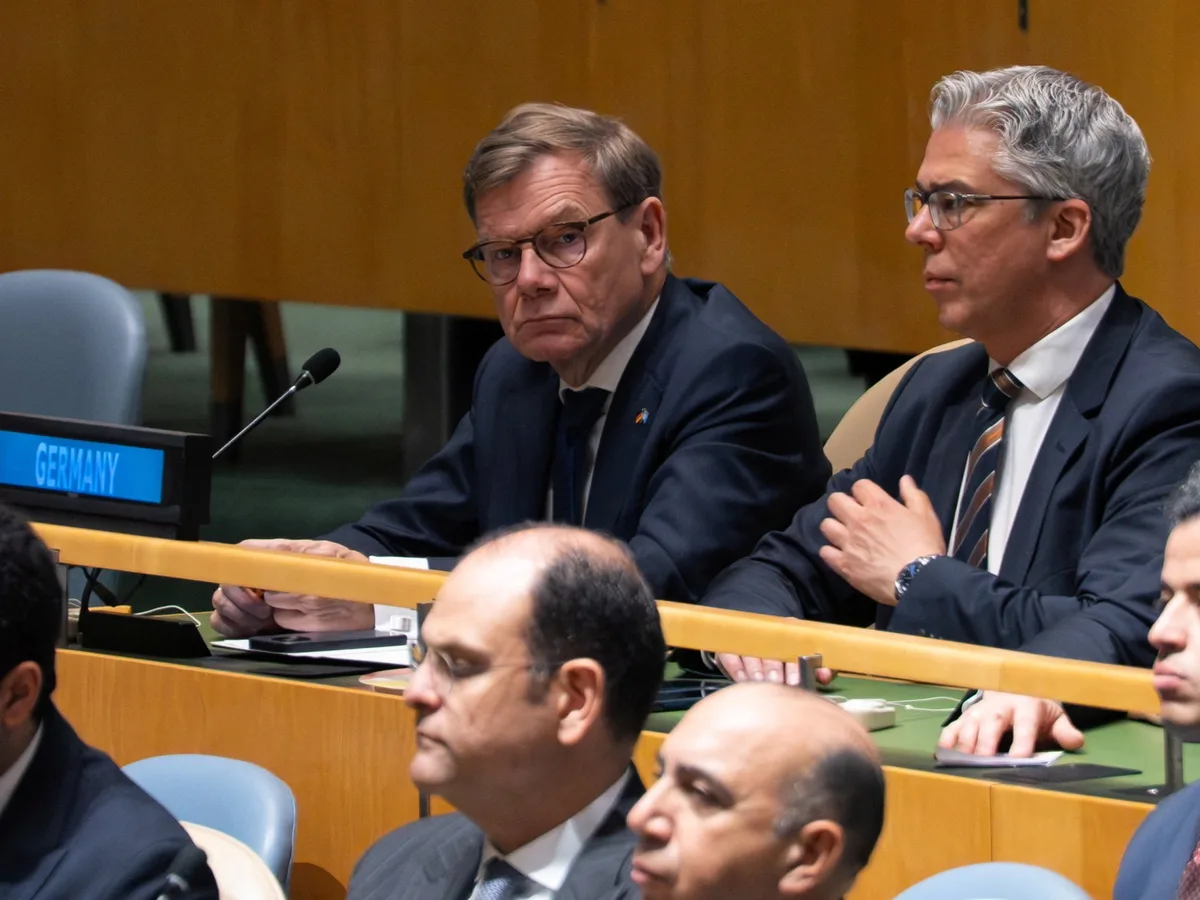
Germany failed to win a non-permanent seat on the U.N. Security Council in a vote held on June 3, 2026, marking the first time it has not served since joining the Council six previous times [1, 2, 3]. Portugal and Austria won the two available Western European seats with 134 and 131 votes respectively, while Germany received only 104 votes [1].
Germany is Europe's largest economy and a member of the Group of Seven industrialized nations [1]. Observers widely attribute Germany's failure to its steady support for Israel amid tensions over the Gaza conflict [2, 3]. Foreign Minister Johann Wadephul acknowledged the political cost, saying, "Germany’s steadfast support for Israel cost it votes" [2]. He also blamed Russia for influencing the outcome [2].
Iran's Foreign Ministry issued a public condemnation on June 5, linking Germany's loss to global dissatisfaction over its Gaza and Israel policies. Spokesman Esmaeil Baghaei said, "Germany’s failure to secure a non-permanent seat on the UN Security Council –– for the first time in decades –– reflects growing global outrage over the German ruling establishment’s irresponsible, hypocritical, and complicit stance toward the genocide in Gaza and US-Israel’s military aggression against Iran." He added, "Those who choose to ignore this shift will inevitably pay a heavy diplomatic price" [3]. Iran also accused Germany of being one of Israel’s largest weapons suppliers and criticized its political support for Israeli actions [3].
Meanwhile, Zimbabwe and Trinidad and Tobago were elected without competition to the African and Latin American seats, receiving 182 and 181 votes, respectively [1]. A second round of voting was ongoing between the Philippines and Kyrgyzstan for the Asian seat as of June 3 [1].
The newly elected members will begin their two-year terms on January 1, 2027 [1].