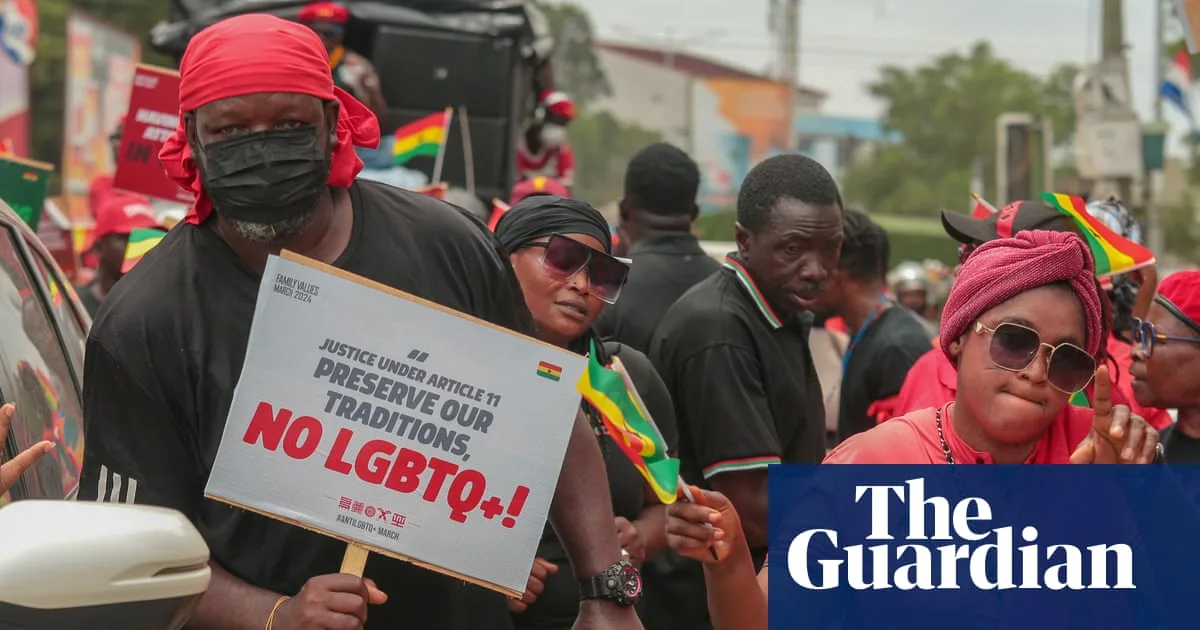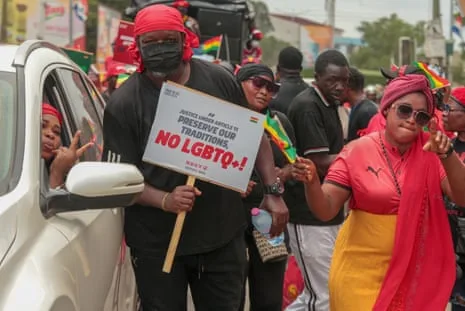
Ghana's parliament approved a sweeping bill in 2026 that criminalises LGBTQ+ activities, including identifying as LGBTQ+ and promoting such activities, with prison sentences ranging from three to ten years [1]. The legislation also targets individuals who act as LGBTQ+ allies, subjecting them to possible imprisonment [2].
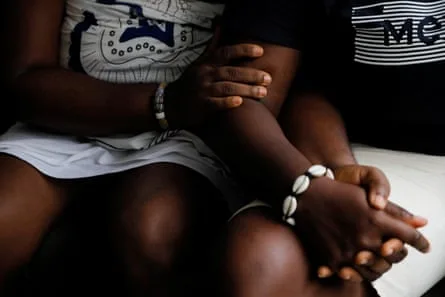
The bill provides exemptions for healthcare workers, lawyers, and media professionals who offer services to LGBTQ+ people, protecting them from prosecution [2, 1]. However, LGBTQ+ community groups warn the law is fueling fear among affected individuals, causing concerns over eviction, job loss, and restricted access to healthcare. Leila Lariba, director of One Love Sisters Ghana, said, "People are panicking and scared. The new bill affects where you are staying; it can get you evicted; it can lead you to lose your job. No matter how safe you think you are, you do not know who’s ready to talk" [1].
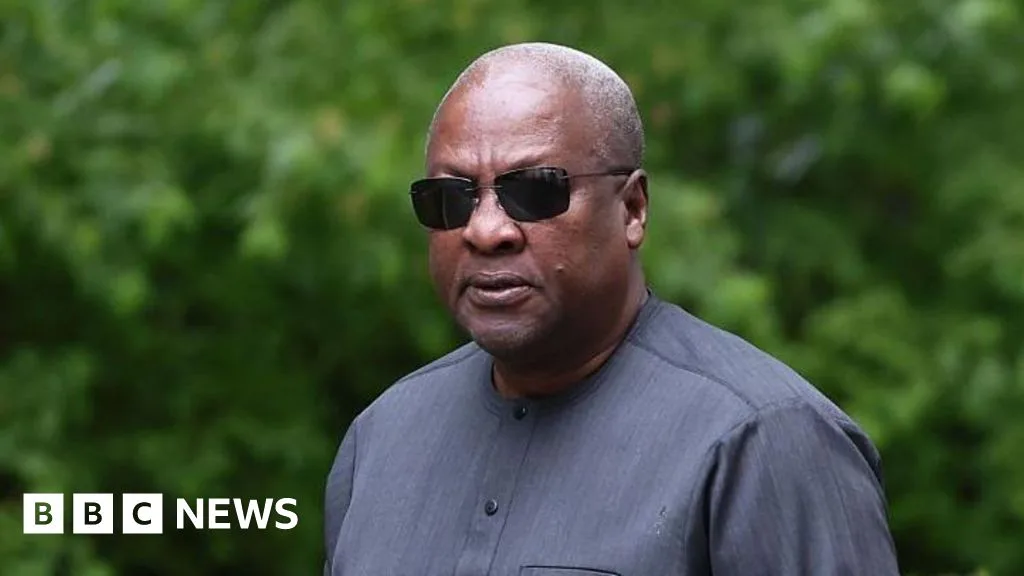
The bill's passage was marked by procedural lapses that Speaker of Parliament is addressing, and President John Dramani Mahama has indicated the law will undergo legal scrutiny. Speaking in London on August 17, Mahama said, "We will look at it and make sure that everything is in order," and the bill might be referred to the Council of State before being signed into law [2].
Similar legislation was introduced in 2021 following the closure of an LGBTQ+ centre in Accra and passed parliament again in 2024, but then-President Nana Akufo-Addo did not sign it amid Supreme Court challenges [2]. Some minority party MPs voiced concern that the 2026 bill weakens deterrence compared to the 2024 version. John Ntim Forjour, a minority party spokesperson, said, "The bill appears, and not only appears, substantially has lost the force and the bite and the thrust, the deterrence, the efficacy that it contained and carried in 2024" [2].
The bill was approved by parliament on June 1, 2026, and awaits final approval and signature from President Mahama [1].