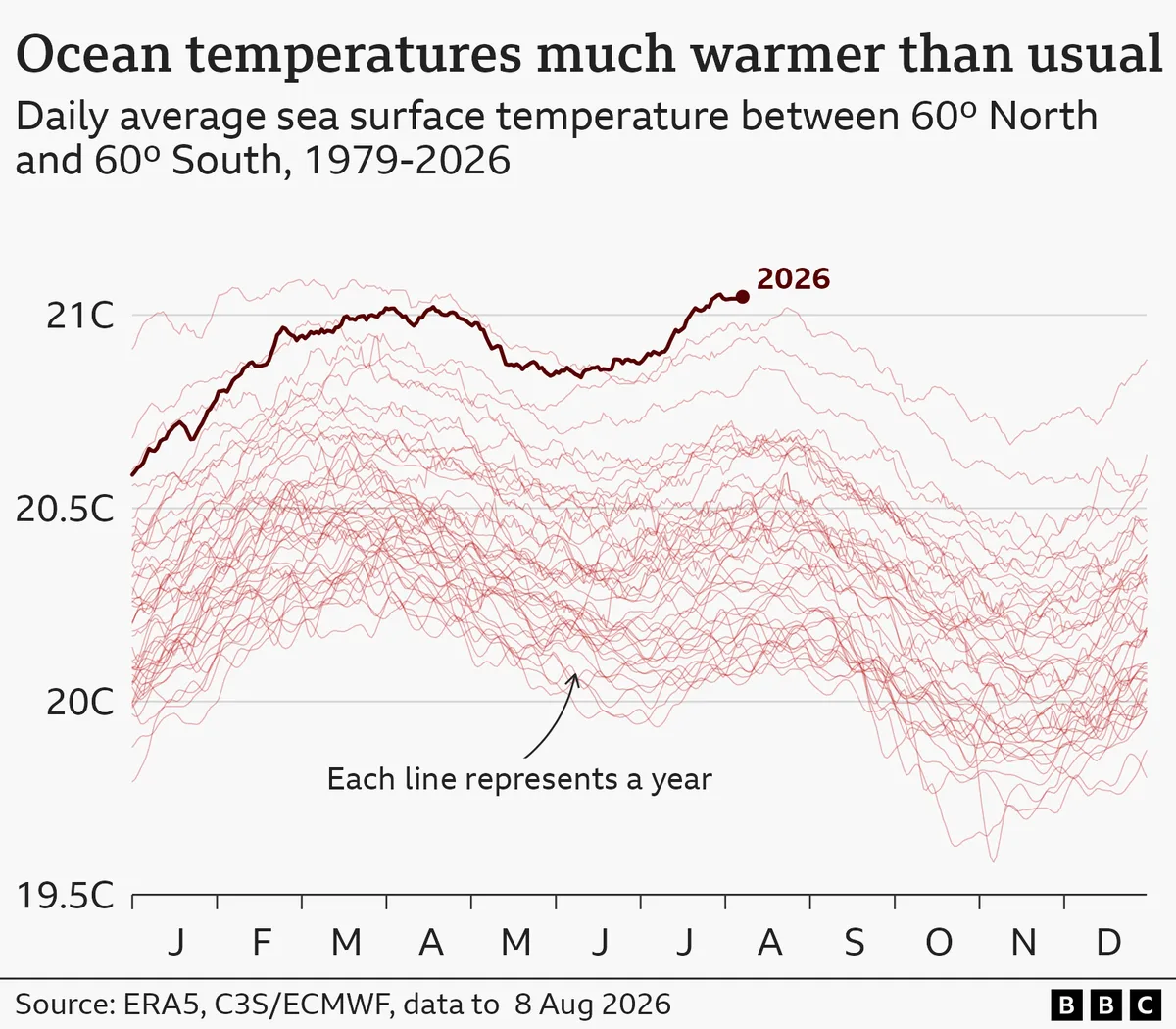
The global ocean surface temperature between 60°N and 60°S hit a record high of 20.96°C in July 2026, exceeding the previous July record of 20.89°C set in 2023 [1, 2, 3]. July 2026 tied with July 2024 as the second warmest July worldwide, behind only 2023 [1, 2, 3]. The global average surface temperature in July 2026 reached 16.9°C, 1.47°C above the pre-industrial (1850–1900) average [2, 3].
El Niño conditions developed and strengthened in the tropical Pacific, contributing to the higher sea surface temperatures observed [1, 2, 3]. Among land regions, Western Europe recorded its highest June and July average temperature at 21.62°C, which is 2.79°C above the 1991–2020 average and surpassed the previous record set in 2022 [1, 2, 3].
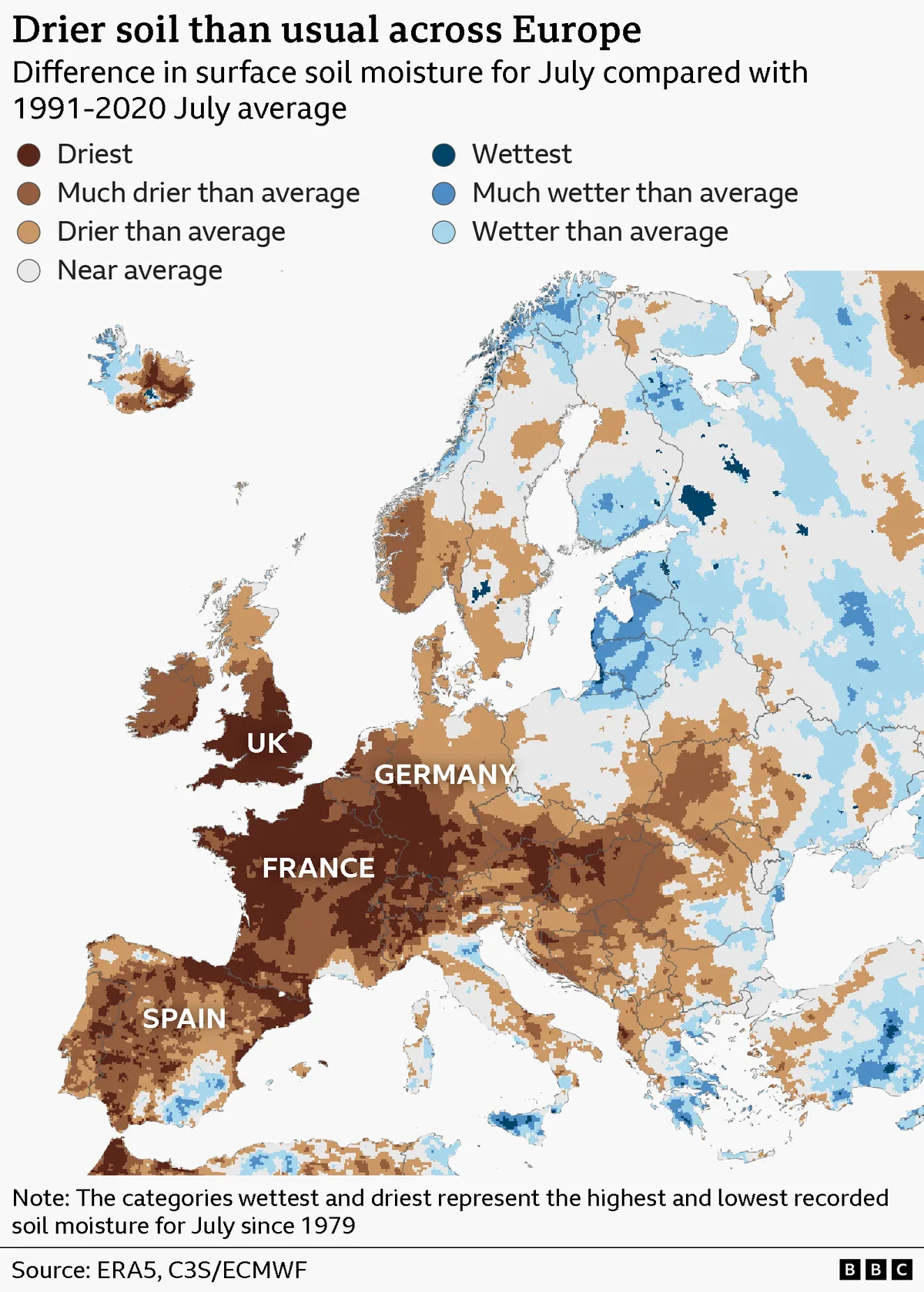
Drought worsened throughout July 2026 across western and central Europe. Countries including France, Spain, Germany, and the UK suffered from abnormally low rainfall and soil moisture deficits [2, 3]. Low water levels in key rivers such as the Seine, Rhine, and Danube affected water supply, agriculture, river transport, ecosystems, and energy production in the region [2, 3].
Oceans have absorbed most of the excess heat from greenhouse gas emissions. Their warming drives sea-level rise through thermal expansion and intensifies marine heatwaves and tropical storms [1].
On August 10, the EU’s Copernicus Climate Change Service officially released its report confirming the July 2026 ocean temperature record alongside the European heat and drought impacts [2, 3].