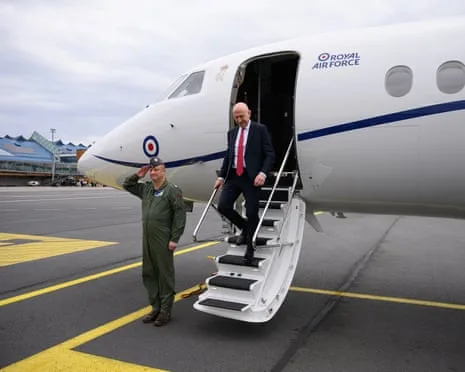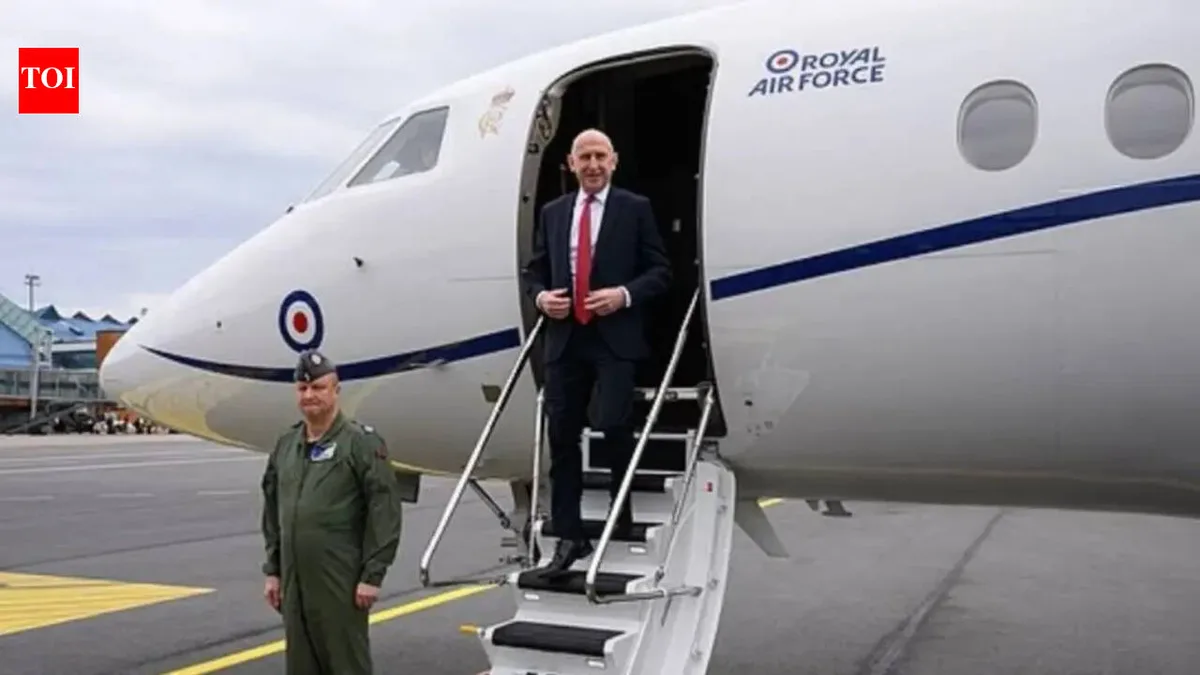
An RAF Dassault Falcon 900LX jet carrying UK Defence Secretary John Healey had its GPS signals jammed for nearly three hours while flying close to the Russian border during a return flight from Estonia to the UK on May 21, 2026 [1, 2]. The jamming disabled onboard GPS and internet connectivity for smartphones and laptops, forcing pilots to rely on alternate navigation methods [1, 2].
The GPS interference is suspected to be deliberate electronic disruption originating from Russia, though it remains unclear if Healey was specifically targeted as the flight path was publicly visible on tracking platforms [1, 2]. Prior to the flight, Healey met Estonia’s Defence Minister Hanno Pevkur in Tallinn to discuss bilateral defence cooperation and strategic expansion [1].
The UK Ministry of Defence commented the attack was "reckless Russian interference," adding the RAF is well prepared to handle such threats [2]. Healey praised the RAF crew’s professionalism and bravery, stating the incident "will not deter the UK’s commitment to defend Nato, our allies and our interests from Russian aggression" [1].
This jamming episode follows a pattern of recent Russian military activity targeting UK air and naval operations. Last month, two Russian fighter jets—an Su-35 and an Su-27—dangerously intercepted an RAF Rivet Joint spy plane over the Black Sea. The Su-35 disabled the plane’s autopilot, and the Su-27 made six passes within six meters of the RAF aircraft [1, 2].
In March 2024, an RAF plane carrying then-Defence Secretary Grant Shapps had its GPS signal jammed for about 30 minutes near Russian territory [1]. The UK also tracked three Russian submarines loitering near critical undersea infrastructure in the North Atlantic for approximately one month before their departure [1].
The GPS jamming on Healey’s flight lasted nearly three hours and cut off essential electronic navigation aids, presenting a significant operational challenge for the crew [1, 2]. The UK Ministry of Defence has yet to announce any direct response but continues monitoring Russian interference closely.
Officials are expected to review security protocols for UK Defence Secretary flights and consider measures to mitigate future electronic attacks.