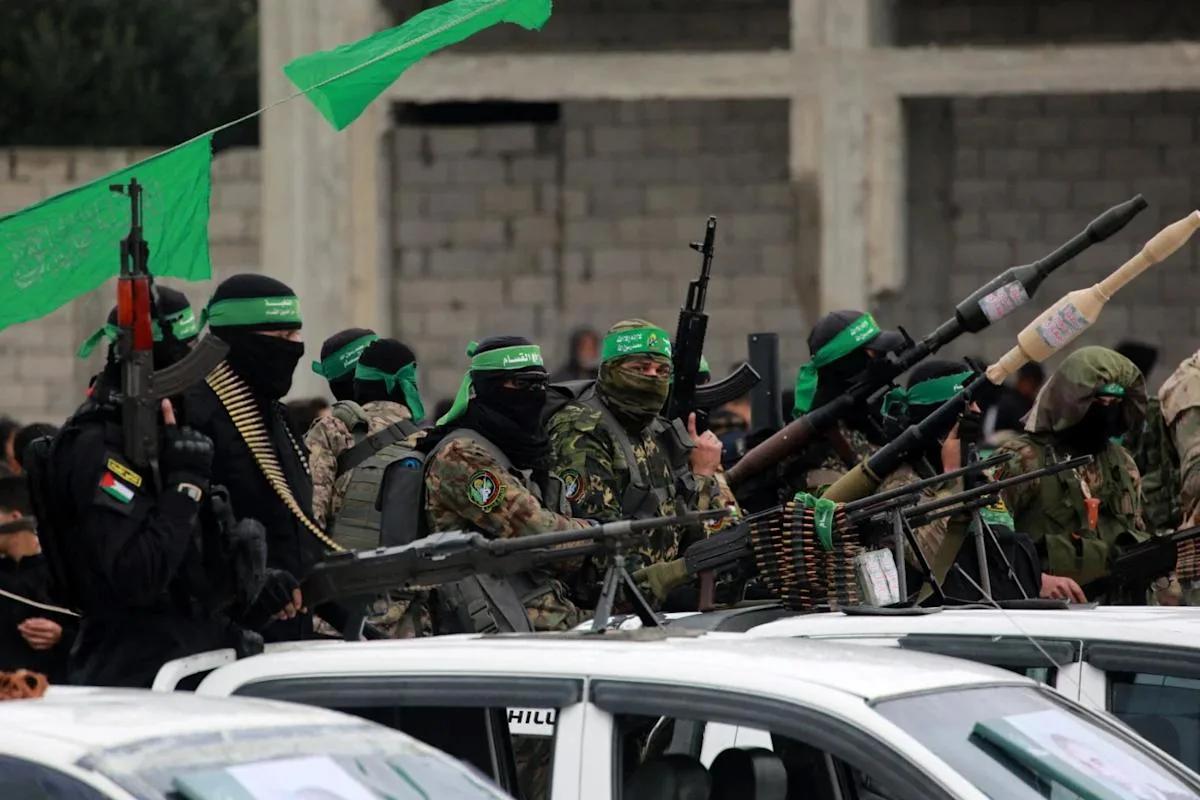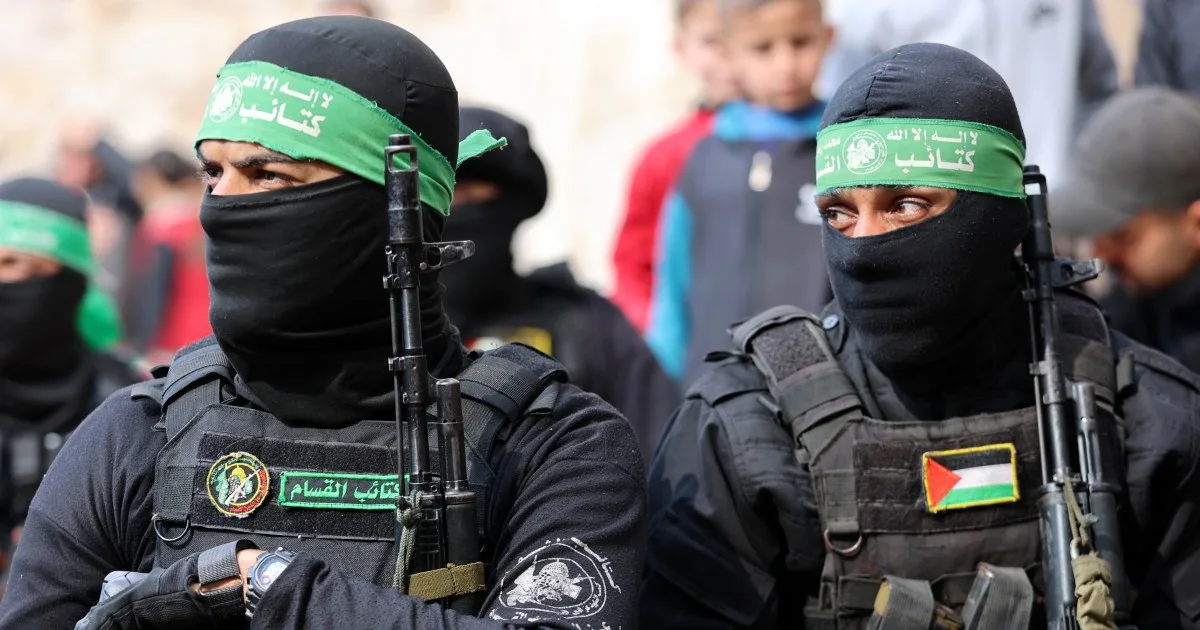
Hamas announced that once the National Committee for the Administration of Gaza (NCAG) assumes control, only official Palestinian police will carry visible weapons in Gaza’s streets, signaling a significant curtailment of armed presence outside formal law enforcement agencies [1, 2]. Husam Badran, a Hamas political bureau member, stated, "When this Palestinian committee comes to take over the Gaza Strip, there will be no visible weapons in the streets and alleys of Gaza except the official weapons belonging to this committee, which is the official Palestinian police" [1]. He clarified, "We are not talking about handing them over; we are talking about, at least, weapons not being visible except for the official weapons of the Palestinian police" with further details to be decided within a national framework [1].
Despite this statement, Hamas reiterated it will not disarm at this stage. The group made clear that the fate of its military arsenal will be determined after comprehensive discussions with other Palestinian factions [1, 2]. Hamas is set to send a delegation to Cairo for renewed negotiations involving eight Palestinian factions aimed at forming a unified stance on a US-brokered ceasefire plan initiated in October 2025 [1]. These talks are scheduled for this weekend [1, 2].
Hamas delayed its participation in past talks to demand an end to ongoing Israeli assassinations of military leaders such as Izz al-Din al-Haddad and Mohammed Odeh. The delay was intended to create a more favorable negotiating environment [1, 2]. Hamas accuses Israel of fulfilling less than 30% of its phase one ceasefire obligations, including continuing targeted killings and limiting humanitarian aid to Gaza [2]. According to Hamas, roughly 70% of Israel’s ceasefire commitments remain unmet [2].
Humanitarian aid trucks entering Gaza number between 150 and 250 per day, far below the agreed 600 daily vehicles, leaving vital infrastructure devastated [2]. Palestinian political analyst Wissam Afifa said Israel is "using the so-called 'negotiation time' to exhaust the local population’s will through escalating conflict" [2].
US and Israeli officials have conditioned the advancement to the ceasefire's second phase and Israeli troop withdrawal on Hamas’s verified disarmament and the deployment of an International Stabilization Force (ISF) [2].
The upcoming Cairo talks this weekend will include eight Palestinian factions working toward a common position on the ceasefire and disarmament framework [1]. These negotiations follow Hamas’s recent articulation of limiting visible weapons to official police ahead of NCAG governance, signaling possible shifts in Gaza’s security landscape [1, 2].
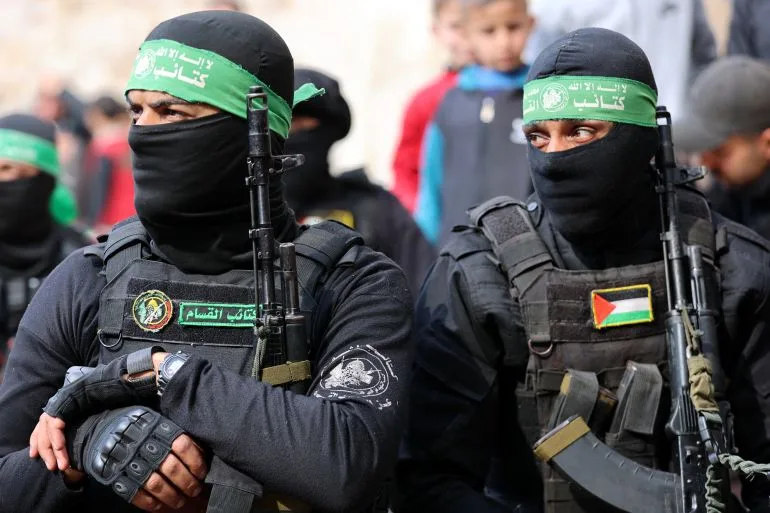
![Hossam Badran, a member of the Hamas Political Bureau, spoke exclusively to Al Jazeera about the group's vision for a long-term Hudna in Gaza. [Mohammad Mansour/Al Jazeera]](/uploads/2026/06/05/cf3a905bd6eb8b8a3afa1da2.webp)