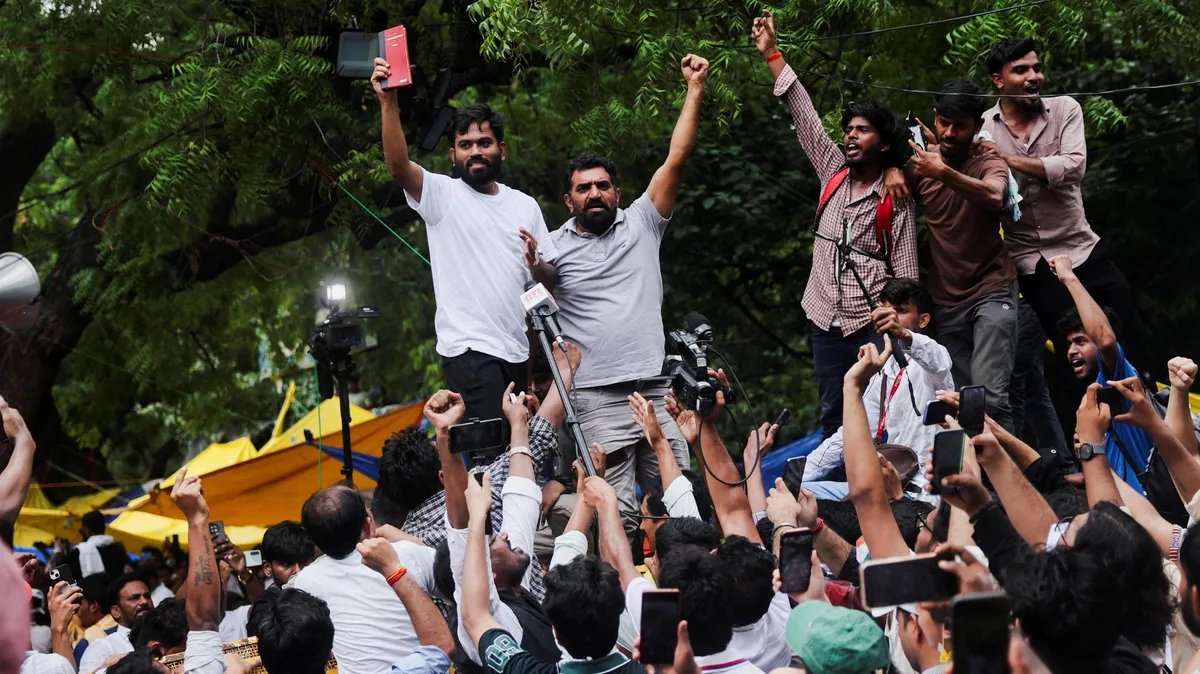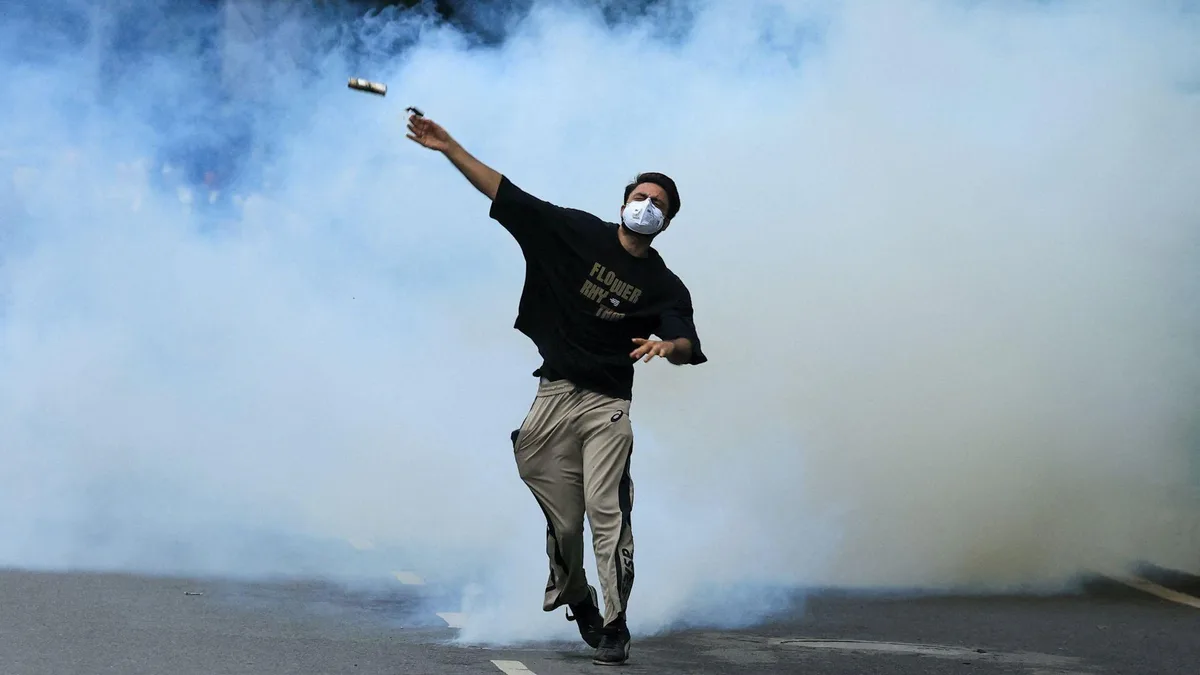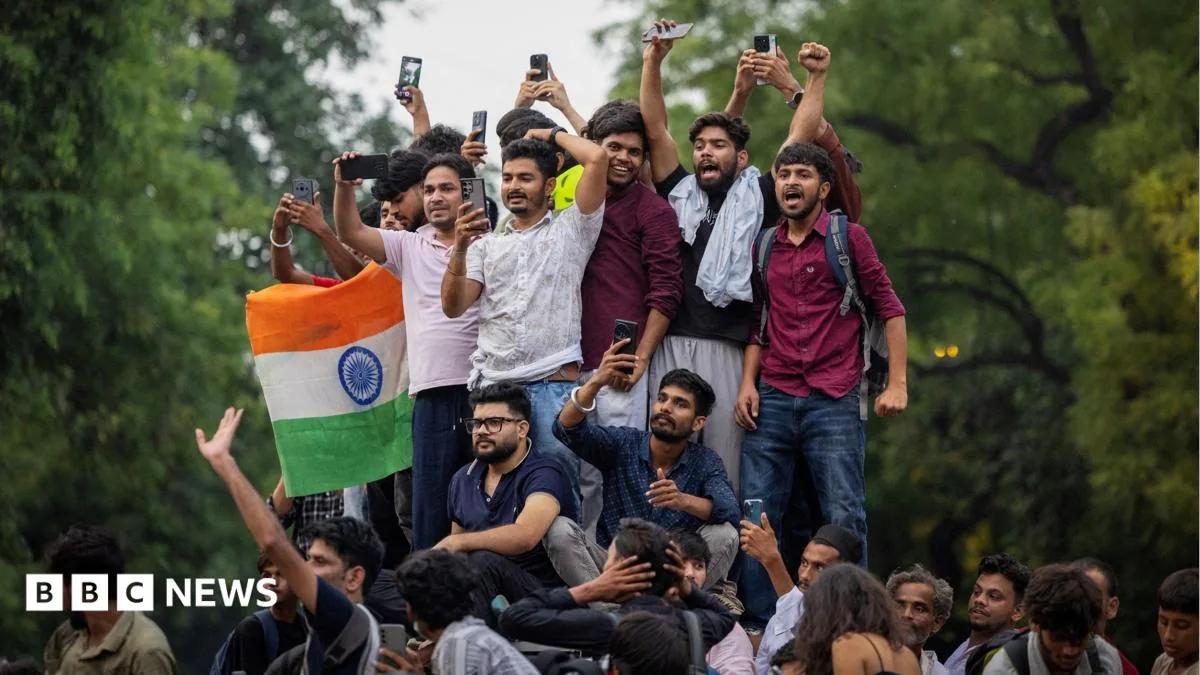
Thousands of protesters, mainly young students and Gen Z, gathered in Delhi demanding the resignation of Education Minister Dharmendra Pradhan over exam paper leaks and failures in the education system, affecting over 2 million students [1, 2, 3, 4, 5]. The protests were led by the Cockroach Janta Party (CJP), a youth movement founded in May as a satire inspired by a remark from India’s chief justice [1, 2, 3, 6, 5, 7].
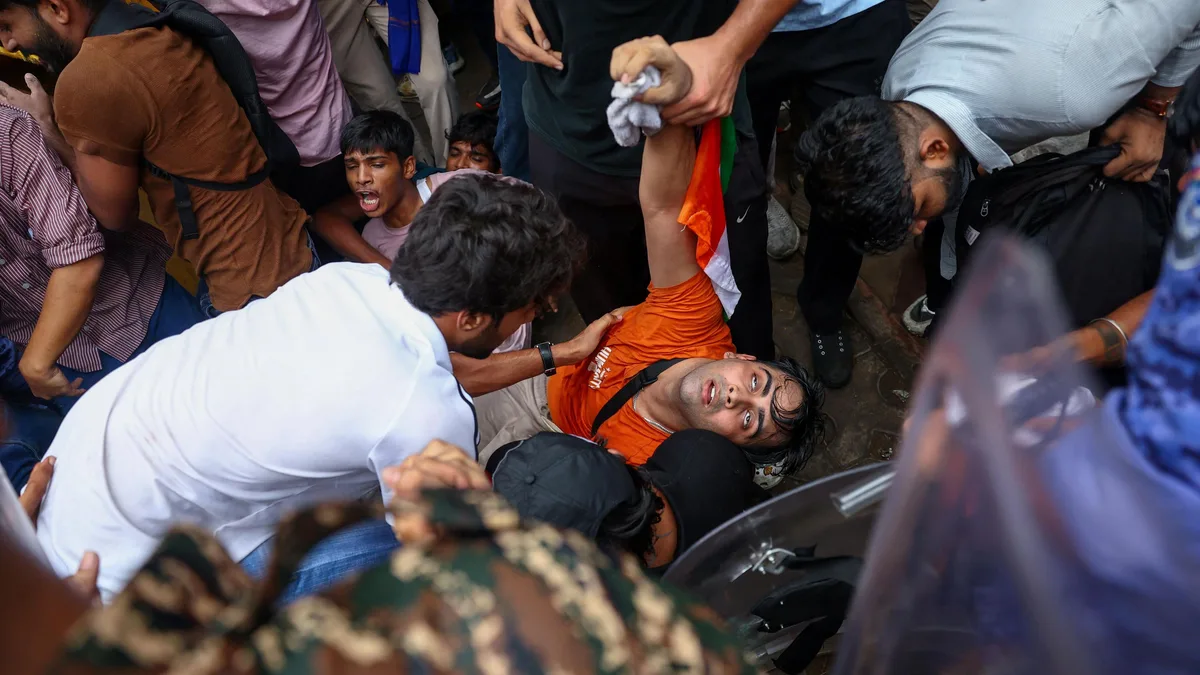
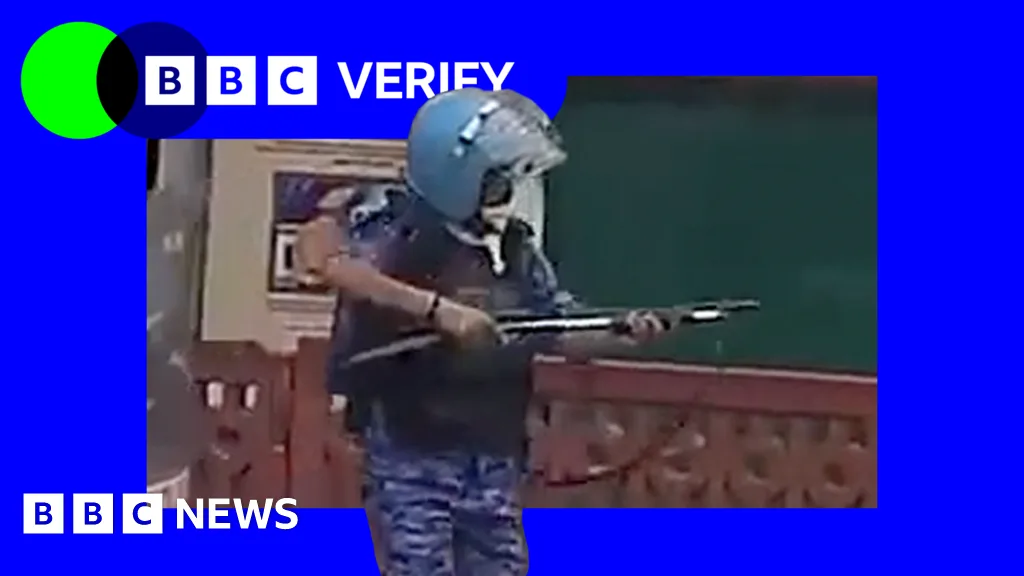
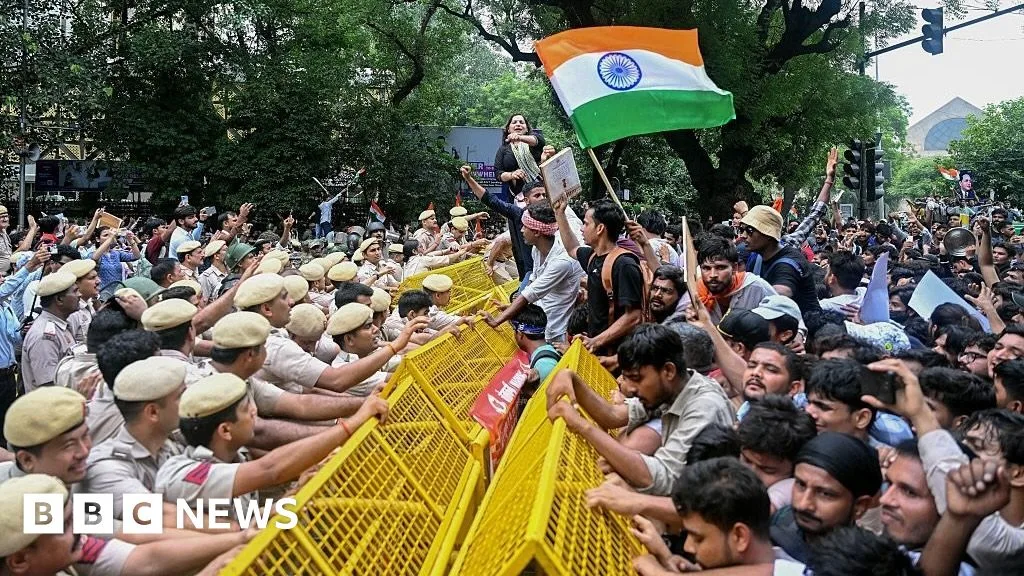
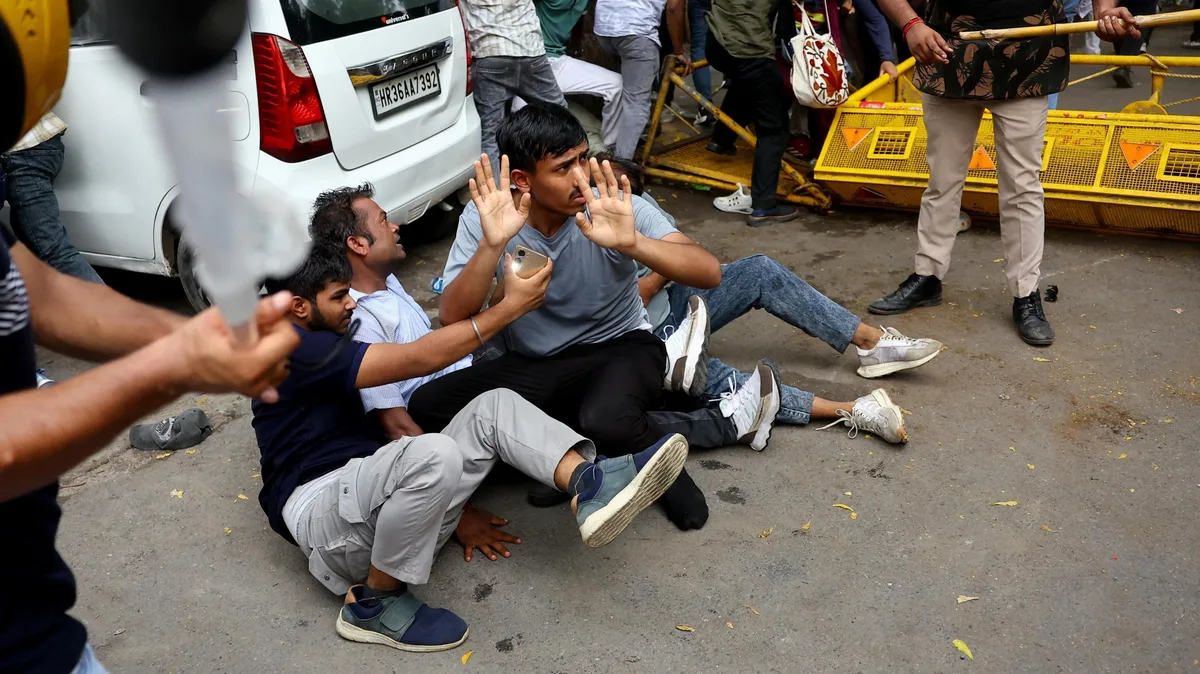
The protest reached a peak on July 20, when tens of thousands attempted a march to parliament. Police banned the march, barricaded roads, and used baton charges, tear gas, and pellet guns to stop demonstrators. The peaceful morning protest escalated into violent clashes in the afternoon, with police dismantling protest tents at Jantar Mantar [2, 8, 4, 9, 5, 7, 10, 11]. Protesters like Rhythm Katoch said, "They are calling this protest illegal, they are calling us anti-national, but I am 22 years old and I am standing here to fight for our education system, for the rights of the young people and for our democracy" [5].
Before this, activist Sonam Wangchuk began a hunger strike on June 28 at Jantar Mantar supporting the protests but was forcibly hospitalized by police on July 18, which galvanized further public support [2, 4, 9, 7, 10]. The demonstrations continued strongly despite police crackdowns and internet shutdowns [11]. Protester Taru said, "We need to have protection in case Delhi police beat us up again. We are not scared of them and we won’t run away, no matter what they do. We’ll stay here till they listen" [11].
The CJP, led by 30-year-old Abhijeet Dipke, organized this five-week campaign demanding greater educational reforms and an end to corruption in examination processes after repeated exam paper leaks [2, 6, 4, 9, 5, 7]. On July 24, Pradhan announced his resignation, stating it was to prevent "anti-national forces from exploiting" the situation and to preserve national unity while allowing students to focus on their studies [6]. The CJP called off the protests, with Dipke declaring, "We have done it" [6].
The protest became one of the largest and most visible youth-led dissent movements against Prime Minister Narendra Modi’s government in recent years [2, 3, 6, 5, 11]. The resignation marks a significant development after weeks of escalating unrest triggered by the education crisis.