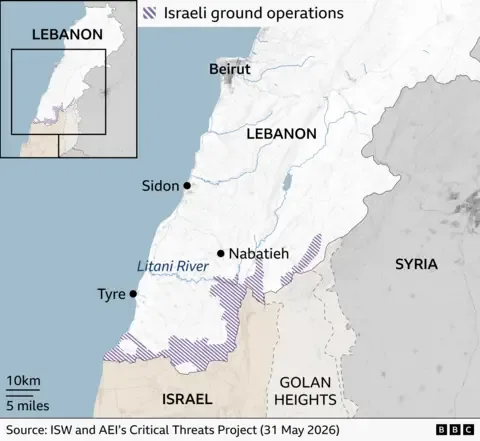
Israel and Lebanon agreed on June 3 to implement a ceasefire contingent on Hezbollah’s full halt of fire and withdrawal from the South Litani Sector in southern Lebanon, after US-mediated talks in Washington [1, 2, 3].
The agreement requires the Iran-aligned Hezbollah militia to cease all attacks and evacuate its operatives from the designated area in southern Lebanon. The deal also involves setting up "pilot zones" where only the Lebanese Armed Forces would operate, excluding Hezbollah and other non-state groups [4, 1, 2, 5, 3].
Hezbollah was not directly involved in the negotiations and has rejected the ceasefire, describing it as a surrender that serves Israel’s aims. Deputy leader Naim Qassem said, "You cannot have a ceasefire from one side, it's going to be an all side or no ceasefire." He called the agreement "humiliating" [4]. A Beirut storekeeper, Sami, echoed the view, calling it "a surrender agreement" rather than peace [4].
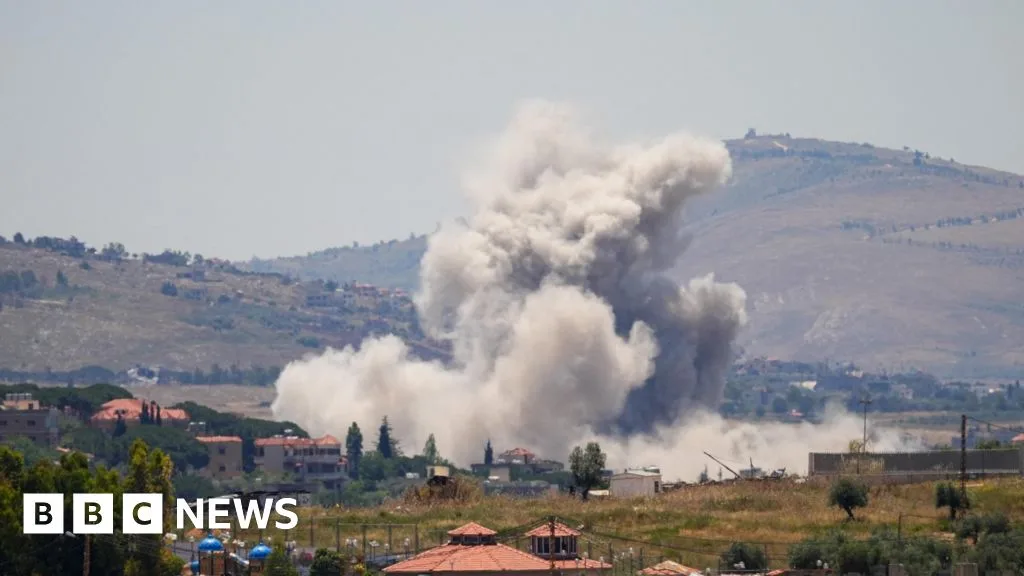
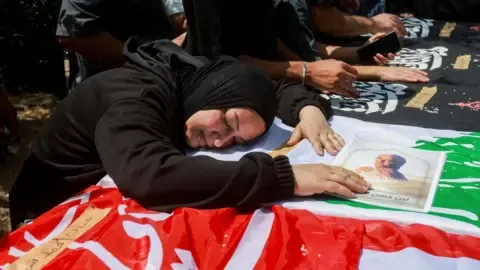
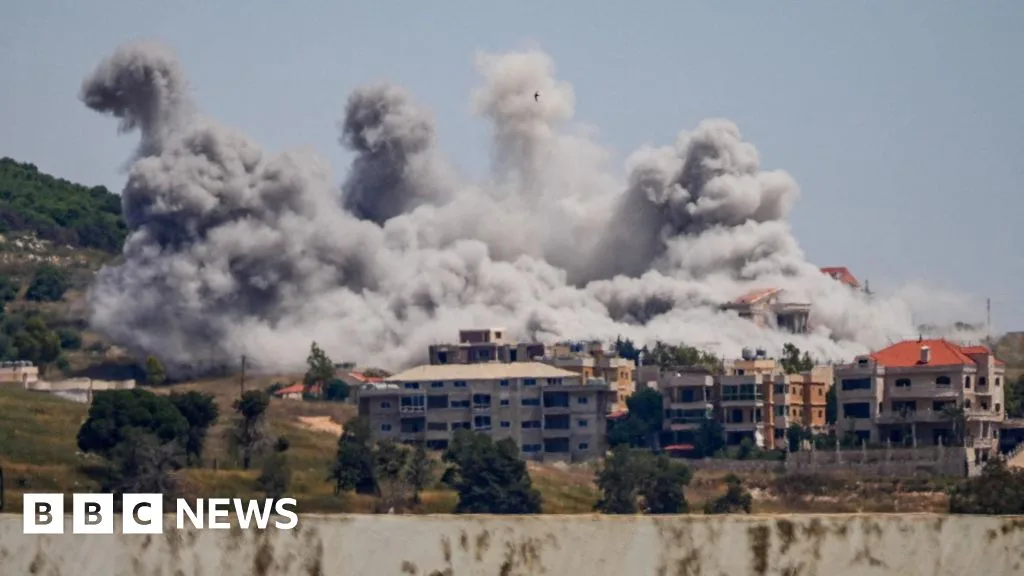
Despite the ceasefire announcement, violent incidents continued on June 3. Israeli air strikes killed at least nine people in southern Lebanon, including two paramedics. Meanwhile, Hezbollah fired rockets into northern Israel the same day [6, 3]. The ceasefire remains fragile amid ongoing clashes [6, 4, 3, 7].
Israeli Defence Minister Israel Katz said on June 4 that the military would continue strikes in Lebanon for now and would not withdraw from southern areas [7].
Lebanese and Israeli diplomats held follow-up talks in Washington on June 3 to discuss broadening the ceasefire and unresolved issues [6, 1, 2, 3]. Lebanese President Joseph Aoun said the ceasefire would take effect within 24 hours of approval by all parties [7].
The conflict began on March 2 when Hezbollah launched rockets into Israel, triggering an Israeli invasion of southern Lebanon [6, 8, 1]. Since then, at least 3,516 people have died in Lebanon and over one million are displaced, according to Lebanon’s health ministry [6].
Iran has declared that a ceasefire in Lebanon is vital for any wider US-Israel-Iran deal and reaffirmed its support for Lebanon and Hezbollah [9, 10, 7, 11]. US President Donald Trump announced the ceasefire, saying he spoke with Israeli Prime Minister Netanyahu and representatives he described as Hezbollah intermediaries, claiming "all shooting will stop," though official US-Hezbollah communication remains unconfirmed [8, 3, 7].
The next steps focus on the implementation of the ceasefire terms, with all parties expected to confirm approval and Lebanese government forces expanding control in the pilot zones deprived of Hezbollah operatives [7, 11].