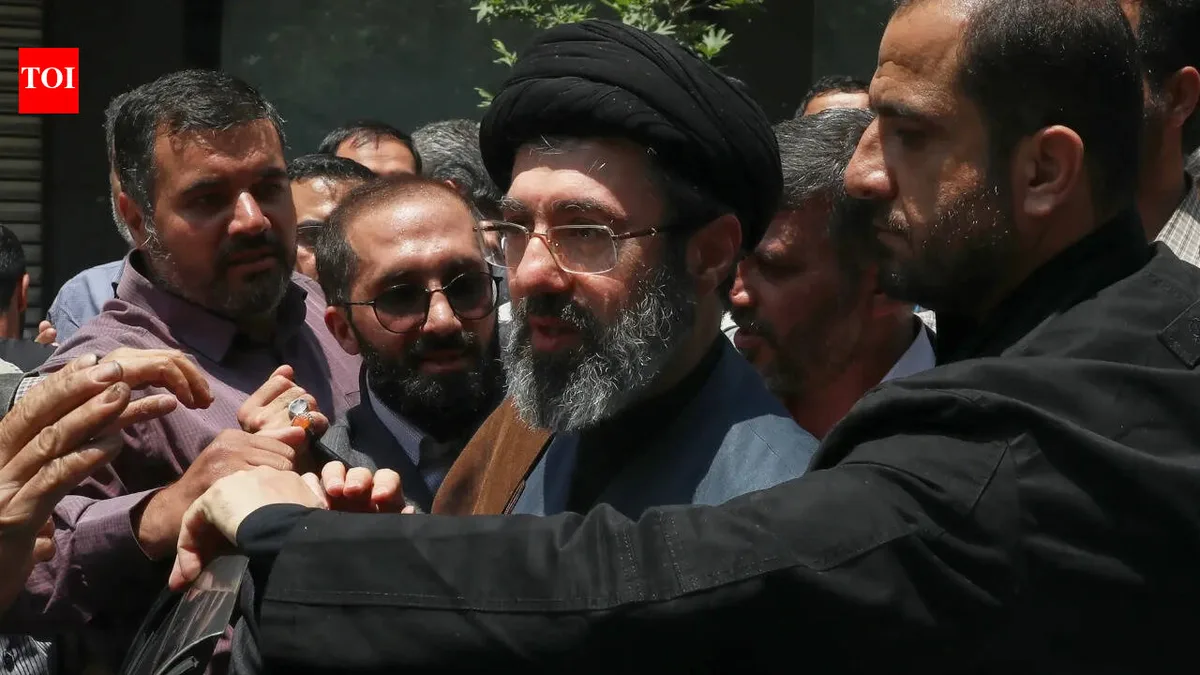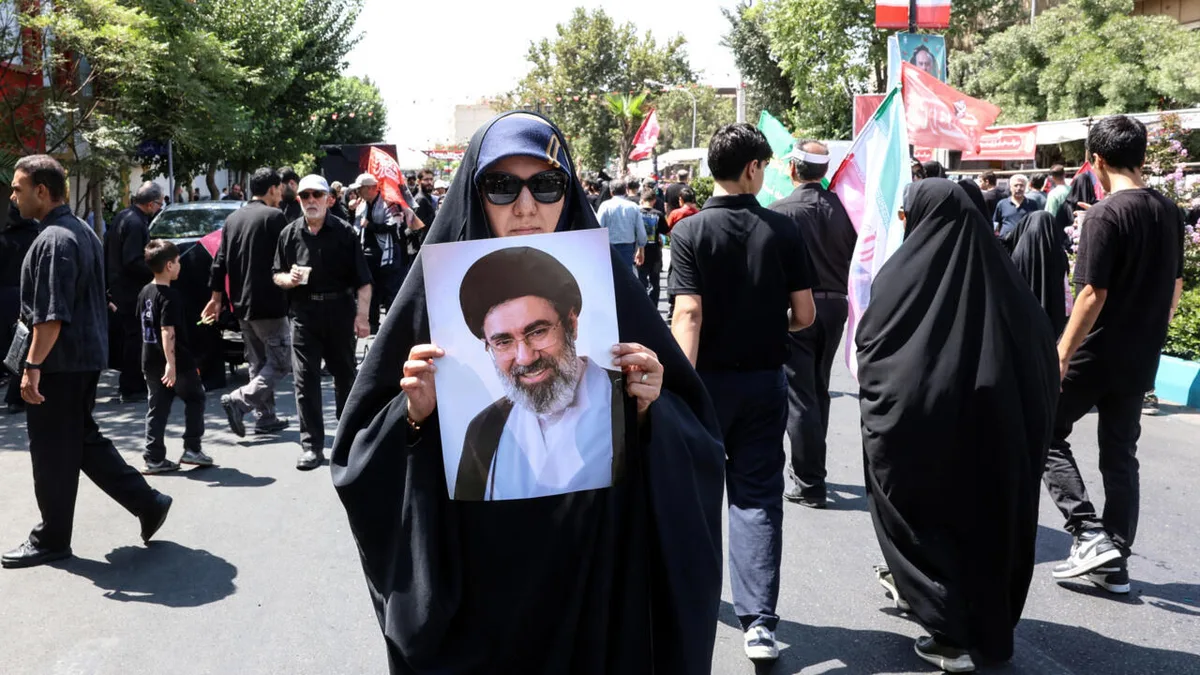
Iran's Supreme Leader Mojtaba Khamenei took office on February 28, 2026, following a US-Israeli strike that killed his father, Ali Khamenei, and other family members [1, 2, 3]. Since then, he has kept a very low public profile, issuing mostly written statements and refraining from public speeches [1, 2, 3]. He did not attend his father's funeral and has not met with cabinet members since assuming power [1, 2].
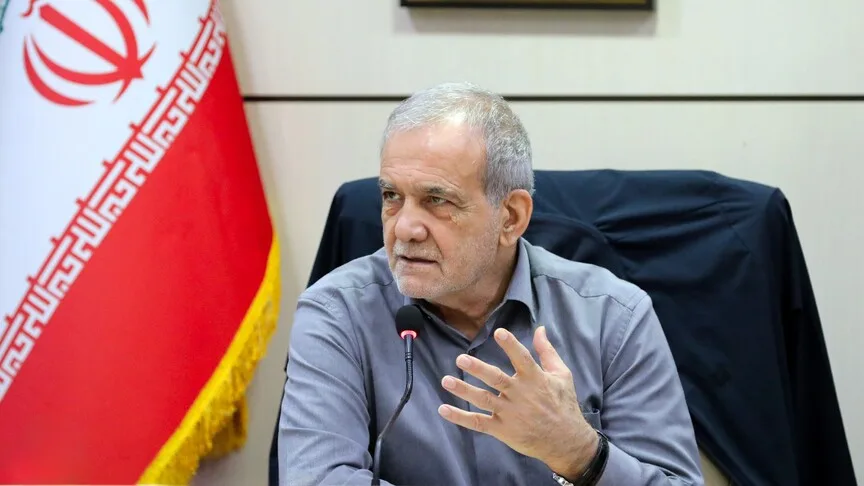
Iranian President Masoud Pezeshkian said on August 6 that it remains "very difficult to communicate with him at the moment, but in any case, his presence is a very great source of strength for us so that we can continue" [1]. Pezeshkian described Khamenei as an "exceptional" figure with humility, ethics, and strong reasoning [3]. He also warned against attempts by some factions to exploit the leader's situation to sow internal divisions in Iran [3]. Pezeshkian added: "The more openly officials present issues to the supreme leader, the easier it becomes to reach mutual understandings" [3].
Some Iranian and foreign media have speculated that Mojtaba Khamenei may be critically injured or in extremely poor health following the February 28 attack, which remains unconfirmed [2]. Officials including Pezeshkian deny severe injuries and stress Khamenei remains involved in governance [1, 2, 3]. Pezeshkian reportedly met Khamenei briefly in a concealed location but could not clearly verify his identity by voice during the meeting [2].
After the strike, Iran and the United States entered direct military confrontation involving missile and drone strikes on US bases, leading to a ceasefire agreement in April 2026 [3]. On June 17, both sides signed a 14-point memorandum of understanding to formalize the ceasefire and halt military operations, signed by Pezeshkian and then-US President Trump [3]. The ceasefire collapsed in July 2026, with renewed attacks before Trump abruptly halted bombardment again [3].
The public status of Mojtaba Khamenei and the extent of his injuries remain closely guarded subjects. President Pezeshkian's interview on August 6 offered rare insight into communication challenges with the leader amid ongoing political and military tensions [1, 3].