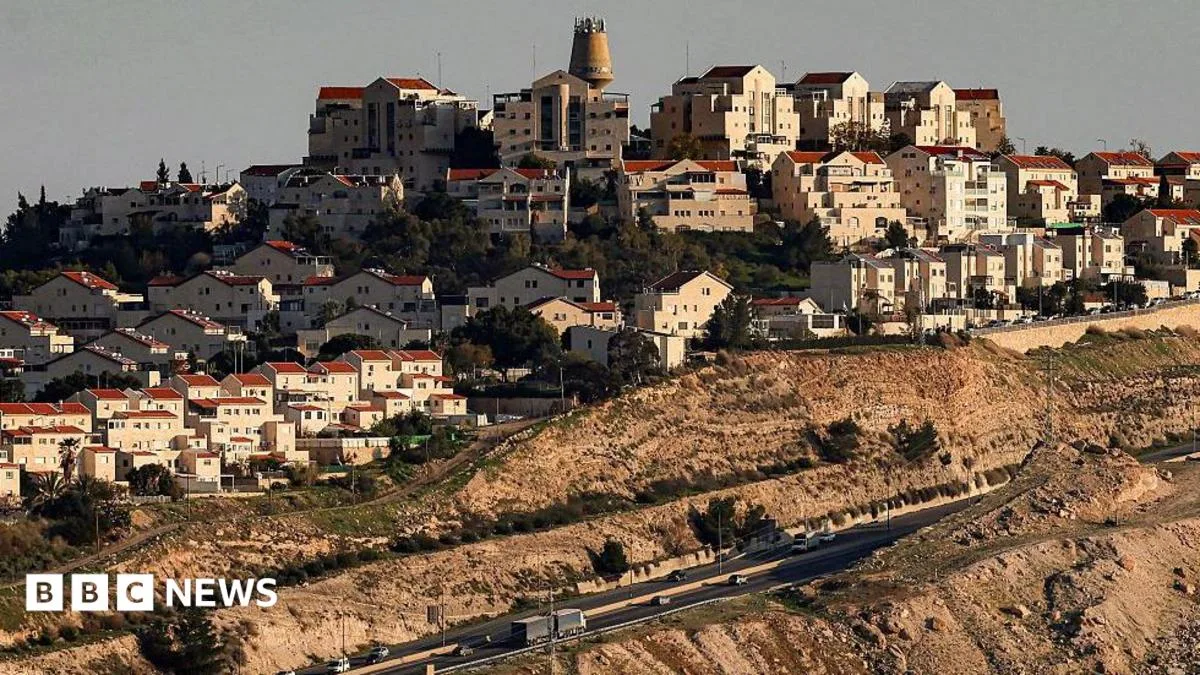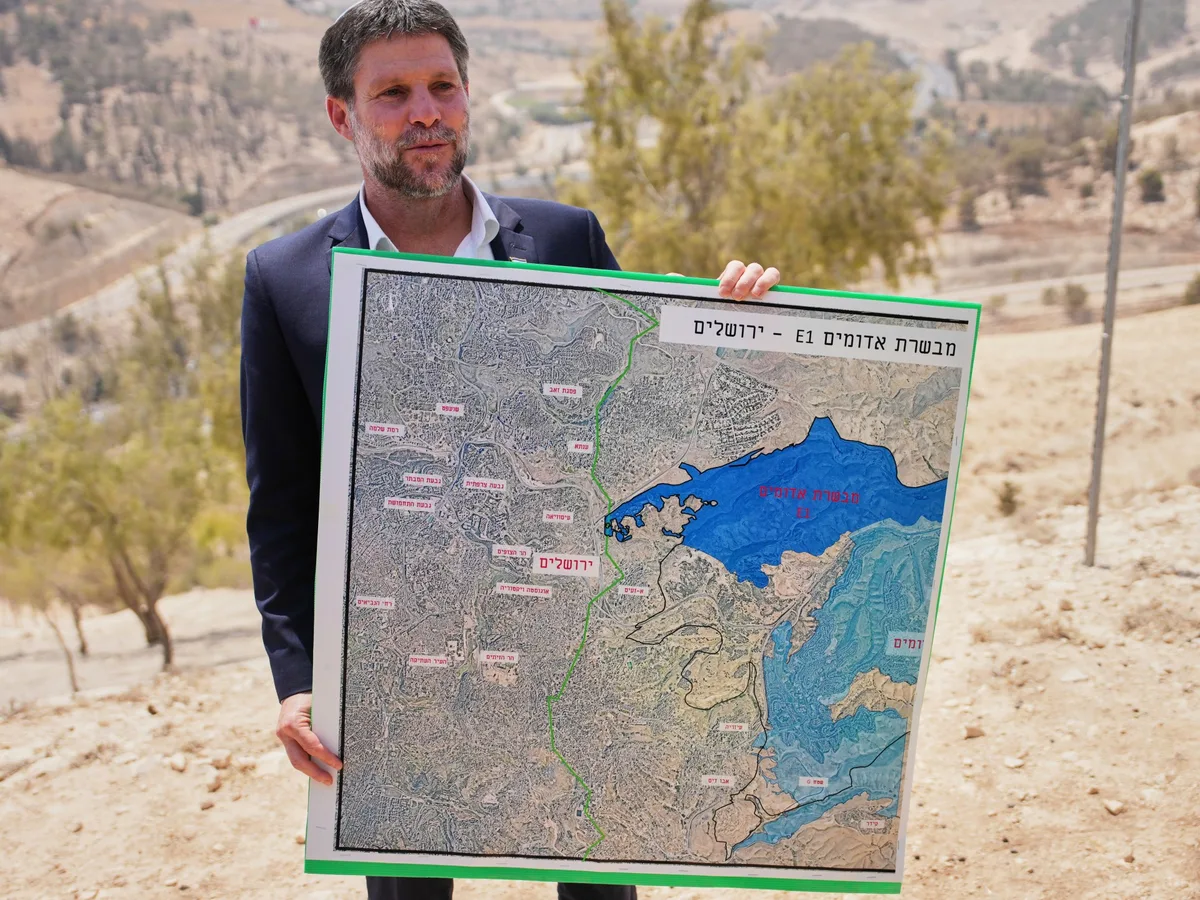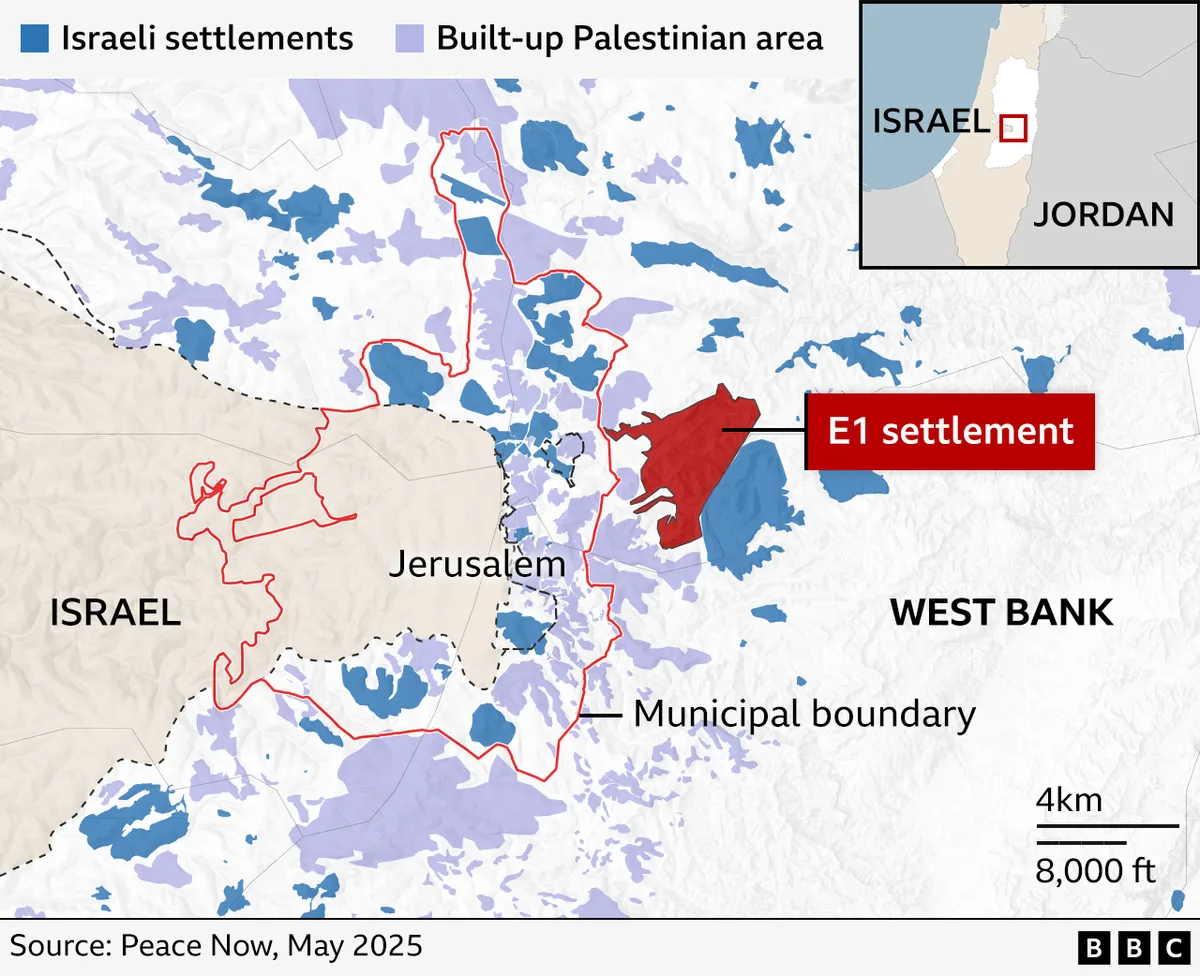
Israel's Ministry of Construction and Housing issued a tender on August 18, 2026, for constructing approximately 1,234 housing units in the E1 area, an occupied West Bank site east of Jerusalem [1, 2]. The E1 project covers about 12 square kilometers (4.6 square miles) of Palestinian land between East Jerusalem and the Israeli settlement of Maale Adumim [3, 1, 4, 5].
The Israeli government approved the overall E1 settlement plan in August 2025, which calls for a total of more than 3,400 housing units in the area [3, 1]. The tender deadline is October 19, 2026, just days before Israel’s general elections scheduled for October 27 [3, 1].
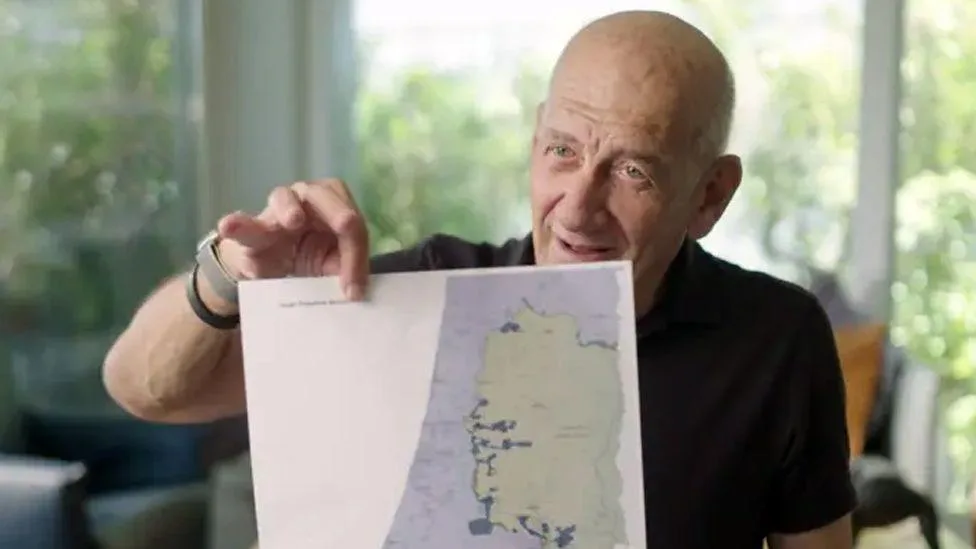
The project would link Israeli settlements of East Jerusalem with Maale Adumim, effectively bisecting the West Bank and isolating East Jerusalem from the rest of the Palestinian territories [3, 1, 4, 5, 2]. Israeli Finance Minister Bezalel Smotrich said the plan aims to "erase" the idea of a Palestinian state [3].
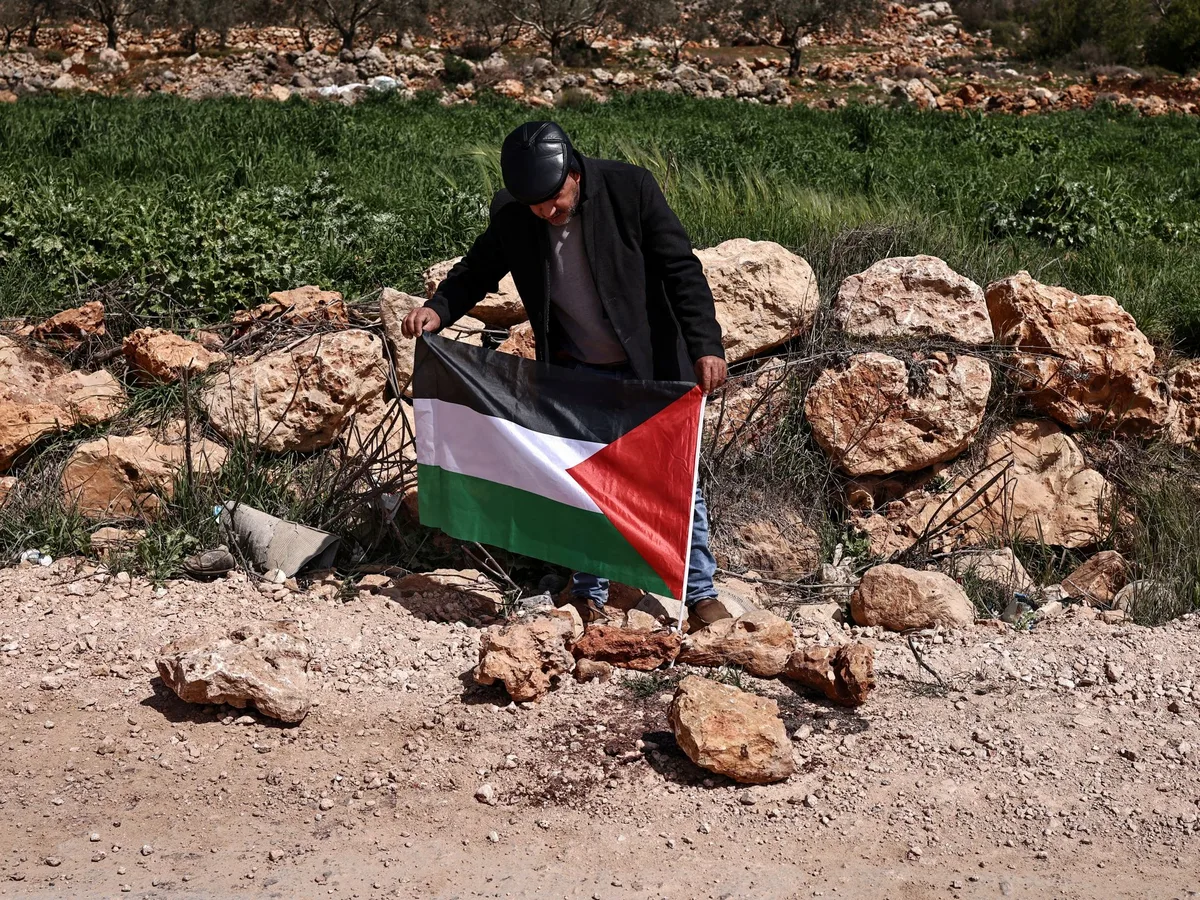
Palestinian residents and Israeli rights groups including Ir Amim, Bimkom, and Peace Now filed an urgent petition with Jerusalem District Court on August 20 to freeze the tender and halt further construction steps [3, 2]. The Palestinian Authority condemned the tender as confining Palestinians to disconnected enclaves and undermining prospects for a two-state solution [1].
Multiple countries including Egypt, Jordan, Türkiye, and several European and Middle Eastern nations have condemned the E1 tender as illegal under international law and a threat to Palestinian statehood and peace efforts [4, 5, 6]. Jordan's Foreign Ministry called the project a clear "undermining" of international efforts toward peace [5]. UN spokesperson Stephane Dujarric said the UN secretary-general was "deeply alarmed by the reports of new illegal Israeli settlement outposts" [4].
Critics warn the E1 settlement could cut off Palestinian territorial contiguity and derail the viability of an independent Palestinian state with East Jerusalem as its capital [4, 5, 6]. Malaysian Prime Minister Anwar Ibrahim described the plans as gravely undermining prospects for a contiguous Palestinian homeland [4].
Israeli settler violence against Palestinians in the West Bank and East Jerusalem was also condemned as violations of international law and threats to regional security [6].
Since 1967, about 160 Israeli settlements housing 700,000 Jews have been built across the West Bank and East Jerusalem, with approximately 3.3 million Palestinians living alongside them [3]. The current government, led by Prime Minister Benjamin Netanyahu, has accelerated settlement expansion since late 2022 [3].
Bids for the E1 housing units tender must be submitted by October 19, 2026, just days before Israel’s general election on October 27 [3, 1].