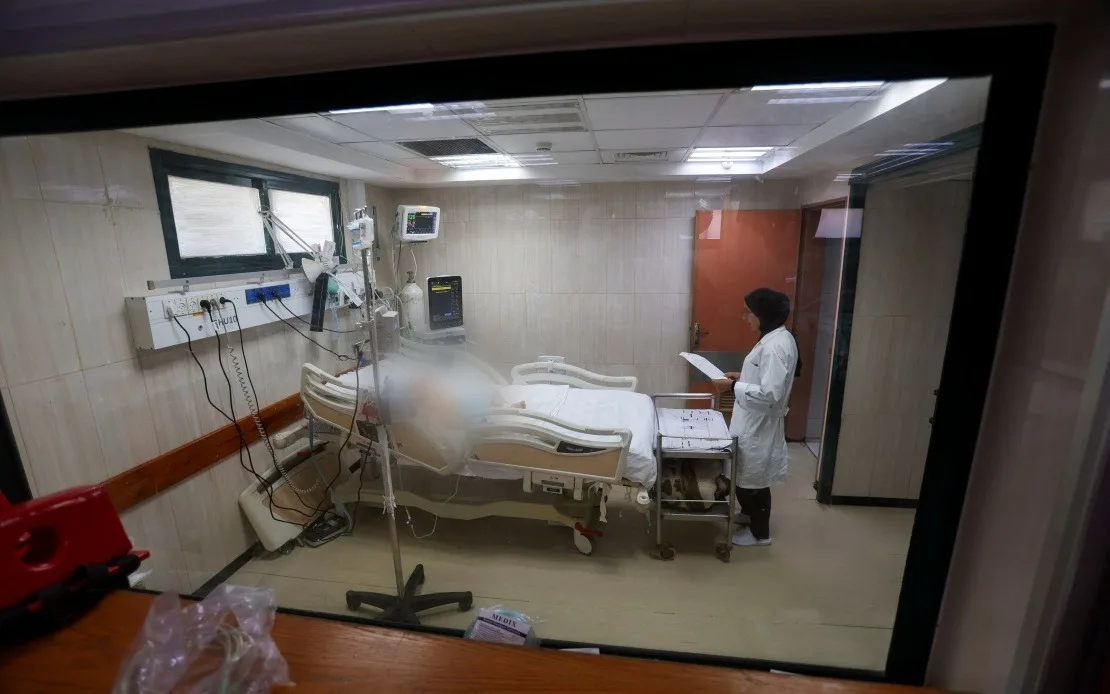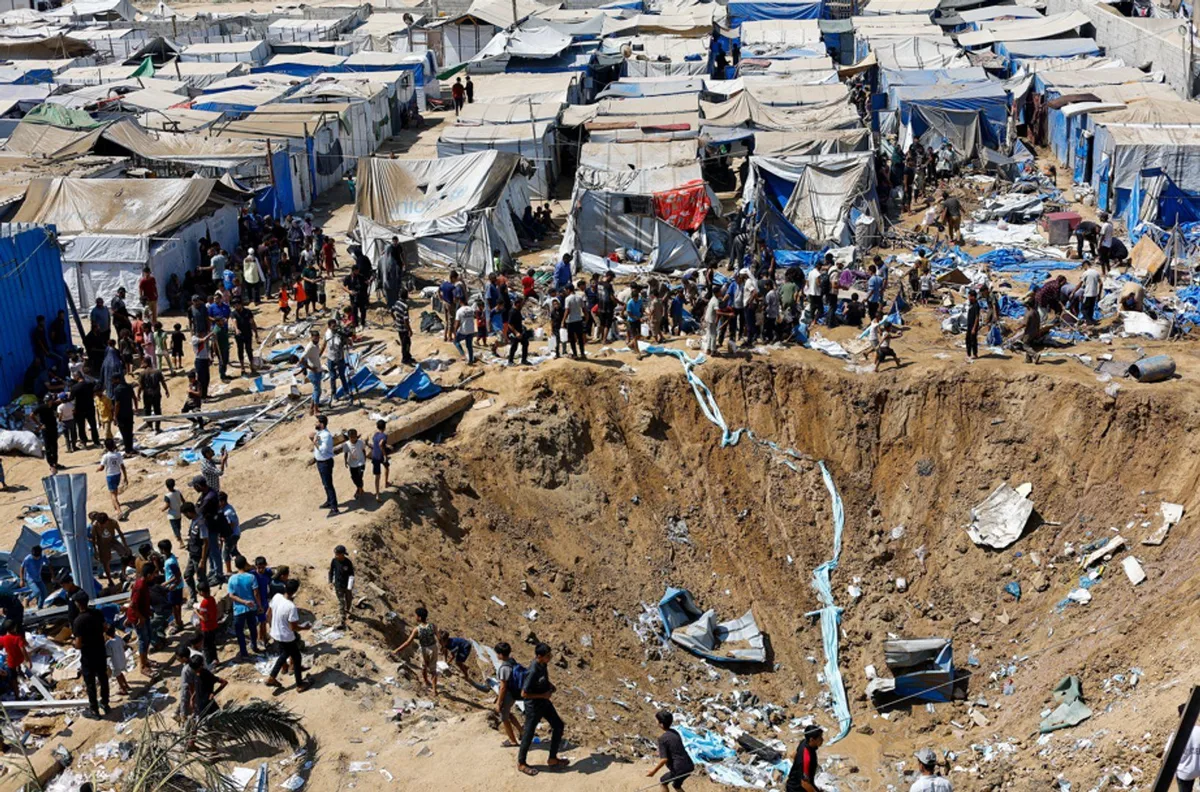
Israeli airstrikes on August 1 destroyed at least two medical warehouses and severely damaged two others at Al-Aqsa Martyrs Hospital in Deir al-Balah, central Gaza Strip [1, 2, 3, 4, 5]. The hospital’s outpatient clinic building suffered extensive damage, and vital medical supplies—including medicines, intravenous solutions, and equipment for dialysis and intensive care—were destroyed [1, 3, 4, 5].
The attack also hit tents near the hospital housing displaced Palestinian families, setting fire to dozens and destroying 50 to 60 tents. Approximately 1,000 people were displaced by the strike [1, 3, 4]. There were no immediate reports of casualties from the strike [3, 4].
The Gaza Health Ministry said the missile strikes completely erased two of the four medical warehouses and caused extensive damage to the others. They described the attack as a direct blow to Gaza’s medical lifeline, accelerating the collapse of the health system and depriving thousands of patients of treatment [4, 5]. Munir Al-Bursh, director general of Gaza’s Health Ministry, said, "The war here is not only targeting buildings, but also medicine, treatment and people’s chance to stay alive" [5].
Gaza is already facing critical shortages due to an ongoing Israeli blockade and restrictions. The Health Ministry reported a 51% shortage in essential medicines, 59% shortage in medical consumables, and 22.5% of laboratory equipment out of service from lack of spare parts [5]. Al-Aqsa Martyrs Hospital is one of the few remaining fully operational government hospitals in Gaza after extensive damage since the start of the war in October 2023 [5].
The Israeli army reportedly issued an evacuation warning for the area minutes before the strike [3, 4]. The attack also damaged and set fire to tents housing displaced Palestinians near the hospital, worsening the already dire humanitarian conditions [1, 3, 4].
The next critical phase will focus on restoring medical services and replenishing supplies at Al-Aqsa Martyrs Hospital amid ongoing blockade constraints and conflict conditions.