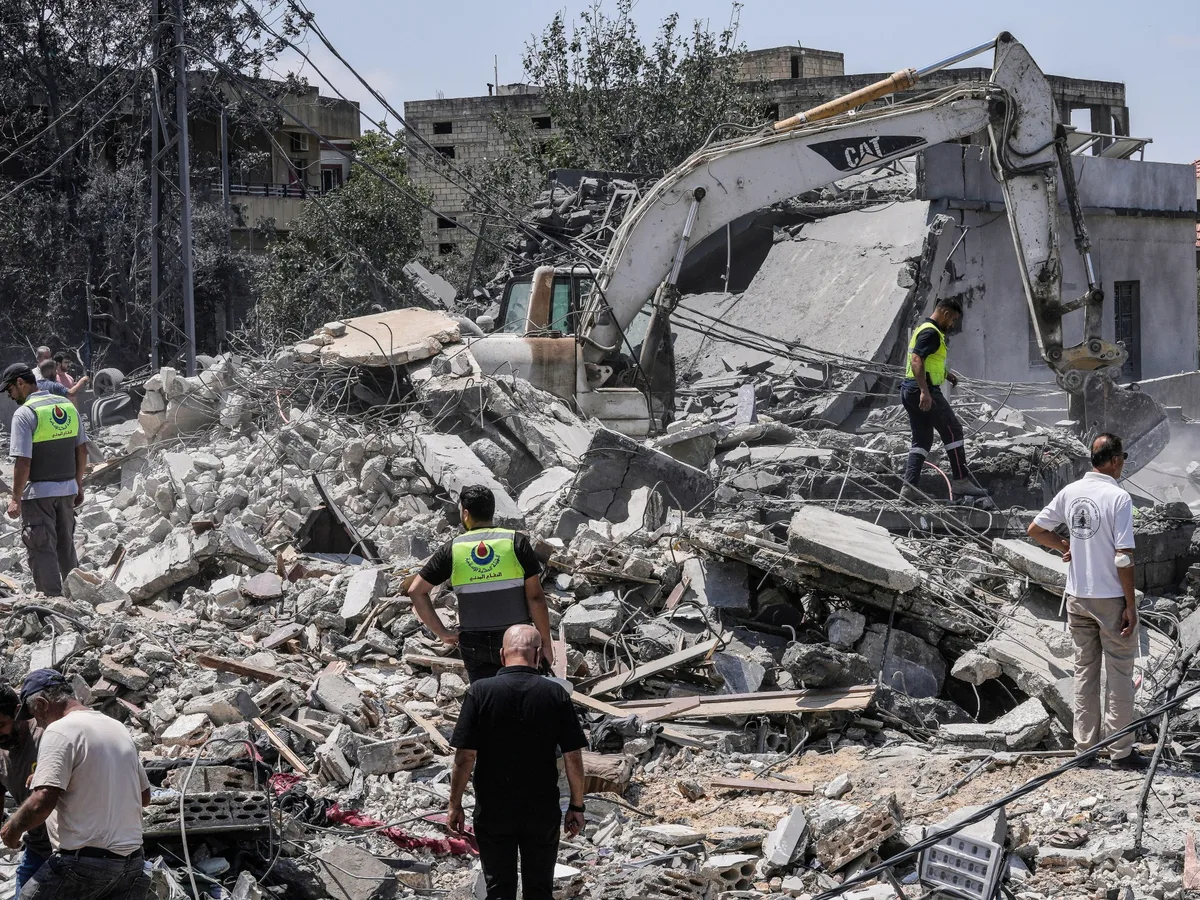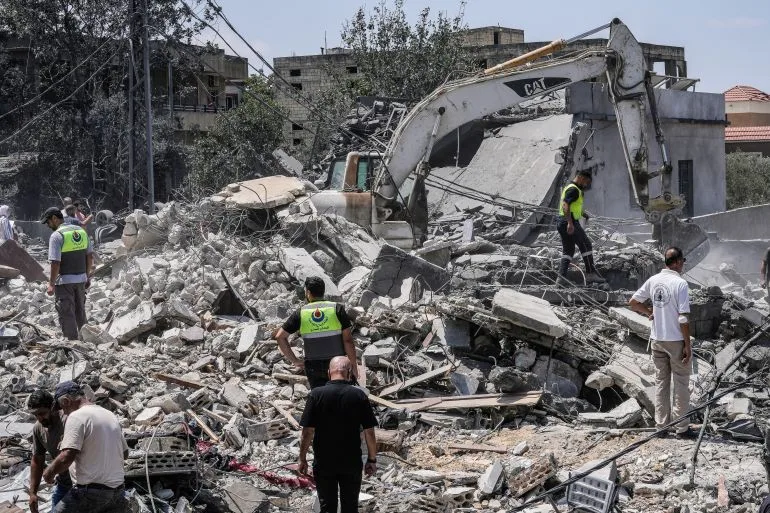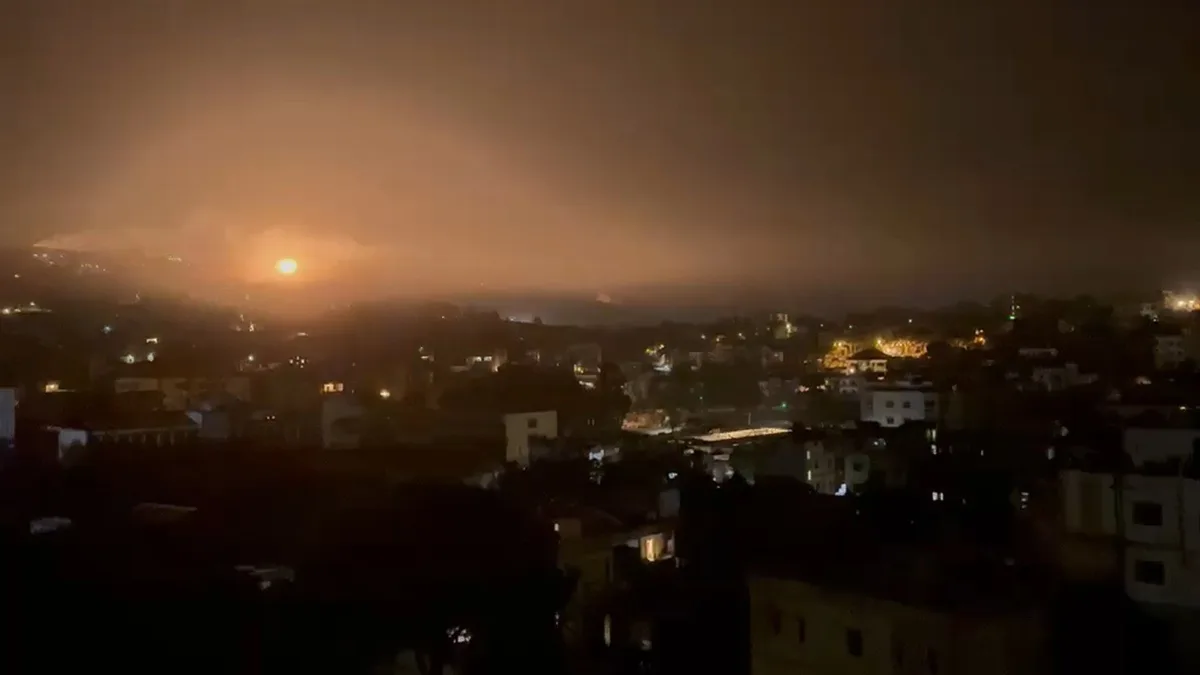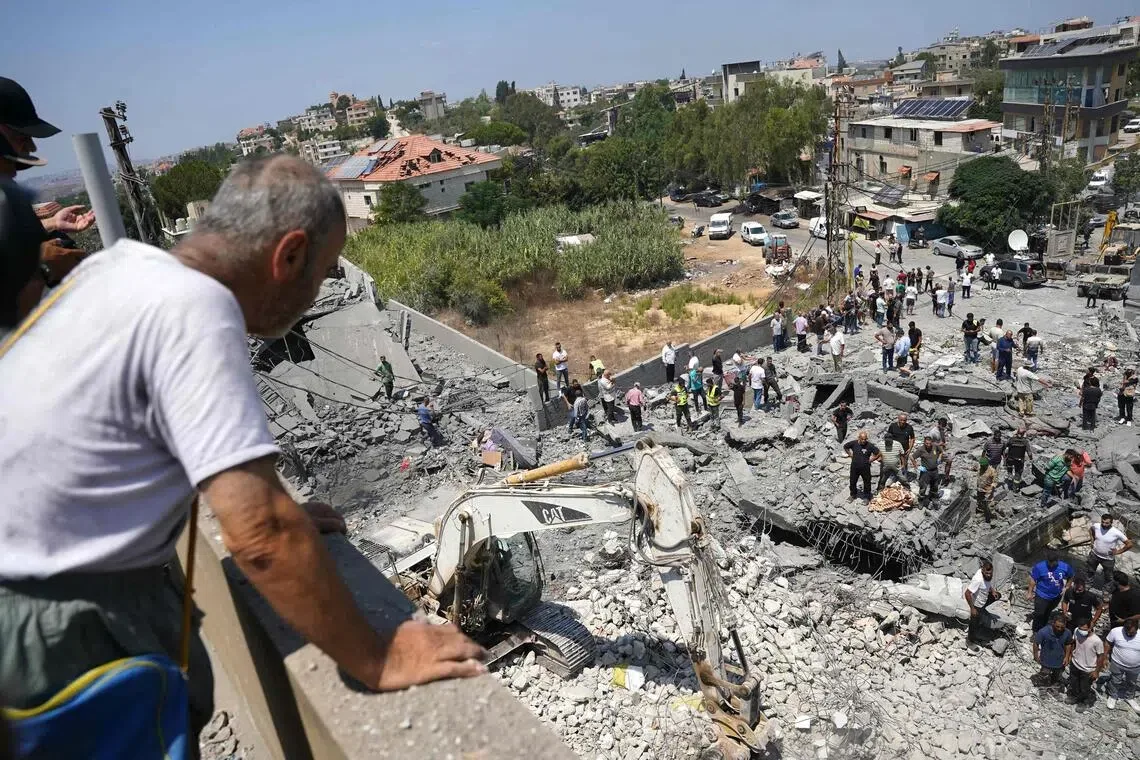
At least 11 people, including several children, died in Israeli airstrikes on southern Lebanon on August 15, marking the deadliest strikes since a ceasefire took effect in June [1, 2, 3, 4]. The Israeli military said it targeted southern Lebanon in response to a Hezbollah attack that wounded three Israeli soldiers the same day [1, 4].
Multiple airstrikes targeted the Nabatieh district, specifically the villages of Ansar and Deir al-Zahrani [2, 3, 4]. The strike on Ansar killed seven people, including three children, and wounded others [3, 4]. The attack on Deir al-Zahrani killed four and wounded 17 more [4].
Israel confirmed the killing of Abu Hassan Alaa, also known as Ali Samir Al-Haj Hassan, described as a senior Hezbollah battalion commander, during the strikes [1, 4]. The Israeli military stated it would carry out further strikes against Hezbollah if threatened [1].
Lebanese Prime Minister Nawaf Salam condemned the strikes on Ansar and Deir al-Zahrani, saying, "The seven martyrs of the Israeli airstrike on the town of Ansar are not military infrastructure and the children and women killed were not military targets" [4]. Lebanese President Joseph Aoun said the strikes "represented a clear message to the negotiation track and to the American efforts aimed at implementing this agreement" [4].
The escalation comes amid stalled US-Iran ceasefire talks set to expire on August 17 that have complicated regional tensions including along the Israel-Lebanon border [1]. Iranian Foreign Minister Abbas Araghchi said, "We have not yet made a decision to resume negotiations with the US" [1].
A ceasefire between Israel and Hezbollah had gone into effect on June 20, followed by a framework agreement on June 26 outlining Israeli withdrawal in exchange for Hezbollah disarmament [4]. The recent strikes represent a significant violation of that agreement.
The Israeli military announced the killing of Hezbollah commander Abu Hassan Alaa on August 16 as part of ongoing operations [1, 4]. The US-Iran ceasefire agreement is set to expire tomorrow, August 17, with heightened concerns that further escalations could follow [1].