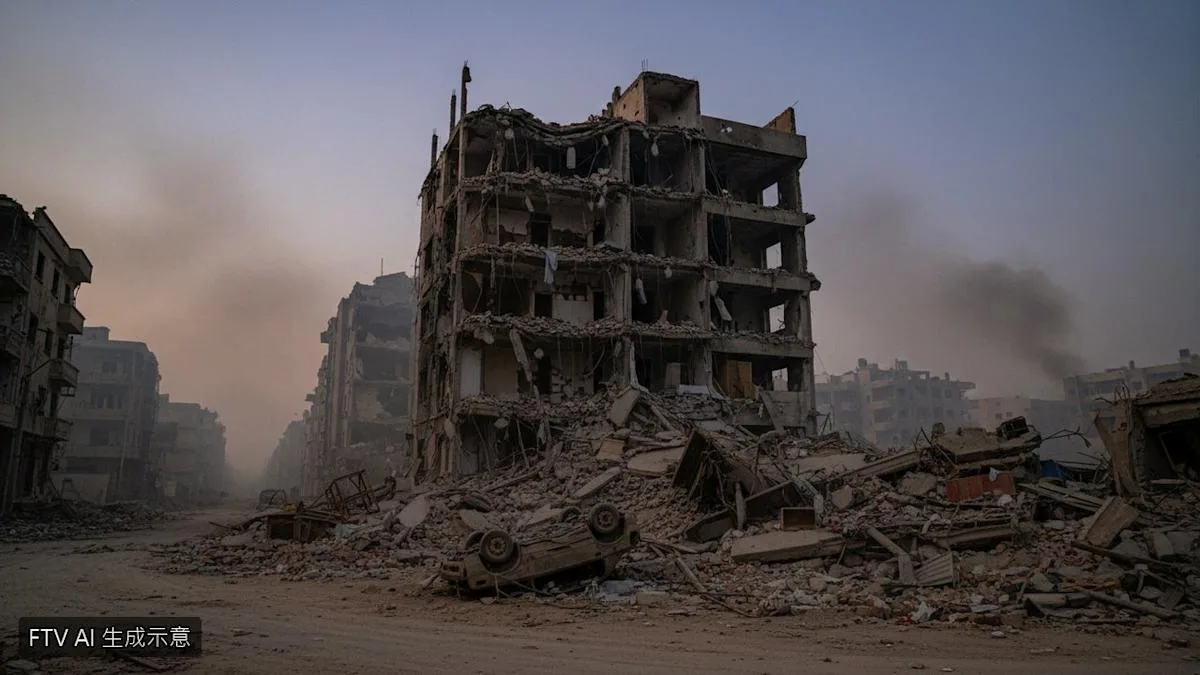
An Israeli drone strike killed 13-year-old Joud Dweik in Beit Lahiya, northern Gaza, on May 21, 2026, medical sources confirmed [1, 2, 3]. Two other civilians were wounded in the same attack [2, 3].
The strike occurred amid resumed nighttime evacuation orders issued by Israeli forces in northern Gaza, forcing residents to flee in darkness. In the two days before the attack, at least three evacuation warnings targeted homes and tent encampments, adding to the stress and displacement faced by civilians [1, 3].
Since a ceasefire brokered by former U.S. President Donald Trump took effect in October 2025, approximately 880 to 881 Palestinians have been killed and more than 2,600 injured by Israeli strikes, according to Gaza health officials [1, 2, 3]. Israeli forces control over half of Gaza, while Hamas maintains a small coastal strip [1].
Four Israeli soldiers have been killed by militants in the same period, Israeli military sources reported [1]. The Israeli military says its strikes aim to prevent attacks and include evacuation warnings to minimize civilian casualties [1, 3]. Gaza residents say the evacuation orders compel dozens of families to flee at night under harsh conditions [1, 3].
Gaza resident Ibrahim Ismail described his apartment being bombed within five minutes after receiving an evacuation order, causing injuries and damage to nearby buildings. He said, "Look. You work for 30 years and, in five minutes, everything ..." and added bluntly, "戰爭就是戰爭 (War is war)" [1, 3].
The renewed evacuation warnings and military strikes reflect ongoing violence in the months following the ceasefire. Israeli forces have continued to conduct targeted attacks amid fragile truce conditions.
The situation remains tense as nighttime evacuation orders and strikes continue across northern Gaza.