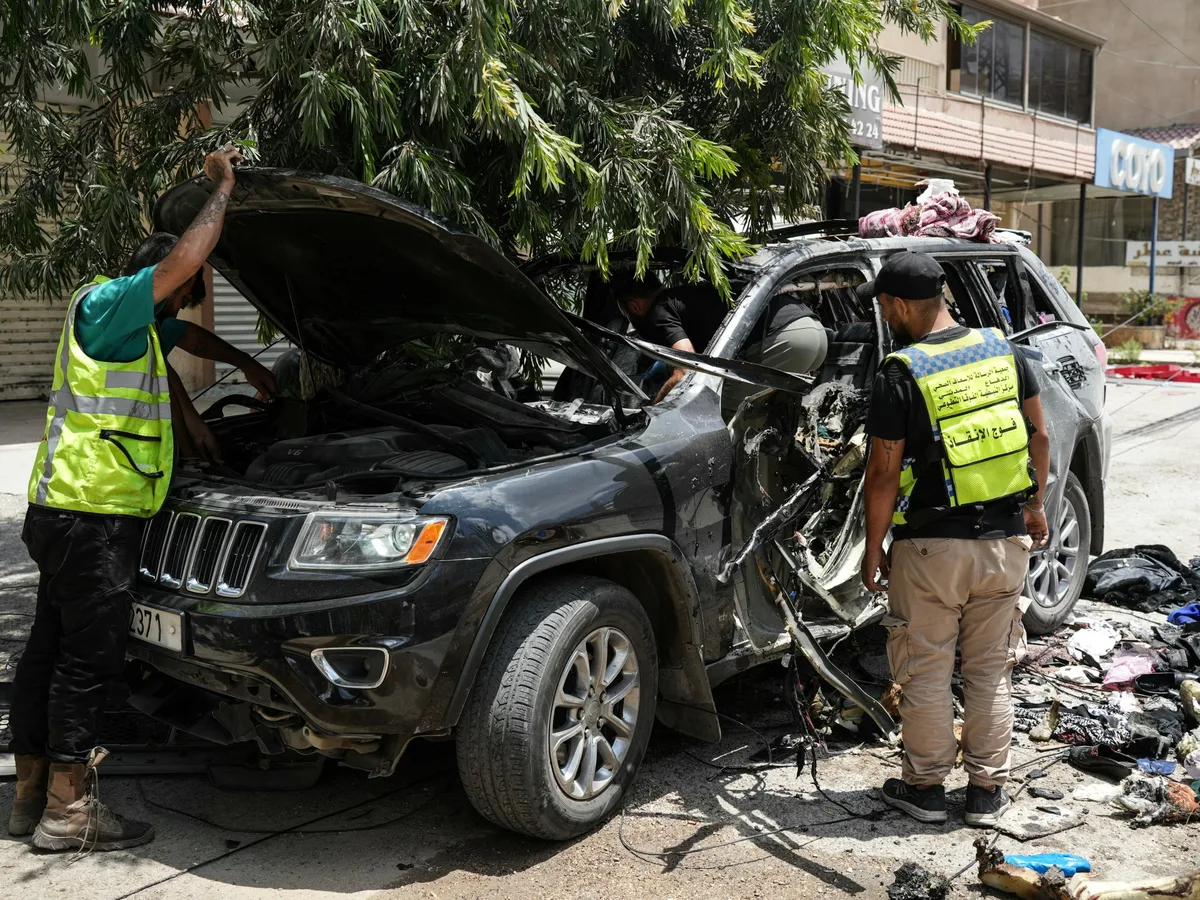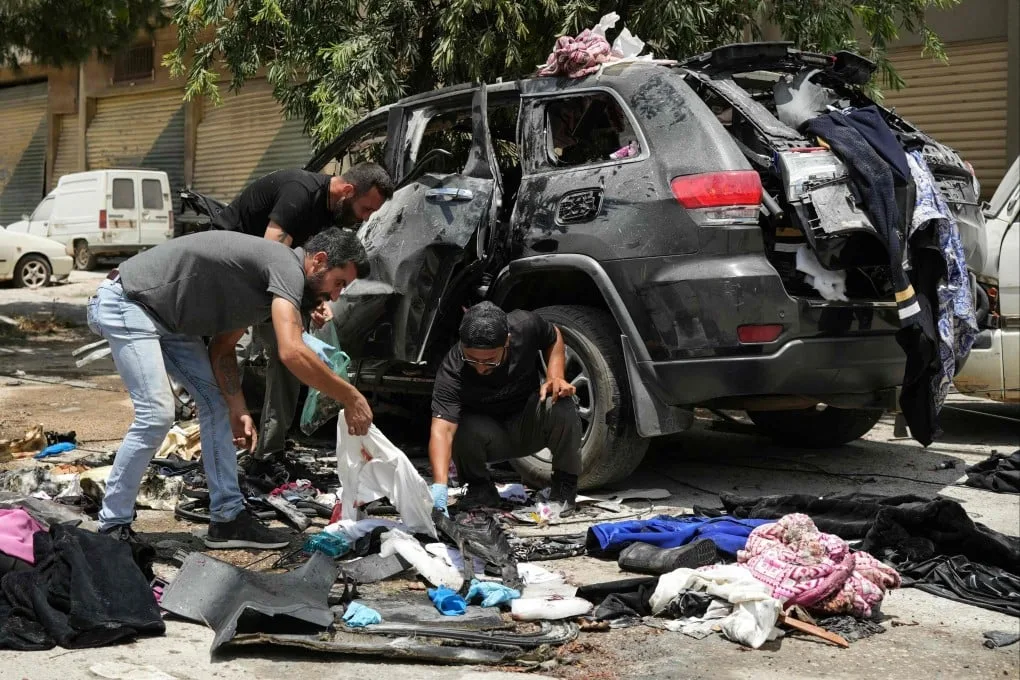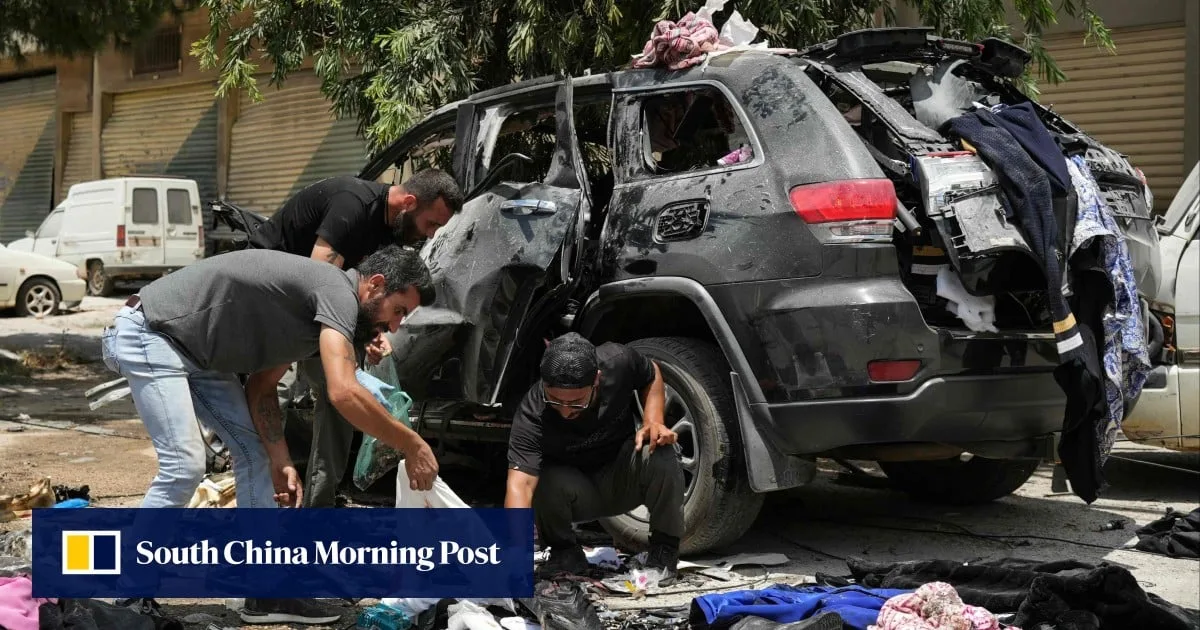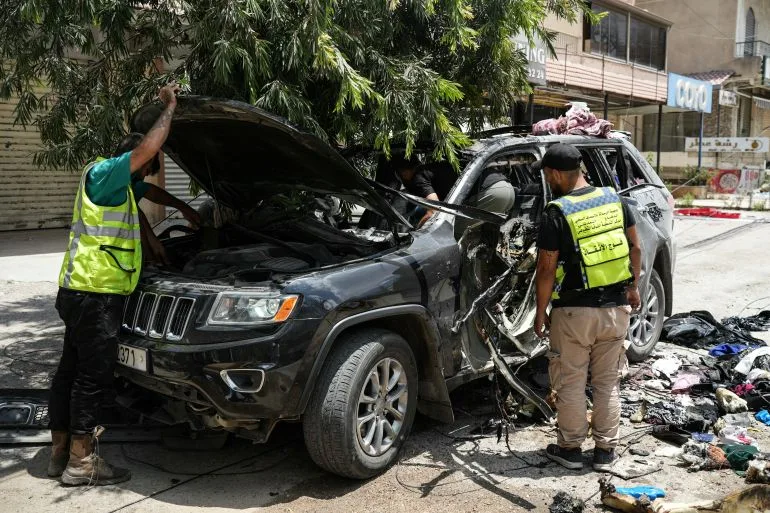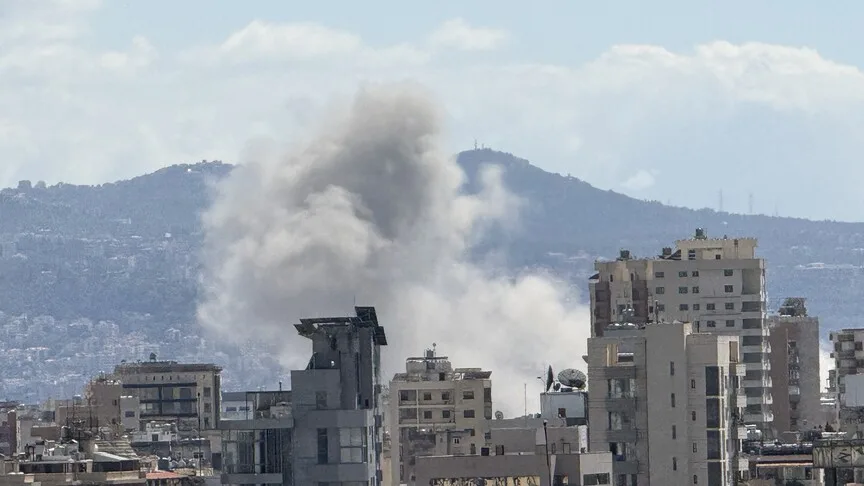
An Israeli drone struck a vehicle in Nabatieh al-Fawqa, southern Lebanon, on July 6, killing four people, including three women, a school principal, her mother, a foreign domestic worker, and a Syrian laborer [1, 2, 3, 4].
The Israeli military said it targeted the car after identifying four suspects posing a threat near the area Israeli forces occupy in southern Lebanon. "We identified four suspects approaching the area our forces occupy who posed a threat and so conducted a precise strike in order to remove the threat," an Israeli military statement said [2].
The strike came despite a ceasefire between Israel and Hezbollah that began on June 21, and a US-mediated framework agreement signed on June 26 between Lebanon and Israel that aimed for a phased Israeli withdrawal [1, 2, 3, 4]. Both Israel and Hezbollah accuse each other of ceasefire violations [2, 3].
Hezbollah lawmaker Ihab Hamade condemned the strike as "a heinous crime against civilians" and blamed the Lebanese state for allowing it [2].
The Israeli-Hezbollah conflict escalated after Hezbollah fired rockets at Israel on March 2. Since then, Israeli attacks in Lebanon have killed at least 4,300 people and displaced over one million others [3].
The drone strike is the latest flare-up since the fragile ceasefire and framework deal were reached last month, underscoring continuing tensions along the southern border.
Officials from both sides remain on alert as diplomatic efforts continue under US mediation, aiming to contain hostilities and implement the withdrawal plan.