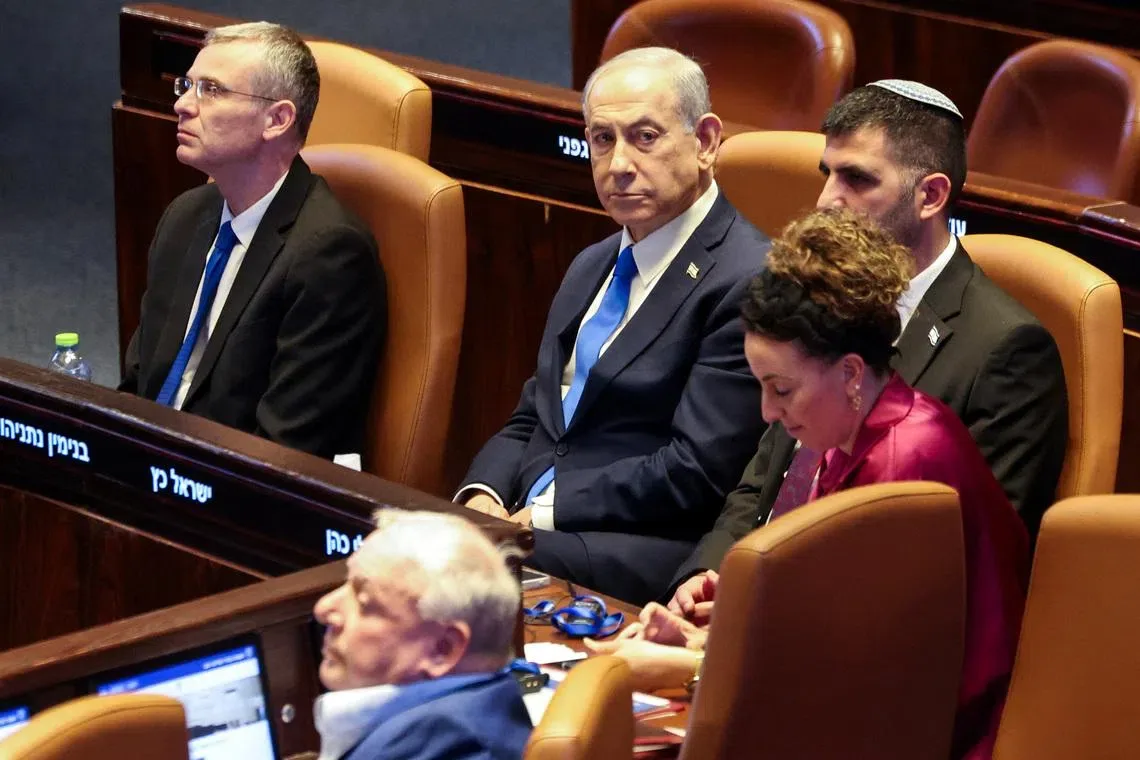
Israel's Knesset held a preliminary vote on May 20 advancing a bill to dissolve itself, with 110 out of 120 members supporting the measure and no votes against it [1, 2, 3, 4, 5, 6]. The bill was submitted by Prime Minister Benjamin Netanyahu's coalition amid a dispute with ultra-Orthodox parties over failure to pass legislation exempting their community from mandatory military service [1, 2, 4, 5, 6].
The dissolution requires three plenary votes, including this initial reading, with final approval needing a simple majority of 61 out of 120 seats and possibly taking several weeks to complete [1, 2, 3, 4, 5, 6]. Once approved, elections would be triggered within 90 days and could be scheduled for September or October, though Netanyahu reportedly prefers holding them on the originally planned date of October 27, 2026 [1, 2, 3, 4, 5, 6]. The latest possible election date under current rules is October 27, as Israel’s last election was in November 2022 and contests are held every four years [1, 4, 5, 6].
The bill came after Prime Minister Netanyahu’s coalition faced a breakdown with an ultra-Orthodox faction dissatisfied by unfulfilled promises related to military exemptions [1, 2, 4, 5, 6]. Rabbi Dov Lando, a Lithuanian Haredi spiritual leader, instructed the Degel HaTorah party to support dissolving the Knesset [6]. Opposition parties united in calling for early elections, seeing opportunity amid Netanyahu’s weakening position in polls after the October 7, 2023 Hamas attacks and ongoing political crises [1, 2, 4, 5, 7]. Opposition leader Avigdor Lieberman warned Netanyahu might use military actions amid conflicts along Gaza and Lebanon to influence elections [7].
Coalition chairman Ofir Katz stated, "This coalition has completed its days. This is the only opposition that caused the coalition to grow. In this term, we passed nine budgets and 520 laws," underscoring the political tensions [4]. Opposition parties urged voters to support dissolving the Knesset and go to the polls promptly [7].
Netanyahu faces additional pressures including a corruption trial and recent health issues such as prostate cancer treatment and a pacemaker implant [2, 4]. If the dissolution bill is finalized, Israel will hold elections within 90 days, tentatively by late October 2026 [1, 2, 3, 4, 5, 6].