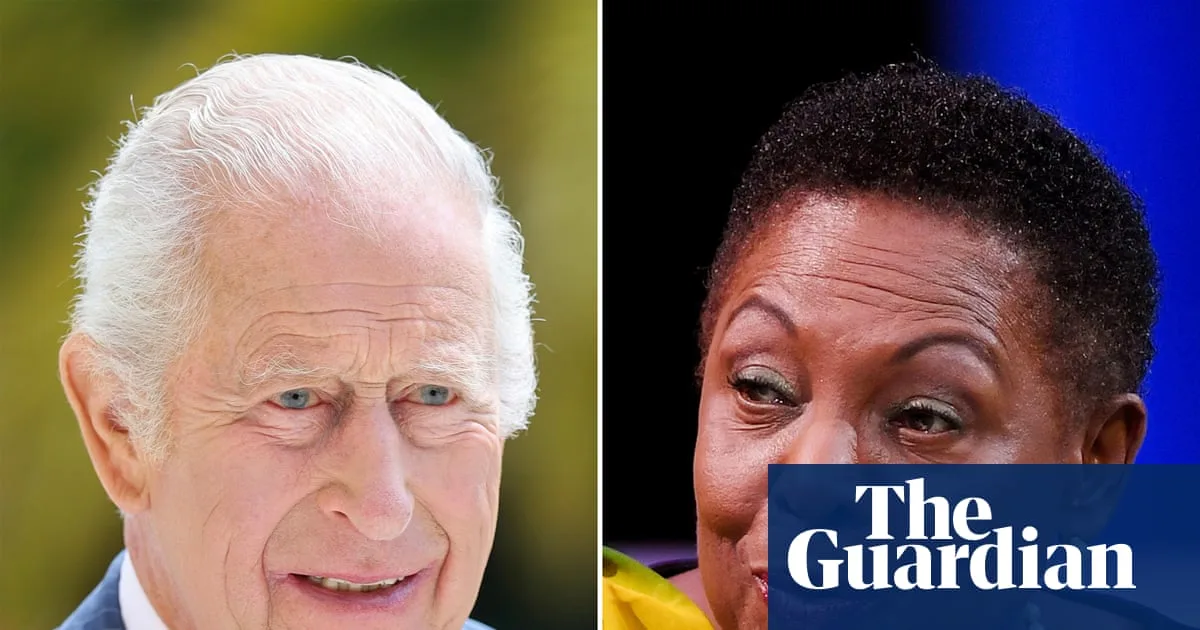
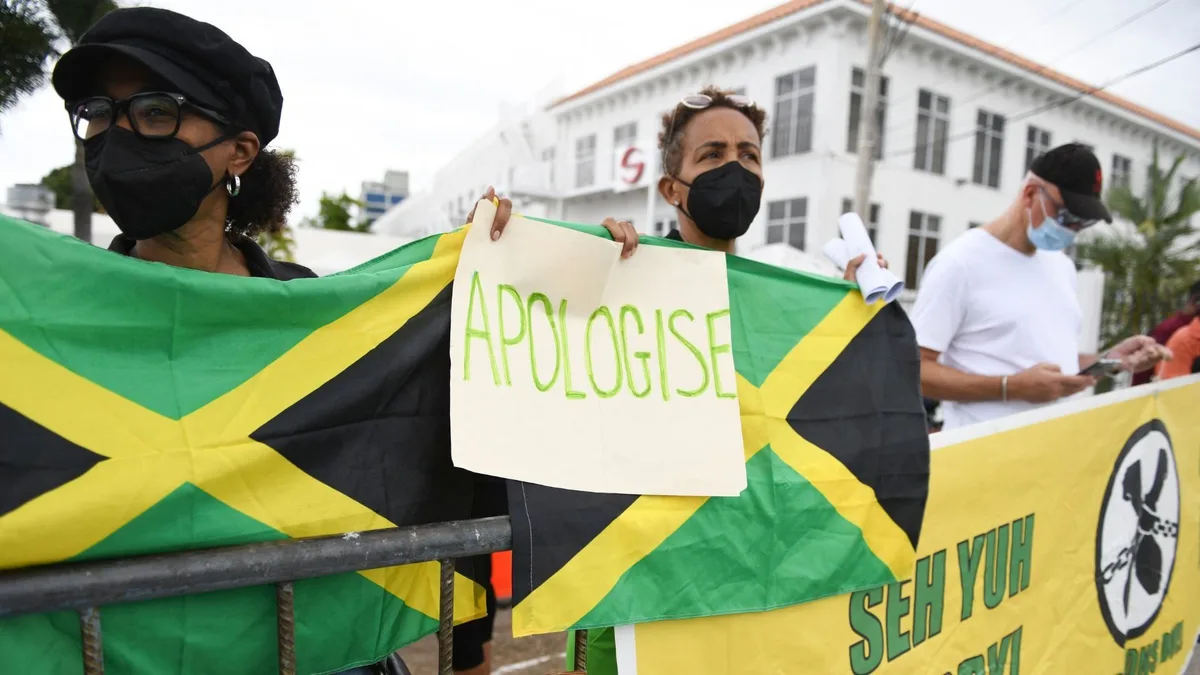
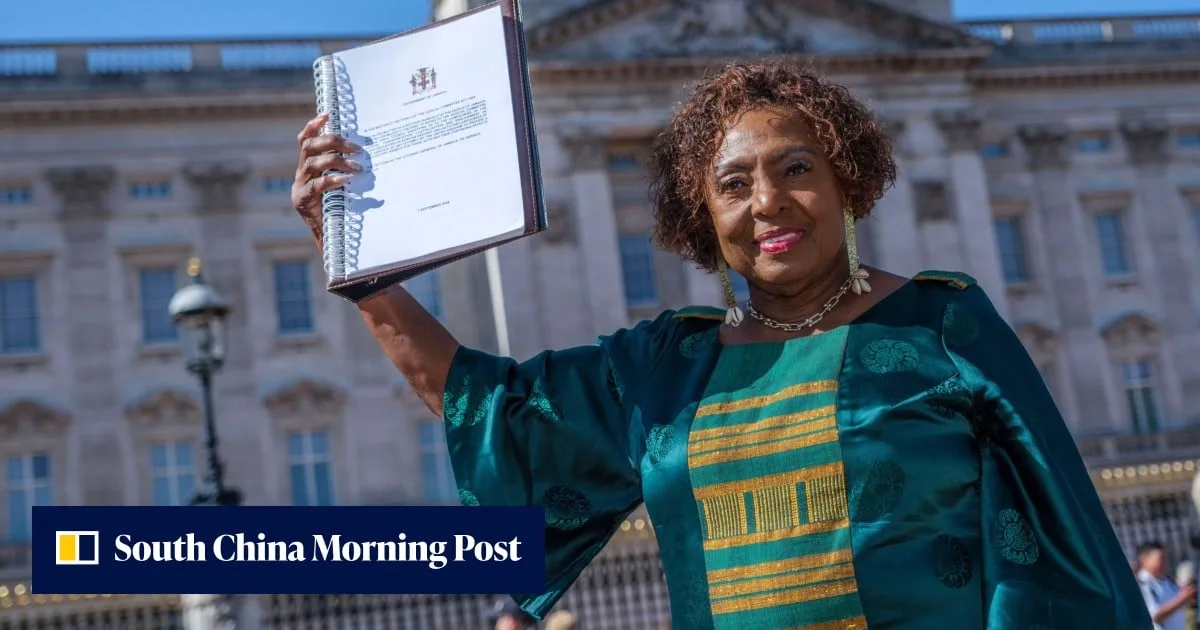
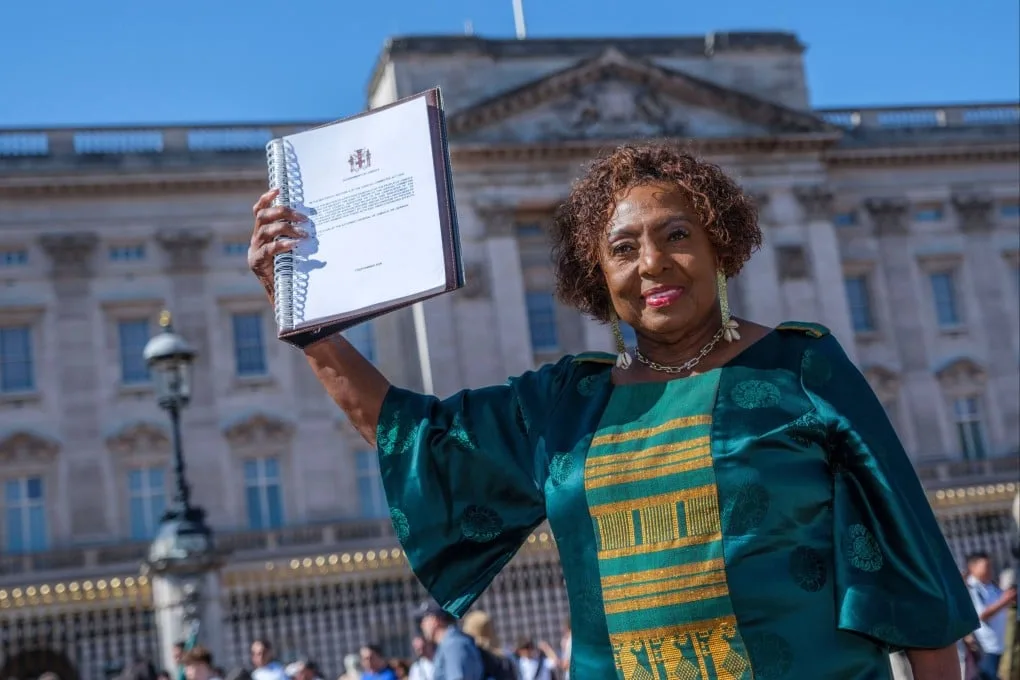
A Jamaican delegation, led by Culture Minister Olivia Grange, arrived in London to file a petition requesting legal guidance from King Charles regarding slavery reparations on Monday, September 7, 2026 [1, 2, 3]. The petition asks the king to refer three key legal questions to the Judicial Committee of the Privy Council, the highest court of appeal for Jamaica, based in London [1, 2, 3]. The questions seek to determine if the enslavement of Africans in Jamaica was legal under English law, whether it constituted a crime against humanity or violated international law, and whether Britain has a legal obligation to provide reparations for the enduring consequences [1, 2, 3].
This marks the first time a Commonwealth country has used the monarch’s prerogative to seek legal advice from the Privy Council on reparations [2, 3]. Olivia Grange said, "We want the answers. Once we get the answers, or once we get a response to those questions, then the next steps will be determined" [3].
Jamaica established a national reparations mechanism in 2009 to address the ongoing economic and social impacts of slavery [1]. Between the 15th and 19th centuries, more than 12.5 million Africans were forcibly transported to the Americas, with some 600,000 to 1 million enslaved in Jamaica between the 17th century and early 19th century [1, 3]. After abolishing slavery in 1833, the UK paid slave owners £20 million (approximately $27 million), a loan that was only fully repaid in 2015 [3]. The Jamaican government estimates reparations owed to be about $10 billion [3].
Grange highlighted Jamaica’s resilience but underscored the persistent challenges stemming from slavery’s legacy. She stated, "We’re a resilient people. We were able to bounce back from [Hurricane] Melissa, for example. But we still have a lot of work to do, and you can imagine if we did not have those inherited problems, the legacy that came out of slavery, how much better we would have been able to do so" [1]. Saint Vincent and the Grenadines Prime Minister Ralph Gonsalves also remarked, "The present is very much the past, because what we are dealing with is the legacies of underdevelopment which you can source, and we do source, to native genocide and enslavement of African bodies" [1].
Buckingham Palace confirmed King Charles’s constitutional role in receiving the petition but clarified that he has no role in deciding the substance of the claim [3]. The Jamaican delegation also plans to discuss with the British Museum the repatriation of cultural artifacts taken from Jamaica [3].
The petition filing on Monday will launch a formal legal process for the Privy Council to consider the questions posed by Jamaica regarding slavery reparations [1, 2, 3].
![Jamaica's Minister of Youth, Sports and Culture, Olivia Grange attends the AIPS and Laureus Press Celebration 'Champions in Sport for Good' during day six of the 12th IAAF World Athletics Championships at Casa Italia, Hotel Ellington on August 20, 2009 in Berlin, Germany. [Mark Dadswell/Getty Images]](/uploads/2026/09/07/2bd46ead57f01fa6ecf6fc41.webp)