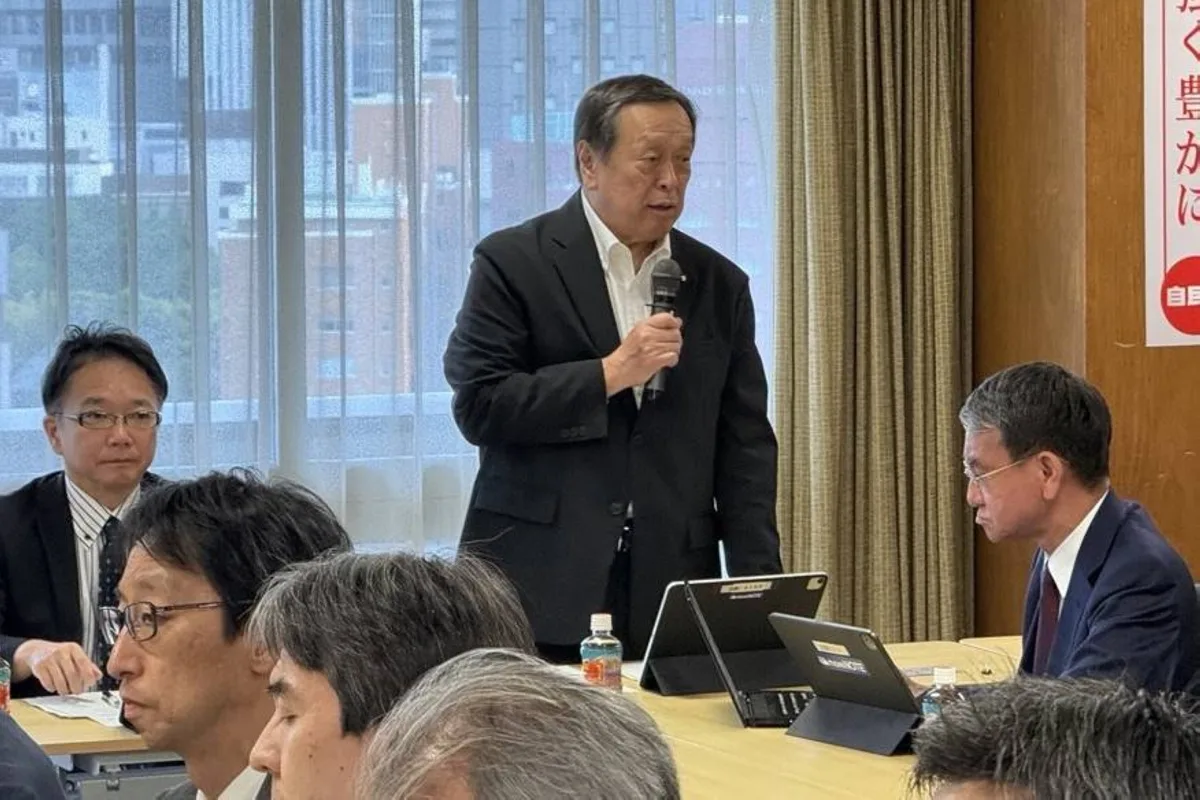
Japan's ruling Liberal Democratic Party submitted a draft proposal on May 20 to its Research Commission on Security to consider increasing defence spending to up to 5% of gross domestic product (GDP) [1, 2]. The suggested spending range of 3% to 5% aims to align Japan's military budget with those of many NATO member countries [1, 2].
This proposal comes amid concerns that rising regional threats require a stronger Japan Self-Defense Force. The party plans to incorporate the potential spending hike into revisions of Japan's National Security Strategy, National Defense Strategy, and Defense Buildup Program by the end of 2026 [2].
Former U.S. President Donald Trump pressured allied nations, including Japan, to increase their defence budgets during his term, even threatening to withdraw U.S. support if they did not meet spending targets [1]. There is also growing unease within Japan that the U.S. military presence could be leveraged as leverage to push Japan toward higher defence investments [1].
The proposals and upcoming strategic revisions signal a notable shift for a country whose postwar policies have limited military spending traditionally to around 1% of GDP. The ruling party’s draft calls for examining a military budget increase as part of its broader security policy update scheduled to conclude by year-end [2].