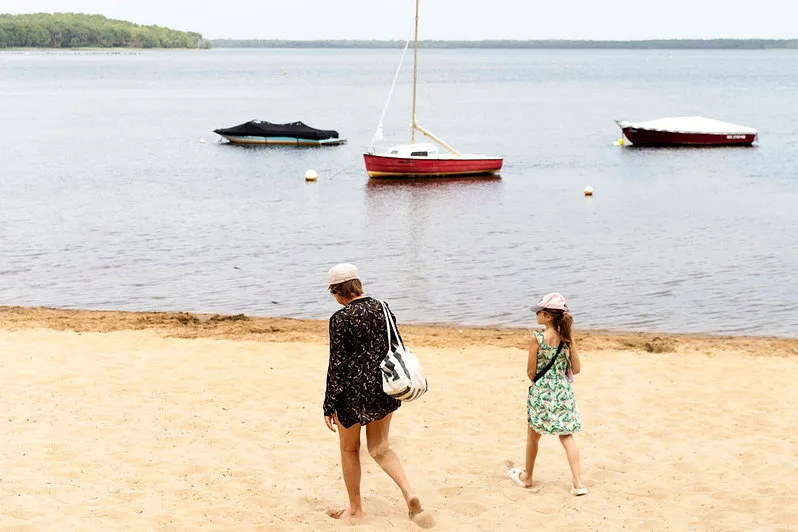
France experienced its hottest month ever recorded in July 2026, surpassing previous heat records from 2003 and 2006, the French Meteorological Agency announced on August 4 [1, 2, 3]. Temperatures reached a peak of 40.5°C in Marignane on July 8, while Vives set a new national record for highest minimum temperature, not dropping below 30.6°C that night [2].
The month was also marked by extreme dryness, with rainfall nearly 70% below the average July levels [1, 2, 3]. Soil moisture fell to record lows comparable to the severe drought seen in 2022 [2]. A 16-day heatwave from July 4 to July 19 was the third-longest heatwave on record in France [2].
The hot, dry conditions fueled a sharp rise in wildfire risk across the country. On July 22, France suffered its largest wildfire since 1949, burning approximately 42,000 hectares in the Gironde region [1, 2, 3]. By early August, the fire was contained but not fully extinguished [2]. The blaze destroyed around 183 homes in Le Porge; residents have begun returning, and several campsites in Lege-Cap-Ferret have been authorized to reopen [2].
Sixteen departments, mostly in southeastern France, were placed under orange heatwave warnings, while twelve departments faced orange alerts for high wildfire risk [2]. Local firefighters mobilized around 1,000 personnel supported by water-bombing aircraft and helicopters, particularly in the Var and Drome departments, to tackle scattered fires [2].
Since May 2026, France has experienced consecutive heatwaves that worsened drought conditions and increased wildfire spread [1, 3]. Scientists partly attribute the repeated heatwaves and drought in Europe this year to human-induced climate change [1, 3].
Authorities continue to monitor fire risks so containment efforts can progress, and meteorological agencies track temperatures amid ongoing challenges posed by the extreme heat and dryness [2].