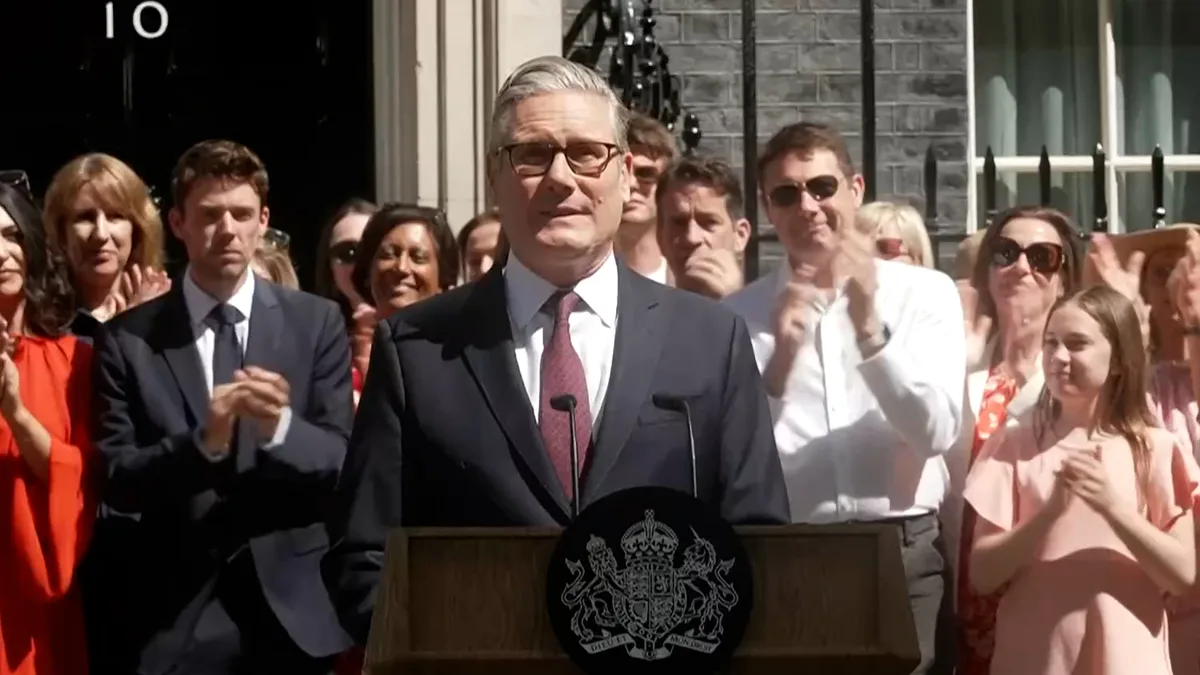
Keir Starmer resigned as UK Prime Minister on July 20, 2026, after King Charles III accepted his resignation [1, 2, 3]. Starmer delivered a farewell speech outside 10 Downing Street, saying, "My work is done. I go with good grace, I go with a smile and I go proud of everything that we have achieved" [2].
Andy Burnham succeeded Starmer as both UK Prime Minister and Labour Party leader on July 20, becoming the sole candidate in the leadership contest [1, 2, 3]. Burnham had received nominations from 379 of 403 Labour MPs, demonstrating broad party support [2]. He pledged to "build a new politics" and said, "The country is crying out for it," promising to restore stability, make politics less toxic, raise living standards, and "bring back the hope" [2].
Starmer became Labour leader in 2020 and led the party to a landslide election victory in 2024. However, his premiership was undermined by political missteps, declining Labour support, and internal party pressure to resign [2]. Burnham became Labour leader unopposed on July 17, 2026, shortly before Starmer’s resignation [2].
King Charles III formally invited Burnham to form a government after Starmer’s resignation was tendered and accepted on July 20 [2, 3]. Burnham is expected to appoint a new Cabinet with significant changes in key portfolios such as the Treasury, foreign affairs, and Home Office [2].
The transition marks a major leadership shift less than two years after Labour’s election win, with Burnham set to take on the role immediately following his appointment.