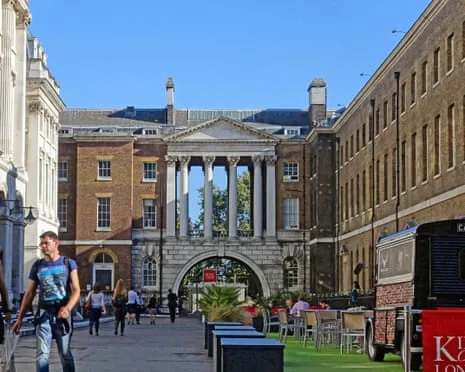
King’s College London and Cranfield University announced on May 14 they will merge to create a new "super-university" with about 47,000 students, making it the UK's second largest mainstream university after University College London and ahead of the University of Manchester [1, 2].
The merger will add roughly 5,000 mainly postgraduate students from Cranfield to King’s total enrollment [1, 2]. The combined institution’s name has yet to be decided [1, 2].
Officials said the merger aims to boost research, innovation, and education by leveraging King’s broad interdisciplinary and policy expertise with Cranfield’s postgraduate focus on technology, engineering, and management, supported by strong industry ties. "Cranfield’s applied research expertise and long-standing industry partnerships would combine with King’s broader academic network," said Prof Dame Karen Holford, Cranfield’s Vice-Chancellor [1, 3, 2].
Prof Shitij Kapur, King’s Vice-Chancellor, said the merger will create "new educational possibilities for students, new discoveries from academics and a clear focus on working in partnership with industry and government to support national resilience," adding that it is "a deliberate step to bring some of the best of the UK to compete with the best in the world" [1, 2].
The UK government provided preliminary approval and supports the merger, viewing it as a boost to the Oxford-Cambridge Growth Corridor and UK science and innovation. Science and Innovation Minister Patrick Vallance said it "will create a driver of innovation and growth, capitalise on the complementary strengths and specialisms of both institutions and increase access, capacity and resilience across teaching and research" [1, 2].
The merger comes amid financial pressures facing English universities, including fluctuating student recruitment, rising costs, and changes to international student visa rules. Cranfield reported an £8 million deficit before tax in the 2024-25 academic year, down from a £29 million surplus the previous year, mainly due to declining international student numbers [3].
Prof Dame Karen Holford emphasized the merger is focused on growth and not further financial restructuring or job cuts, saying, "This merger is not predicated on further financial restructuring or job losses or anything like that. It’s actually a merger for growth" [3].
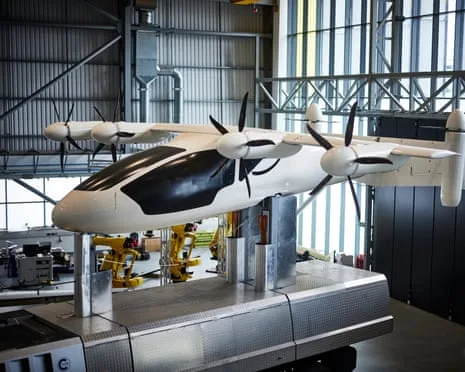
The merged institution will concentrate on research fields such as aerospace, robotics, hydrogen energy systems, life sciences, public leadership, national security, AI, defence, energy, manufacturing, and climate research [2].
The merger is scheduled to be completed by the end of summer 2027, with further details on governance and the institution’s final name expected in the coming months [1, 2].