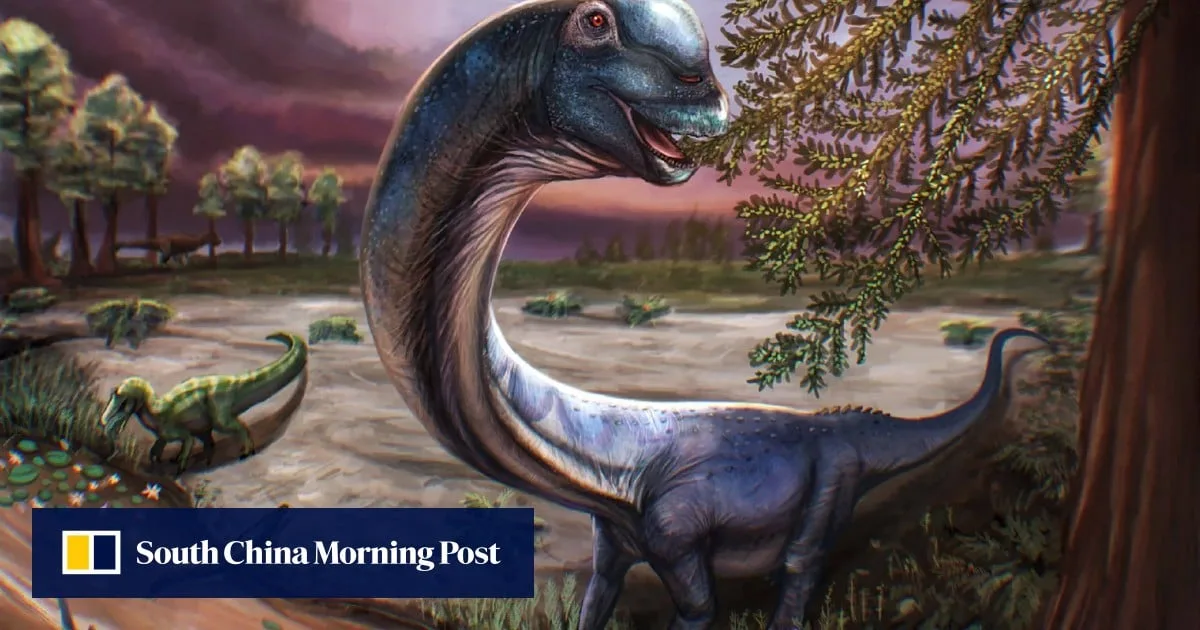
A new species of giant long-necked dinosaur named Nagatitan chaiyaphumensis was identified from fossils uncovered in northeastern Thailand's Chaiyaphum province [1, 2, 3, 4, 5, 6]. At about 27 meters (88-90 feet) long and weighing an estimated 27 tonnes, roughly equivalent to nine adult Asian elephants, Nagatitan is the largest dinosaur discovered so far in Southeast Asia [1, 2, 3, 4, 5, 6].
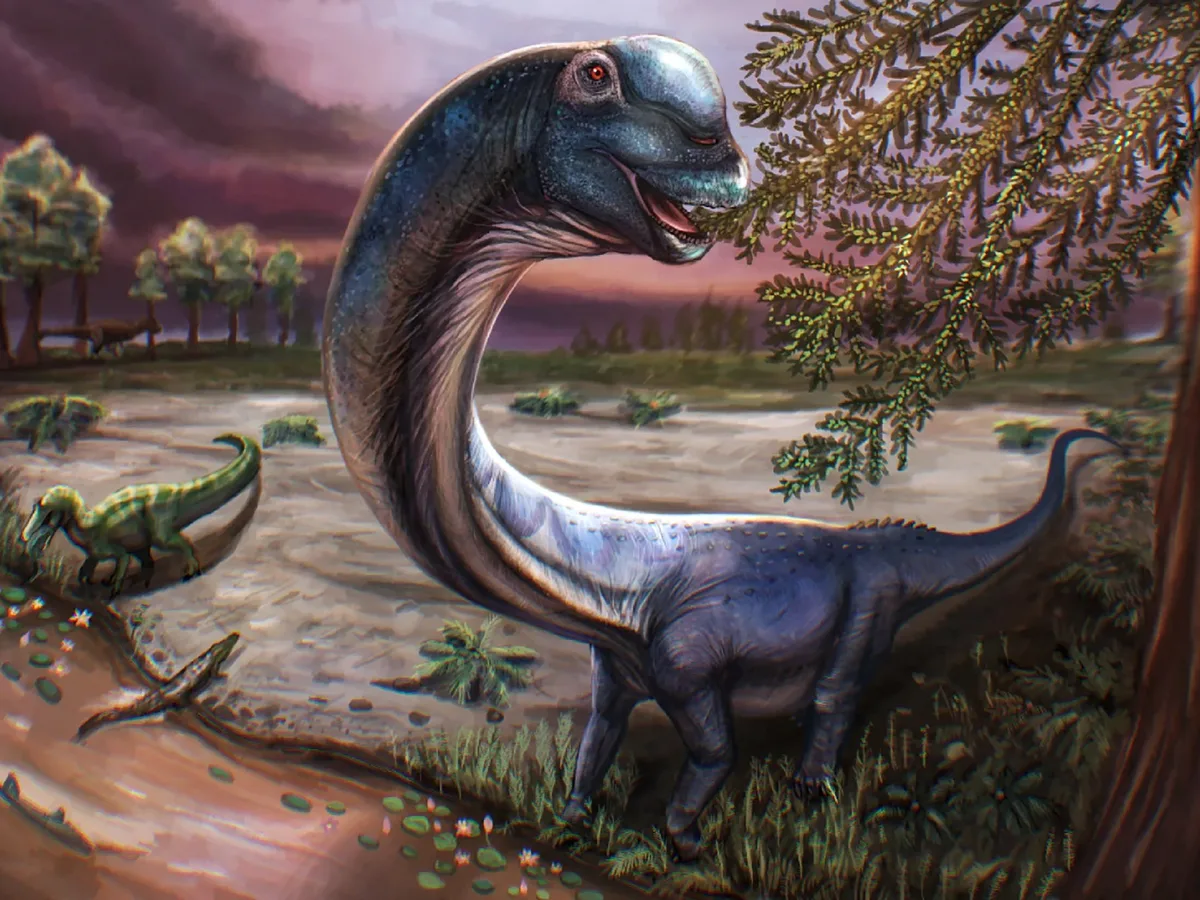
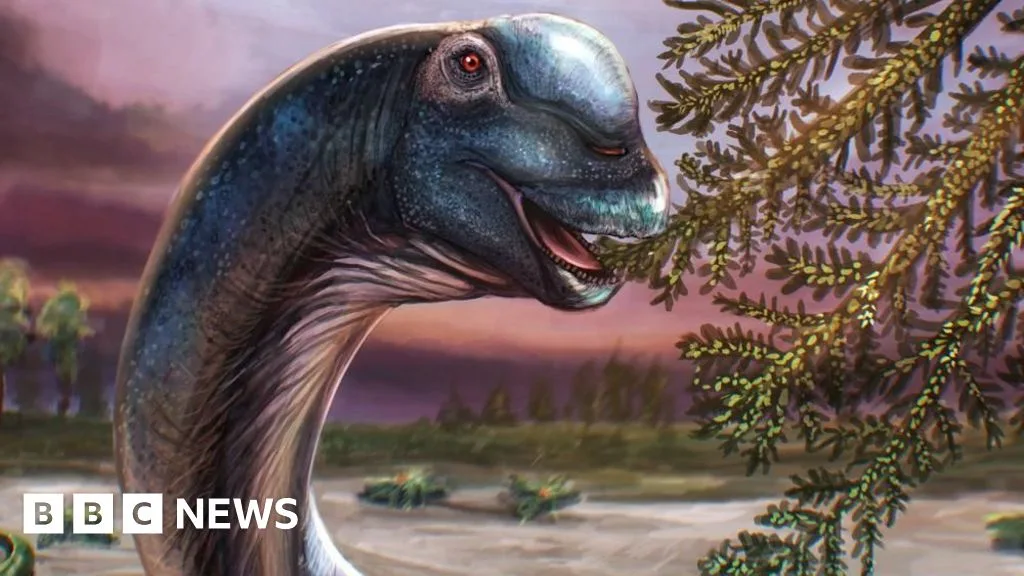
Belonging to the sauropod family, a group of long-necked herbivorous dinosaurs, Nagatitan likely browsed on high volumes of vegetation such as conifers and seed ferns, according to lead researcher Thitiwoot Sethapanichsakul, who said, "Nagatitan was probably a bulk browser that focused on consuming high volumes of vegetation that required little to no chewing" [1, 4, 6].
The fossils were found in one of Thailand's youngest dinosaur-bearing rock formations in Chaiyaphum province. Excavation began after local residents discovered the remains about 10 years ago. Research and excavation of the site were completed in 2024 [1, 2, 3, 4, 5, 6].
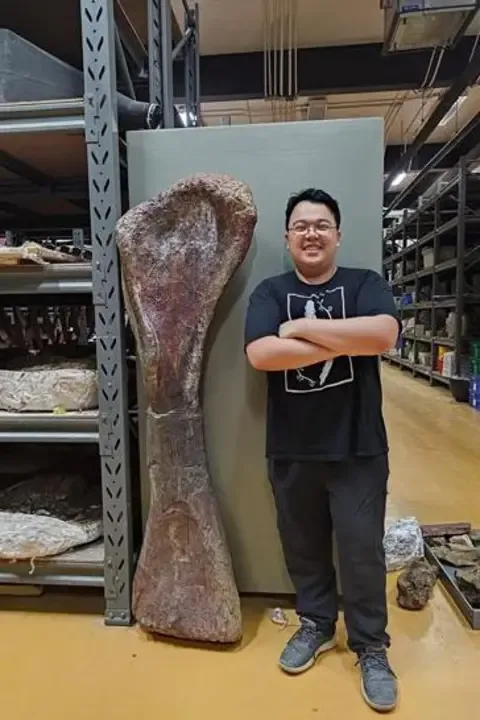
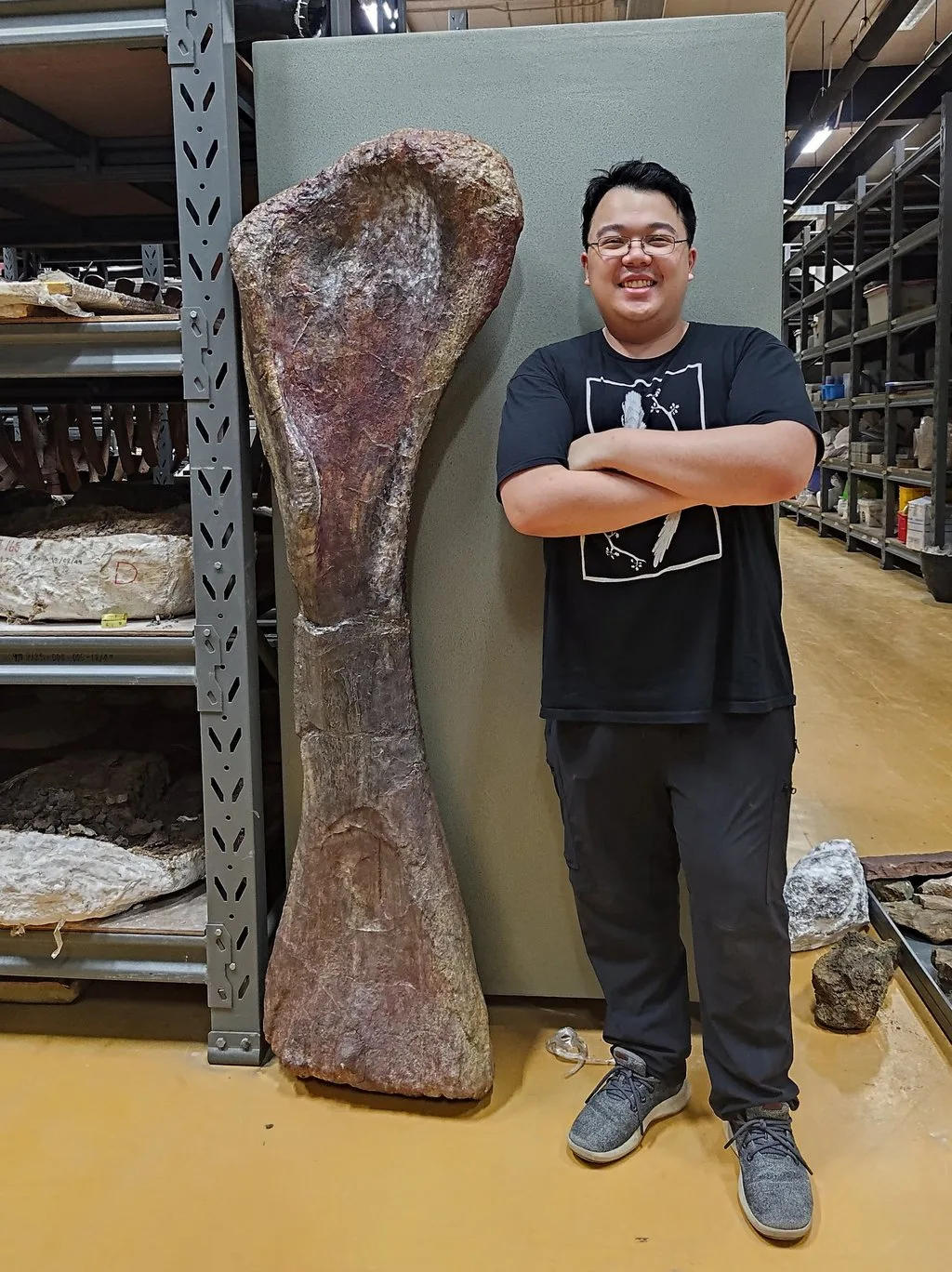
Excavated bones include the spine, ribs, pelvis, and notably a front leg (humerus) measuring 1.78 meters (5.8 feet) long [5, 6]. The dinosaur lived approximately 100 to 120 million years ago during the Cretaceous period. Afterward, the region became a shallow sea, making Nagatitan possibly the last large sauropod species found in Southeast Asia. "So this may be the last or most recent large sauropod we will find in Southeast Asia," said Sethapanichsakul [1, 2, 3, 4, 6].
The species was named after "Naga," a serpent from Southeast Asian folklore; "Titan," referencing giants from Greek mythology; and "chaiyaphumensis" for the province where the fossils were found [1, 2, 3, 5]. Nagatitan is now the 14th dinosaur species named in Thailand [1, 5].
Nagatitan coexisted with other dinosaurs, pterosaurs, crocodiles, and freshwater fish. Large predators in the area were much smaller, around 8 meters long and 3.5 tonnes, unlikely to threaten a fully grown Nagatitan. Sethapanichsakul noted, "At that size, it was dwarfed by Nagatitan. At full size, Nagatitan likely had very little to fear in terms of predation" [6].
The scientific description of Nagatitan chaiyaphumensis was published on May 14, 2026, in the journal Scientific Reports [1, 2, 3, 4, 5, 6]. Sethapanichsakul said, "My dream is to continue pushing to get Southeast Asian dinosaurs recognized internationally" [5].