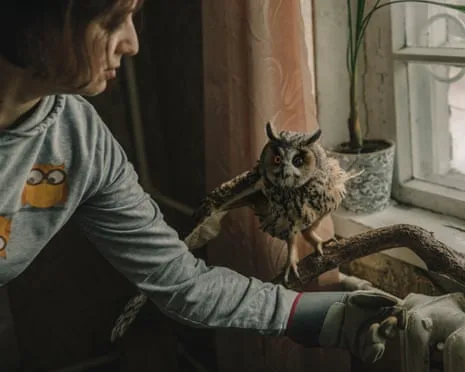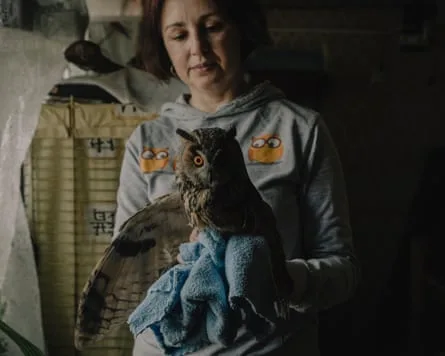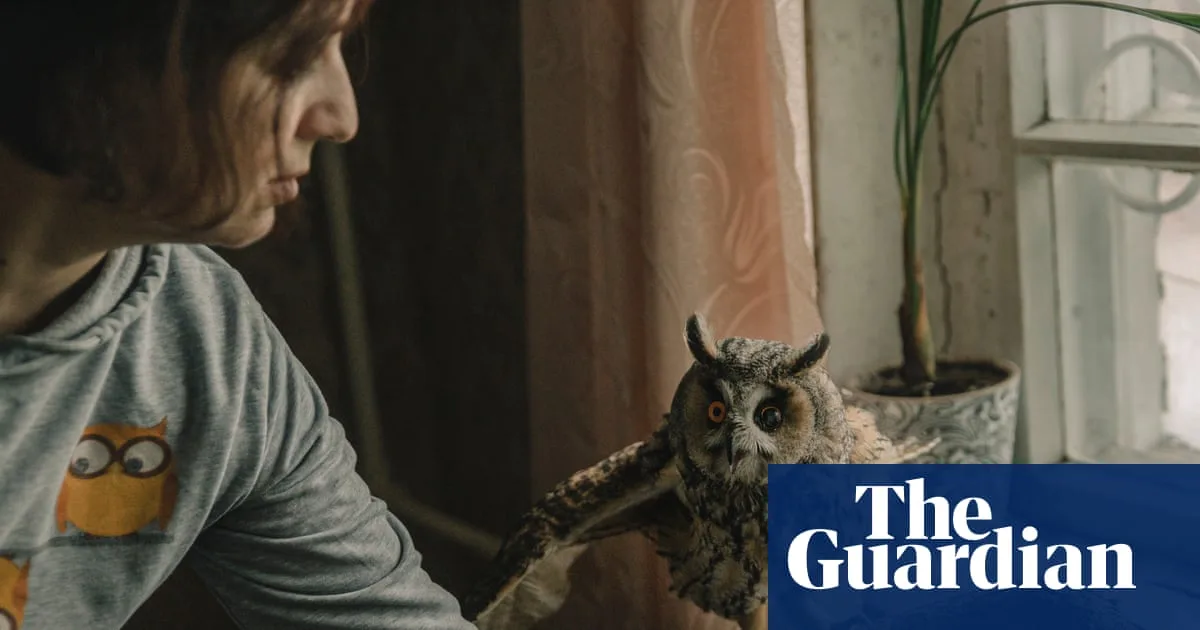
A male long-eared owl suffered severe injuries during a Russian kamikaze drone attack on the Ukrainian city of Zaporizhzhia in February 2026. The owl, found blinded in one eye with a badly broken left wing, was rescued by a passerby and taken to Dnipro for treatment [1].
Volunteer biologist Veronica Konkova, who has rescued wounded birds since 2015, is caring for the owl, nicknamed Sunny. She explained, "The fracture was so bad his left wing had to be amputated. The vet diagnosed brain trauma. Sunny doesn’t react normally to light" [1]. Currently unable to fly or hunt, Sunny hops around while recovering before being moved to a wildlife rehabilitation center in Kyiv [1].
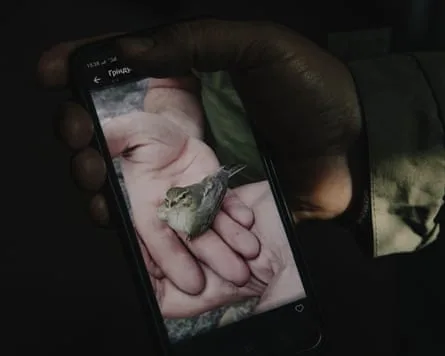
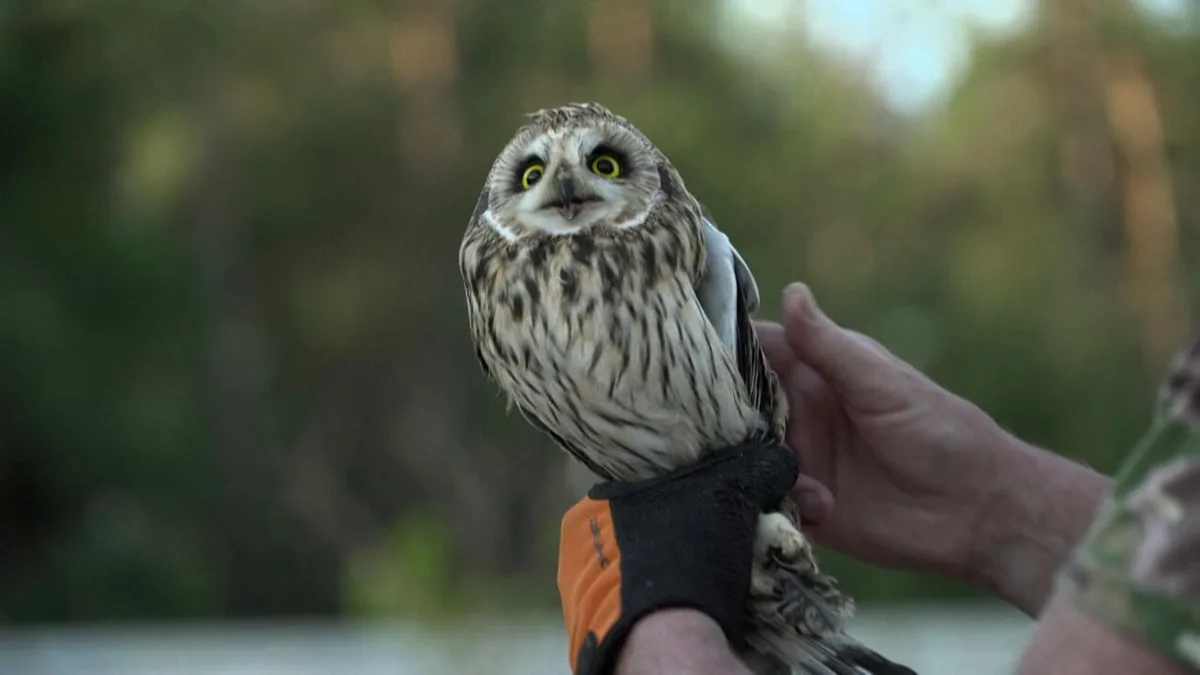
Konkova spoke about the broader impact of the war on wildlife, noting that many birds become trapped in nets set up to protect roads from enemy drones. "The birds die from dehydration or from heart attacks if they get stuck upside down for a long time," she said [1]. Owls often get caught in thin fiber-optic cables dropped by Russian drones across battlefields [1].
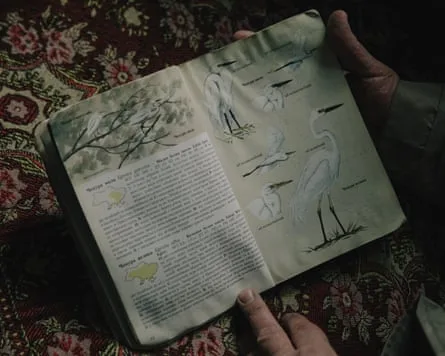
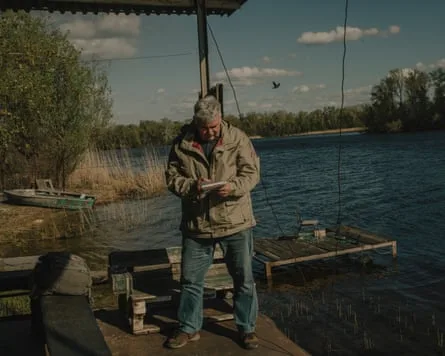
The war has severely damaged natural habitats, including migratory bird breeding grounds along the Dnipro River. Oleksandr Ponomarenko noted, "We’re losing the birds’ feeding grounds. The area is shrinking" [1]. In 2023, Russian forces blew up the Kakhovka dam on the Dnipro, causing massive flooding and destruction that harmed wildlife environments [1].
Sunny’s case highlights the toll of the conflict beyond human casualties. Rescue workers continue to treat injured wildlife amid ongoing fighting in eastern Ukraine [1].