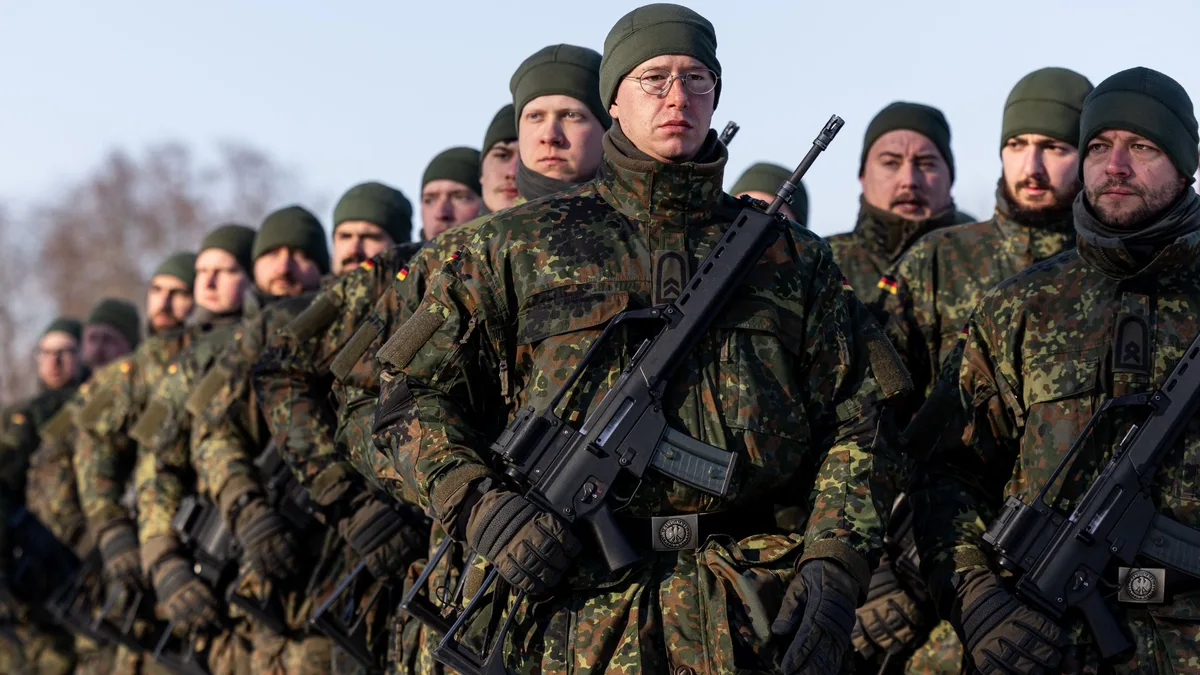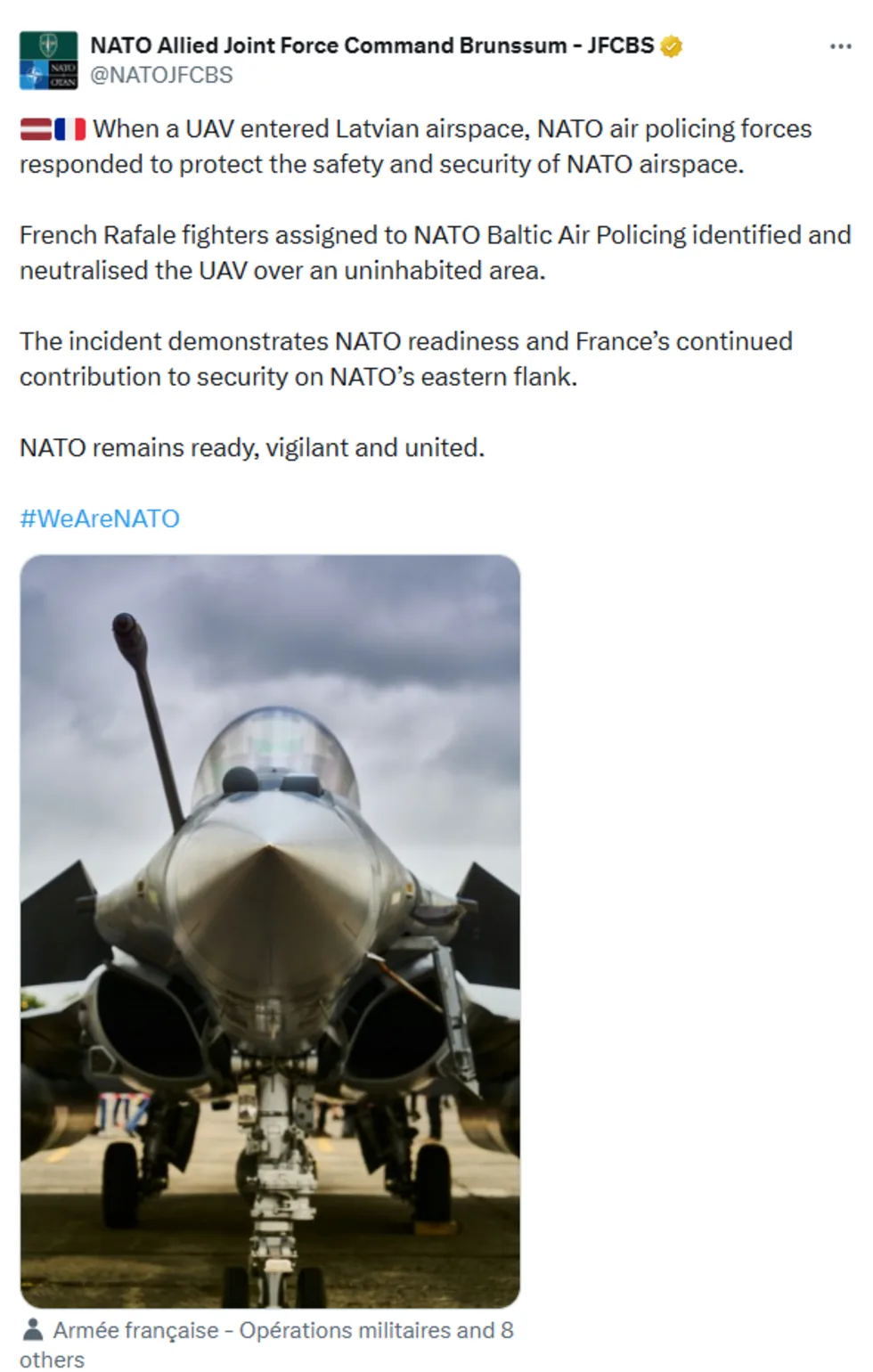
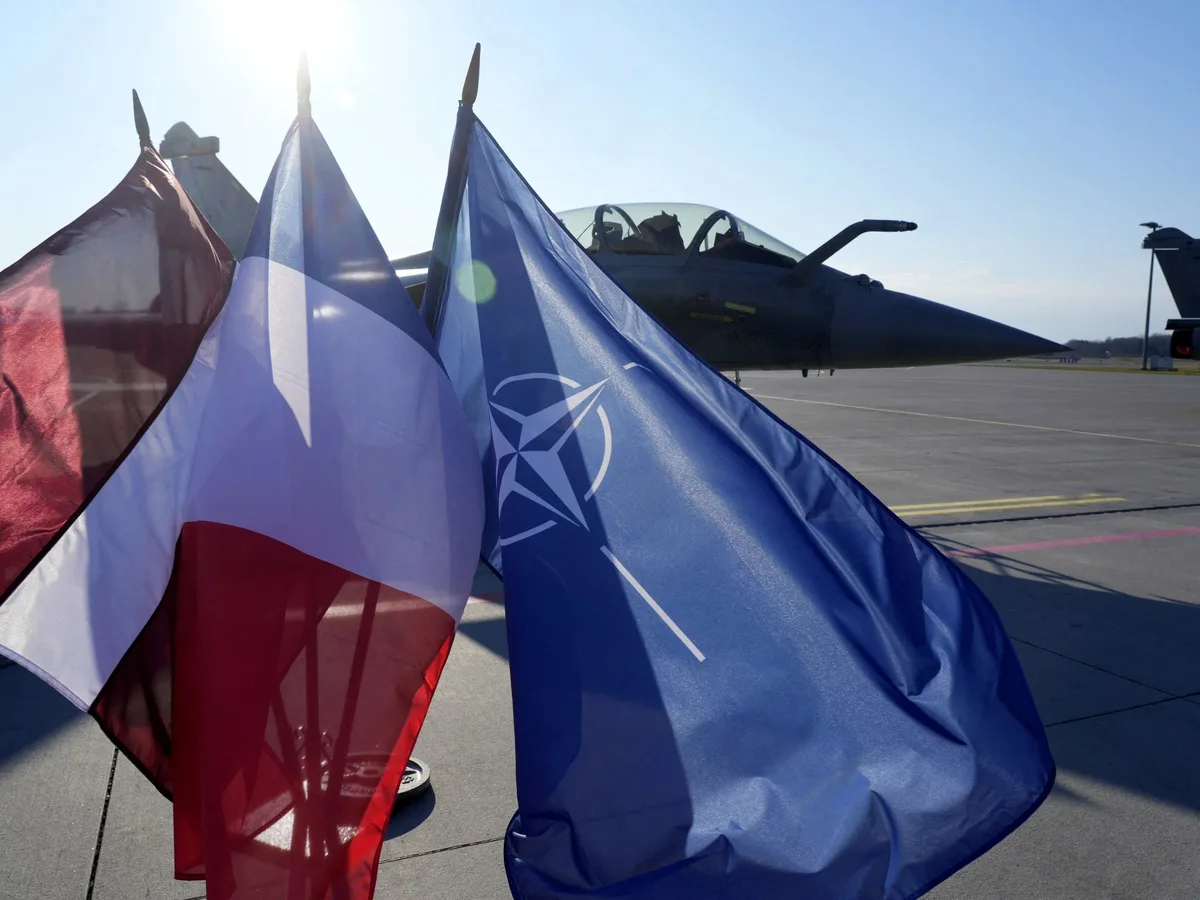
NATO fighter jets, including French Rafale fighters, shot down a drone that entered Latvian airspace from Russia on June 8 near the village of Berzgale, about 30 km from the Russian border, at 07:05 GMT (just after 09:00 local time) [1, 2, 3]. The incursion occurred due to Russian electronic warfare activities that caused the drone to stray into NATO airspace, according to Latvian and NATO sources [1, 2, 3]. Latvian officials praised the swift and professional response, with Prime Minister Andris Kulbergs commending the “swift decision-making and professional action” and Foreign Minister Baiba Braze thanking France for the shootdown [1, 2]. A NATO official said the event “shows once again NATO’s determination and ability to deter and defend” [1].
No casualties or property damage were reported from the incident, according to official statements [1, 2]. Residents in eastern Latvia were warned to shelter indoors amid the airspace threat around the time of the drone incursion [1, 2, 3]. Latvian authorities have since increased air defense capabilities along the eastern border, deploying additional units for monitoring and quick response [4, 3].
The shootdown occurred the same day fragmented remains of a Ukrainian drone were found in Moldova after entering from Ukraine, further raising concerns about the spillover of the Russia-Ukraine conflict into neighboring states [1, 2]. Repeated drone incursions into the Baltic states’ airspace in recent weeks have heightened regional security concerns [1, 2, 4, 3].
Latvia has a population of 2.8 million and shares a 274 km border with Russia's Kaliningrad exclave [4]. The government faces political tension partly tied to border security, with its coalition collapsing in May over disagreements on handling drone incursions [4]. Ukraine asserts that Russian electronic jamming inadvertently diverted drones into Baltic airspace, while Russia denies responsibility and accuses Latvia of planning to deploy military drones [4].
Latvian defense spending stands at 5.38% of GDP as it seeks to strengthen border security amid the ongoing conflict's regional fallout [4]. Additional air defense units remain deployed along Latvia’s eastern border as monitoring continues following the June 8 incident [4, 3].
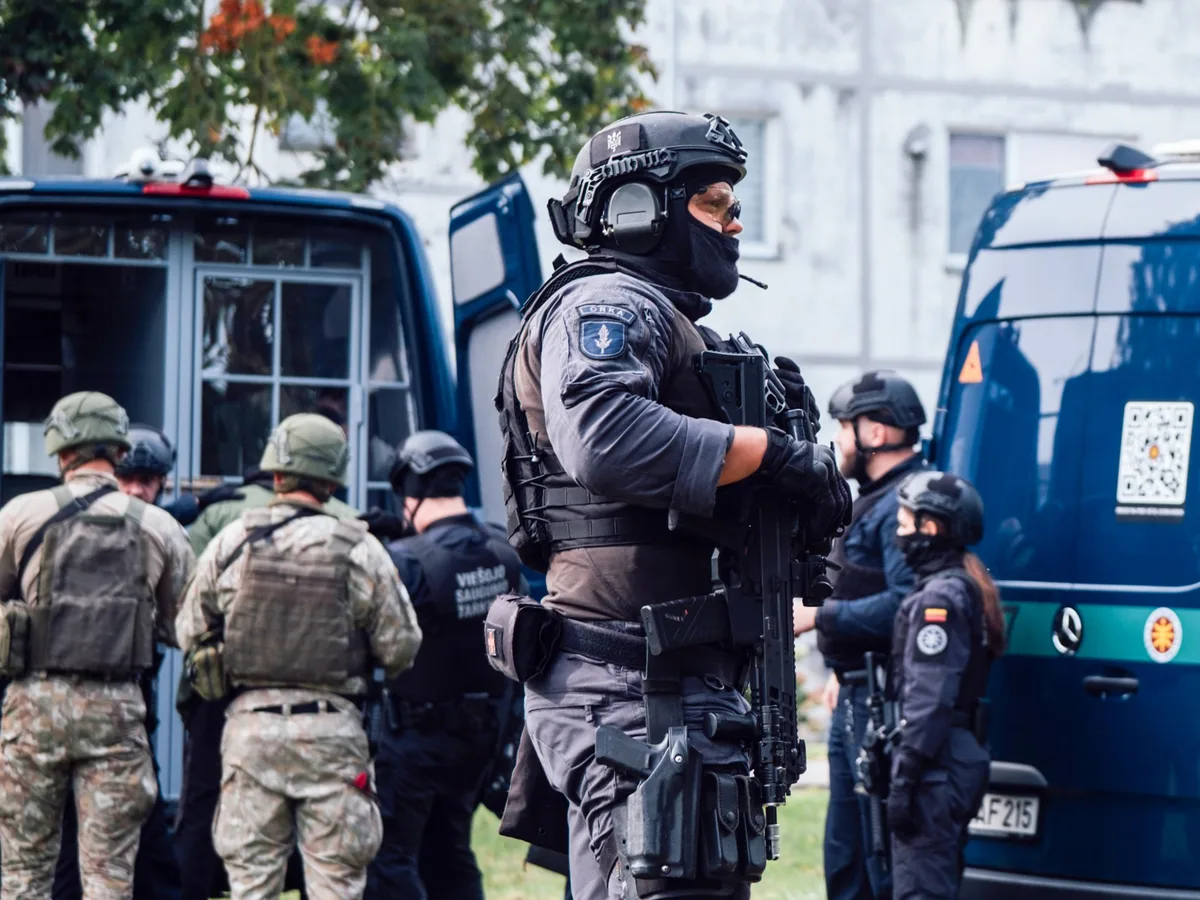
![Lithunanian armed special forces and members of the Lithuanian Riflemen’s Union take part in a military exercise in central Lithuania [File: Nils Adler/Al Jazeera]](/uploads/2026/06/10/535b5e5096a07b66578a8069.webp)