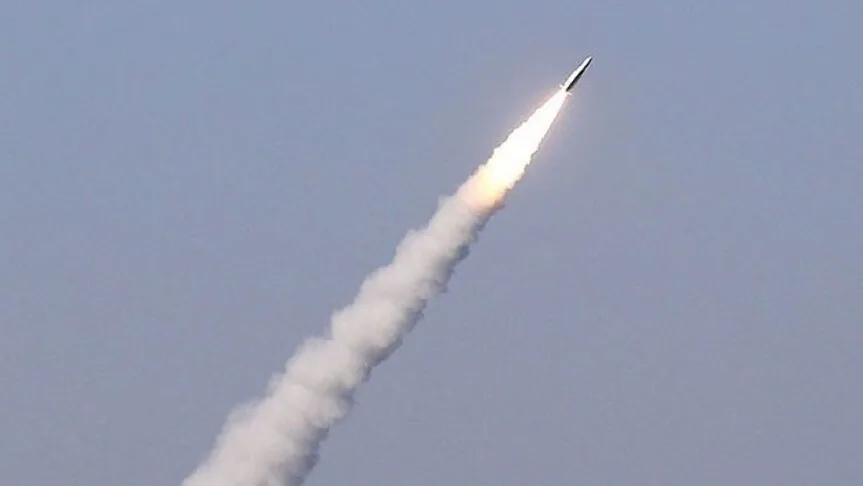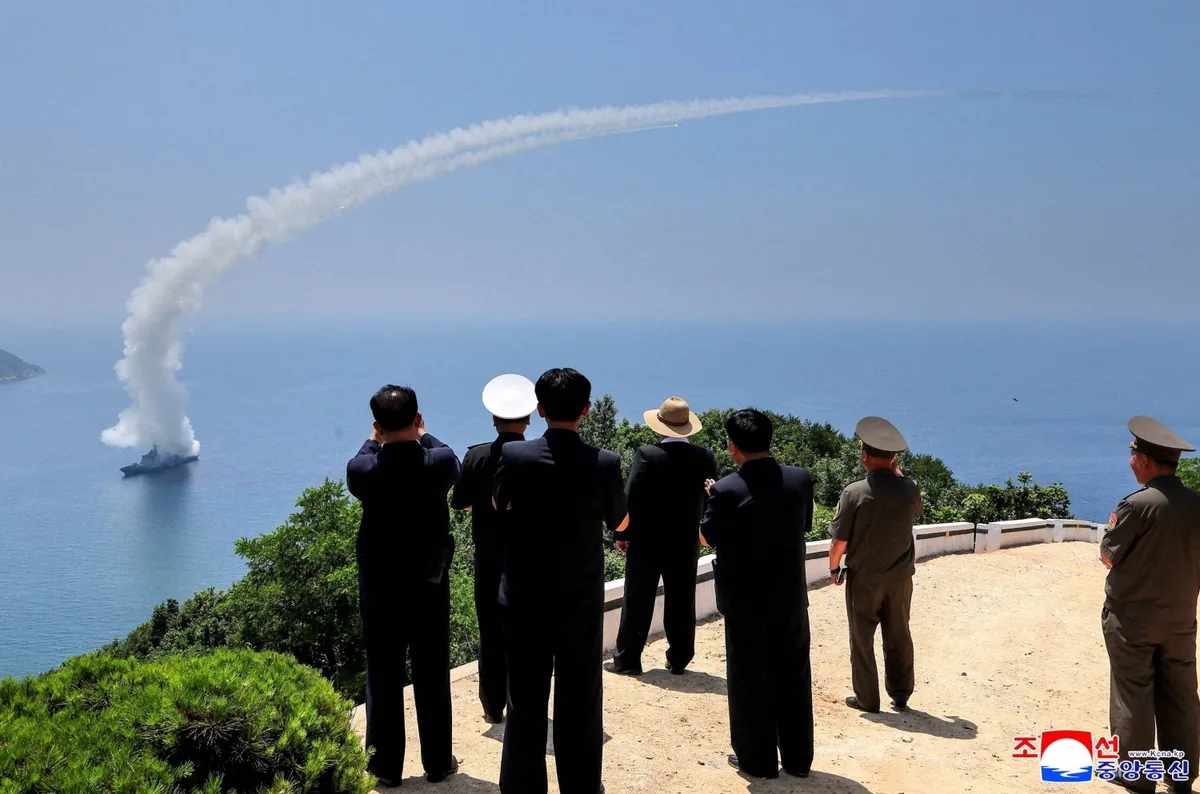
North Korean leader Kim Jong Un supervised weapons tests on July 3, 2026, from the 5,000-ton destroyer Kang Kon. The tests included cruise missile launches and electronic warfare operations, according to multiple sources [1, 2, 3]. South Korea's military detected a cruise missile fired from the Kang Kon toward the East Sea on the same day [3].
The Kang Kon destroyer had partially capsized during its launch ceremony in May 2025 but was subsequently repaired and relaunched in June 2025 [1, 2, 3]. Kim Jong Un blamed the accident on "absolute carelessness" and "irresponsibility," ordering those responsible to be held accountable [1, 2].
Kim gave instructions to “complete the trial process of the destroyer in a responsible manner and commission it for the Navy within two months,” indicating an imminent formal induction of the vessel [1, 2, 3]. Analysts note the commissioning is likely timed to coincide with North Korea’s 78th founding anniversary on September 9, 2026 [2].
The weapons test came less than two weeks after another 5,000-ton destroyer, the Choe Hyon, entered military service in mid-June 2026 [1, 2]. During that ceremony, Kim vowed to equip the navy with nuclear weapons and develop larger 10,000-ton warships [1, 2]. Since the 2019 Hanoi summit collapse, North Korea has declared itself an "irreversible" nuclear state [1, 2].
The Kang Kon is expected to operate primarily off the eastern coast of the Korean peninsula, focusing on nearshore low-threat missions [2]. Kim also emphasized the need to strengthen North Korea’s war deterrent and pledged to demonstrate “through more obvious actions our political will and determination to have an absolute power” [1, 2, 3].
North and South Korea remain technically at war, as their 1950-53 conflict ended with an armistice, not a peace treaty [1, 2]. The next key milestone is the commissioning of the Kang Kon destroyer into the navy before the September 9 anniversary, in line with Kim’s directive [1, 2, 3].