Ousted Ukrainian defence minister Mykhailo Fedorov publicly called for elections during wartime, citing a systemic crisis of governance and corruption in Ukraine. He said, "Democracy cannot be held hostage by Russia," challenging the suspension of elections under martial law since Russia's full-scale invasion in 2022 [1, 2, 3].
Ukraine has been under martial law since February 2022, which has suspended elections while the country defends its territory [1, 2, 3]. The Ukrainian government maintains that elections cannot be held under these conditions until the war ends [2].
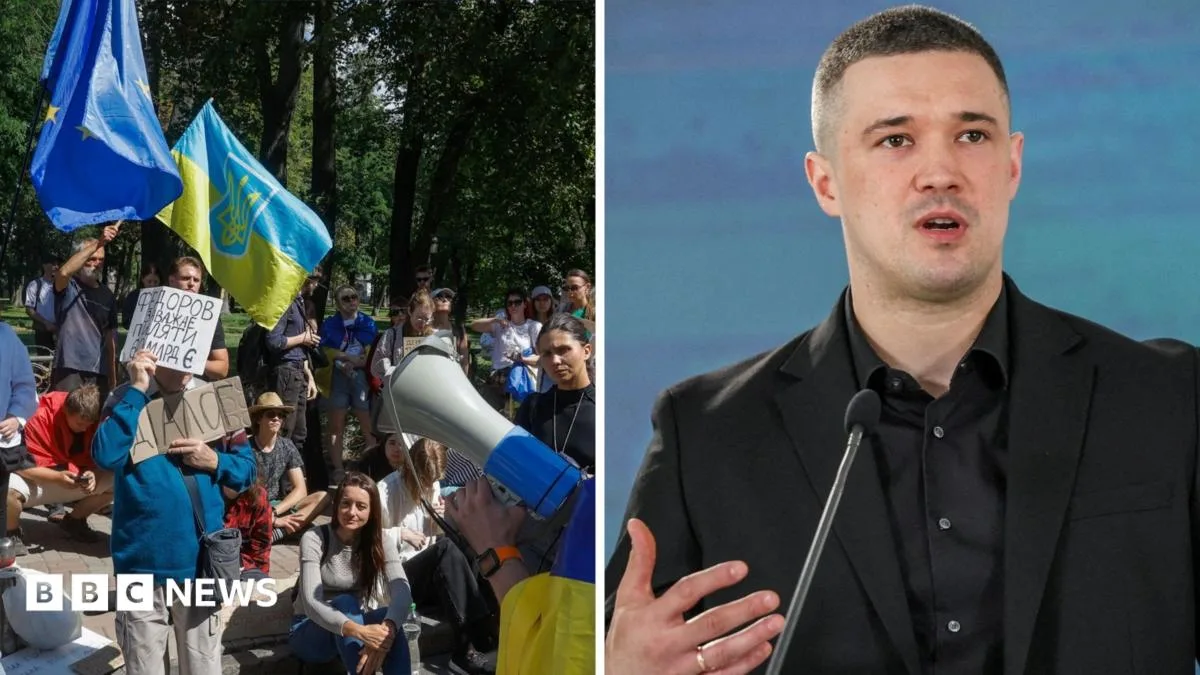
Fedorov has not confirmed whether he will run against President Volodymyr Zelensky in the proposed elections [1]. His call triggered protests in Kyiv on August 19, where demonstrators supported his push for holding elections despite ongoing conflict [4].
On the same day, Ukraine’s parliament confirmed Yevhenii Khmara as the new defence minister to replace Fedorov [4].
Kremlin spokesman Dmitry Peskov responded by saying Fedorov’s call revealed deep divisions within Ukraine’s leadership. Peskov claimed the Kyiv regime is "extremely heterogeneous" and criticized the call as part of internal political splits. He echoed President Vladimir Putin’s position that without elections, Zelensky lacks the legitimacy to negotiate with Russia [2].
The dispute highlights a sharp disagreement. Fedorov and his supporters insist on elections as a means to resolve governance problems amid war, while Ukraine’s government rejects holding polls under martial law. Kremlin statements aim to question Zelensky’s mandate in ongoing conflict talks [1, 2, 3, 4].
The parliament’s appointment of Khmara formalizes the defence ministry transition amid the political dispute. Meanwhile, protests in Kyiv signal public divisions over wartime governance and political leadership.
The situation remains fluid, with no official date set for elections. Ukraine continues martial law while defending its territory and managing internal governance challenges [1, 2, 3].