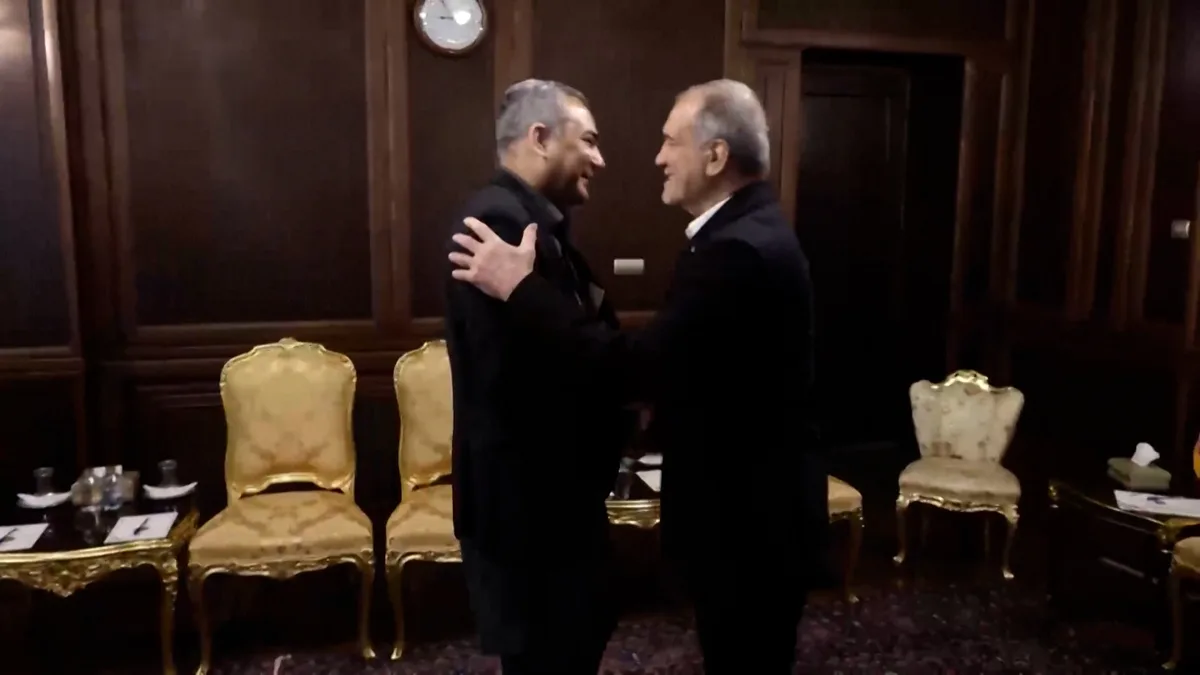
Pakistan Interior Minister Mohsin Naqvi arrived in Tehran on May 16 for an unannounced visit to meet Iranian officials, including President Masoud Pezeshkian and Interior Minister Eskandar Momeni [1, 2, 3]. The discussions focused on regional security, strengthening cooperation between the two nations, and enhancing border trade [1, 3].
Iranian Interior Minister Eskandar Momeni said both sides were determined to expand economic and trade relations. He stressed the need to establish facilities on both sides of the border to strengthen what he called "unity, solidarity, and brotherhood" [3]. Naqvi expressed confidence that the two countries would reach "tangible solutions" on bilateral relations, border security, and trade [3].
The visit comes amid Pakistan’s ongoing efforts to mediate between the United States and Iran. A ceasefire brokered by Pakistan took effect on April 8 after US and Israeli strikes triggered conflict with Iran on February 28 [2, 3, 4]. However, talks hosted by Pakistan in Islamabad from April 11 to 12 failed to produce a lasting agreement [4].
Following the Tehran visit, Pakistani and Qatari diplomats held discussions on May 18 to revive the stalled US-Iran negotiations [4]. The day before, Pakistani Prime Minister Shehbaz Sharif and Qatari Prime Minister Mohammed bin Abdulrahman Al Thani spoke by phone about developments in the Middle East [4].
Pakistan’s Foreign Ministry said both sides in the Tehran meeting emphasized the importance of dialogue and diplomatic engagement to address regional challenges [4]. Pakistani Foreign Minister Ishaq Dar reaffirmed Pakistan’s commitment to advancing peace, stability, and prosperity in the region and beyond [4].
Naqvi’s talks in Tehran aim to bolster cooperation with Iran while supporting Pakistan’s role as mediator in the US-Iran conflict, which remains tense after the initial ceasefire. Further diplomatic efforts by Pakistan and regional partners are continuing to seek a durable solution.