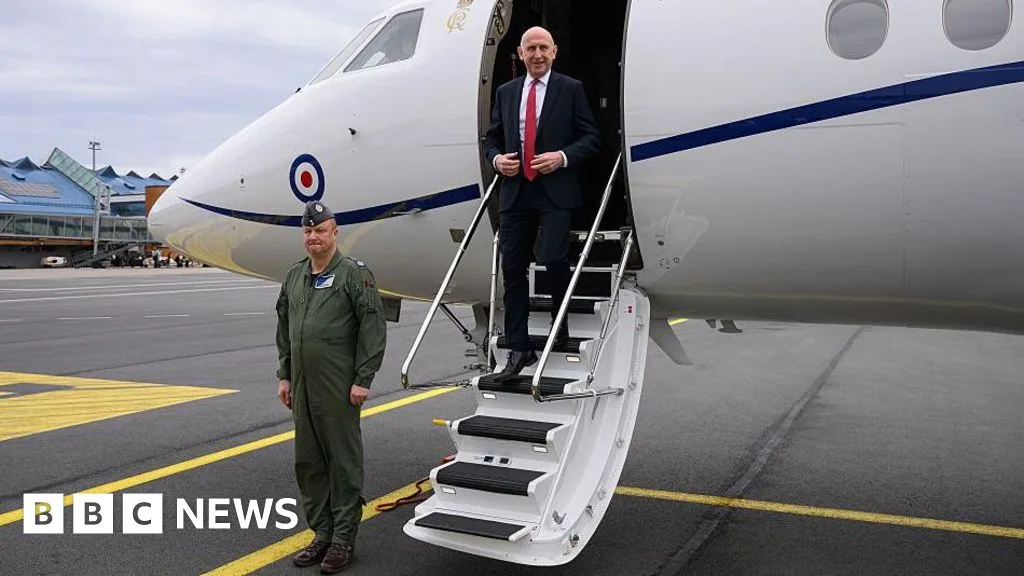
An RAF jet carrying UK Defence Secretary John Healey experienced GPS signal jamming near the Russian border on May 21 during a return flight to the UK from Estonia, lasting three hours and forcing pilots to navigate using inertial systems instead [1, 2]. The jamming disabled the aircraft’s GPS and also affected onboard laptops and smartphones [2].
Healey was returning from a visit to British soldiers participating in a NATO exercise in southeastern Estonia close to the Russian border [1, 2]. The incident marks a serious escalation in electronic interference targeting UK military flights in the region.
Russia is believed to be responsible for the signal jamming, though this attribution remains medium confidence [1, 2]. A pilot aboard the RAF jet described the event as an unusual occurrence not experienced "in a long time" [2].
Last month, Russian Su-35 and Su-27 jets made close, aggressive passes near RAF and U.S. surveillance aircraft in the same area, with some jets approaching as close as 6 meters from RAF planes’ noses [1]. John Healey praised the RAF crew’s "outstanding professionalism during unacceptable Russian flybys" which the UK Ministry of Defence called the most dangerous Russian actions since 2022 [1].
In 2022, a "rogue" Russian pilot fired a missile at a U.S. Rivet Joint surveillance aircraft over the Black Sea, underscoring ongoing tensions in the region [1].
The UK government has not announced specific countermeasures following the jamming incident. The next NATO exercises in the region remain scheduled as planned, with vigilance increased for electronic or physical provocations.