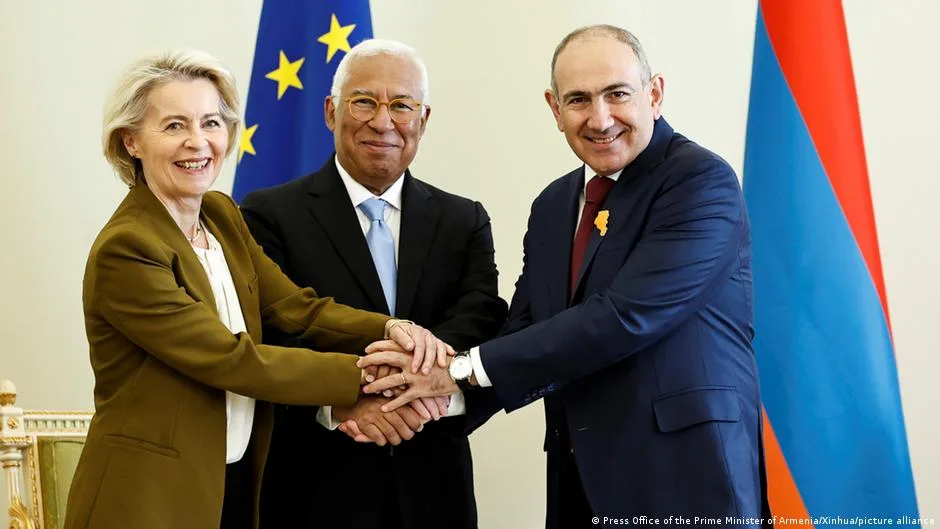
Russia announced on May 30 that it recalled its ambassador to Armenia, Sergey Kopyrkin, for consultations due to Armenia's steps to deepen relations with the European Union, which Russia says undermine cooperation within the Eurasian Economic Union (EEU) [1, 2, 3, 4, 5].
The Russian Foreign Ministry stated, "The Russian ambassador to the Republic of Armenia, S. Kopyrkin, has been recalled to Moscow for consultations on steps taken by the Armenian leadership on a rapprochement with the European Union, undermining cooperation within Eurasian Economic Union" [1]. A similar message emphasized that the ambassador "has been called to Moscow for consultations in connection with steps by the Armenian leadership aimed at rapprochement with the EU that are causing damage to interaction within the EAEU" [3].
Armenia has traditionally maintained strong economic, diplomatic, and security ties with Russia but has in recent years increasingly moved toward closer relations with the West and the EU [1, 4, 5]. The EEU, a regional economic bloc including Russia, Armenia, Belarus, Kazakhstan, and Kyrgyzstan, expressed concerns about Armenia's plans to apply for EU candidacy [1, 2, 5].
Leaders of the EEU called on Armenia on May 29 to hold a referendum to decide whether to remain in the EEU or pursue EU membership. They warned such shifts posed "significant risks" to the EEU's economic security and raised the possibility of suspending Armenia's EEU membership [1, 2, 4, 5].
Russian President Vladimir Putin compared the tension to the "Ukrainian scenario" where conflict erupted after Ukraine sought closer EU integration [1]. There are also Russian threats to suspend affordable natural gas supplies to Armenia and ban imports of Armenian brandy, fruits, and vegetables if Armenia moves closer to the EU market, potentially costing Armenia at least 14% of its economy [1, 4, 5].
Relations between the two countries have been strained after Armenia accused Russia of failing to support it during the 2020 and 2023 wars with Azerbaijan over Nagorno-Karabakh [1, 4, 5]. Armenia's population is approximately 3 million [4].
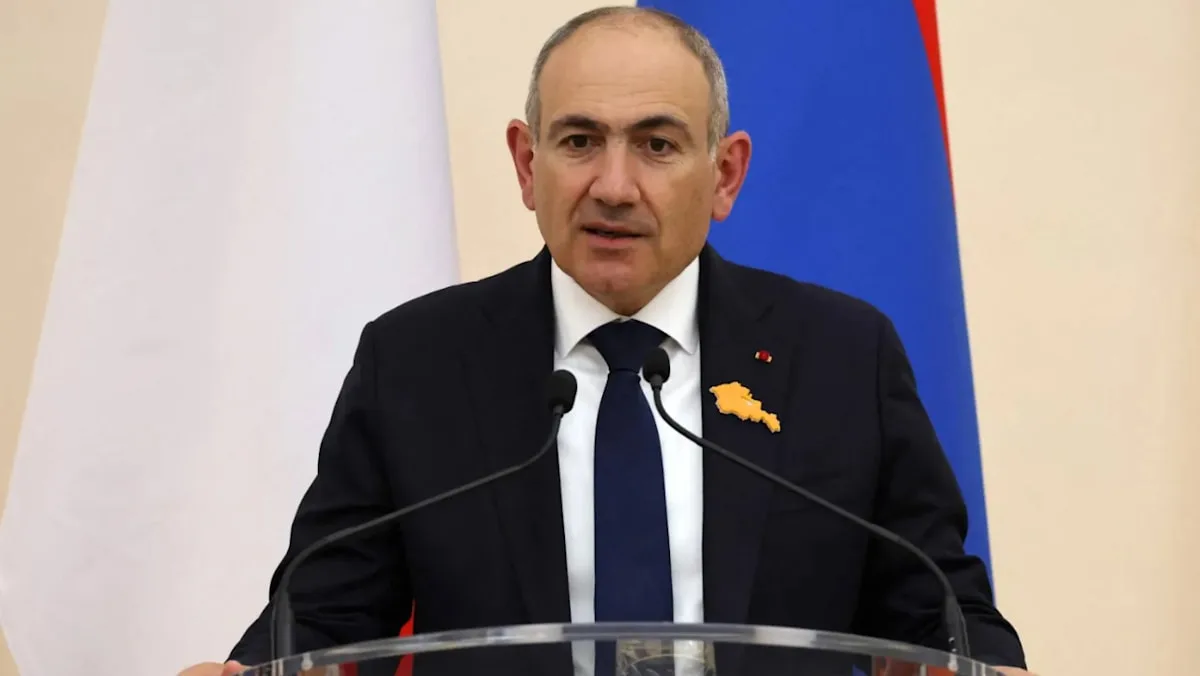
Armenia is set to hold parliamentary elections on June 7, 2026. Current polls indicate the pro-Western ruling party of Prime Minister Nikol Pashinyan is leading over the pro-Russian opposition amid these geopolitical tensions [4, 5].