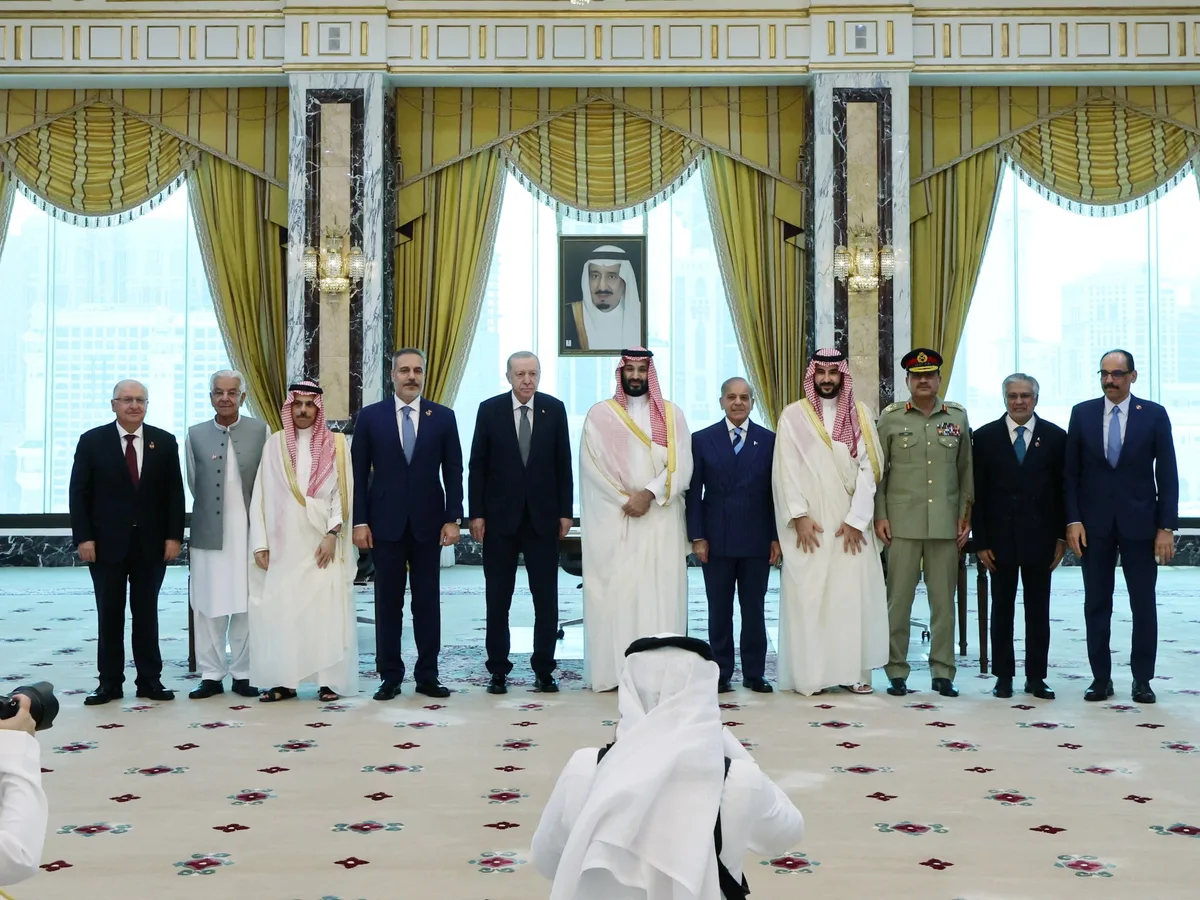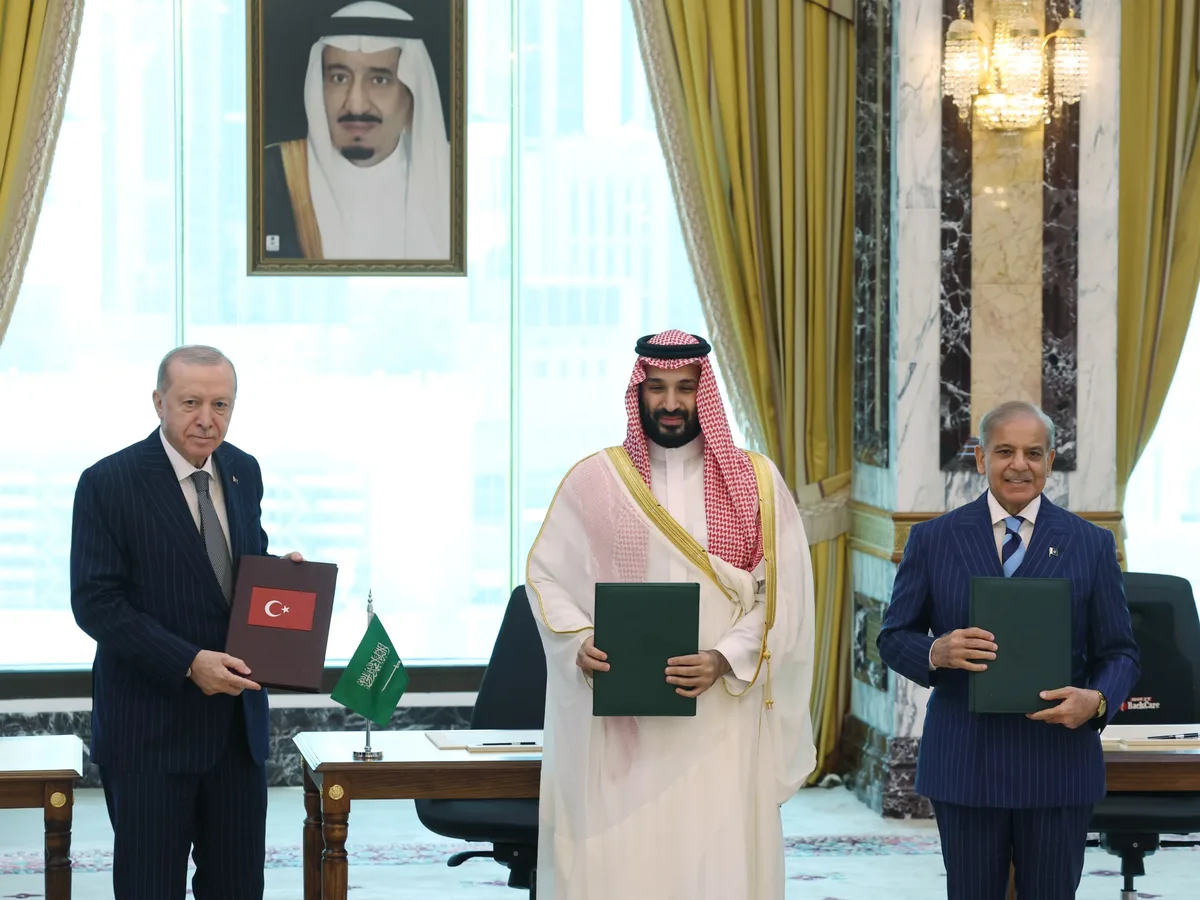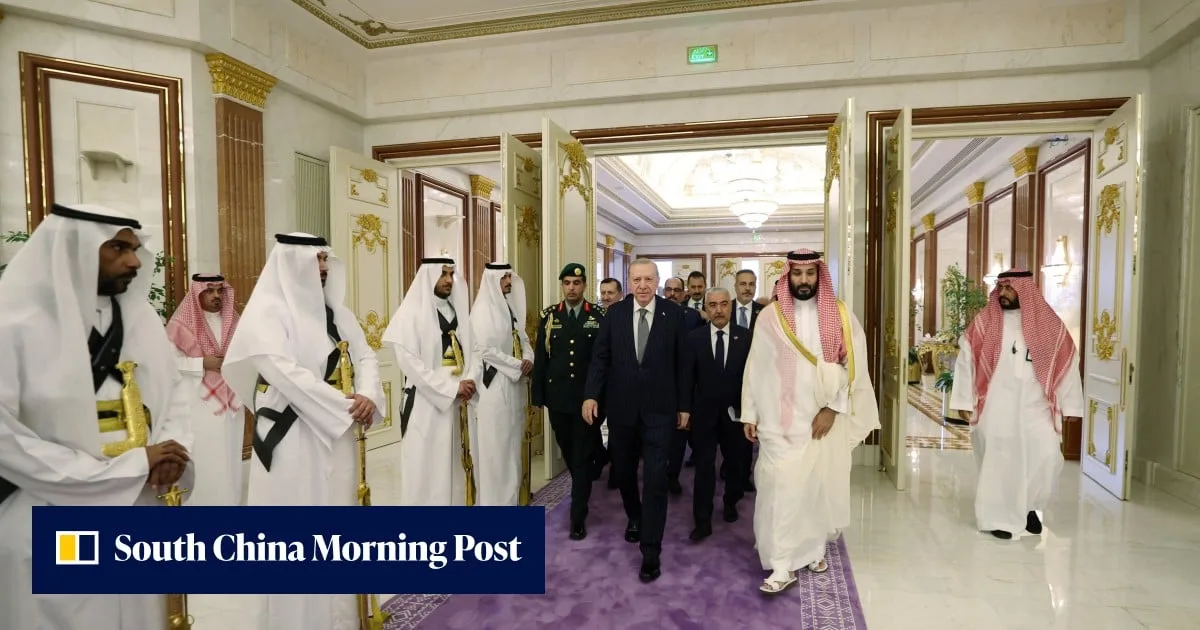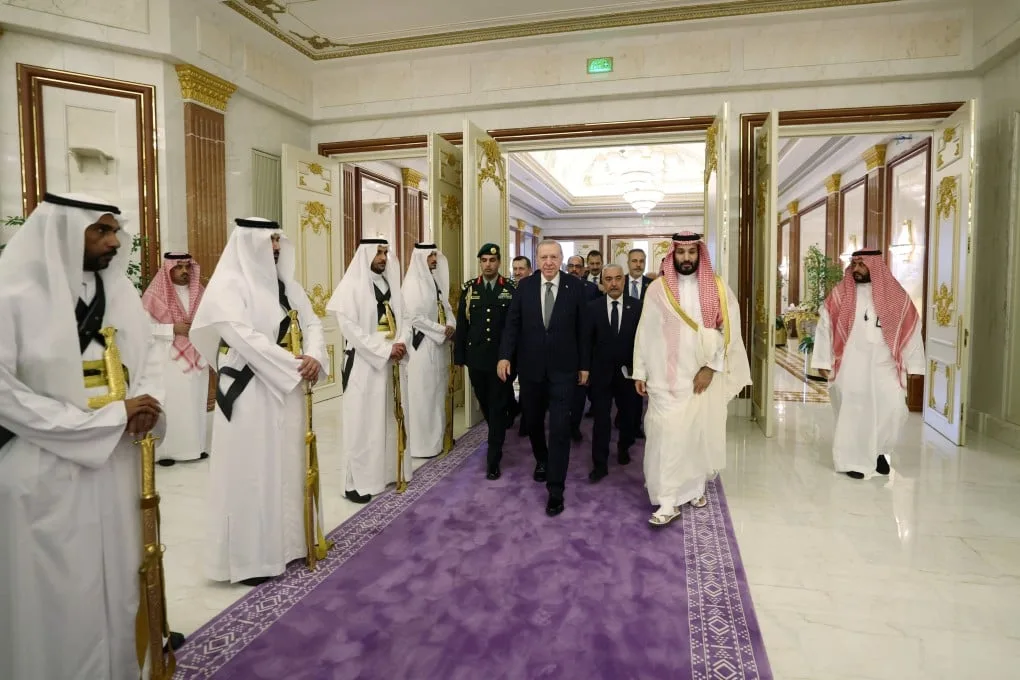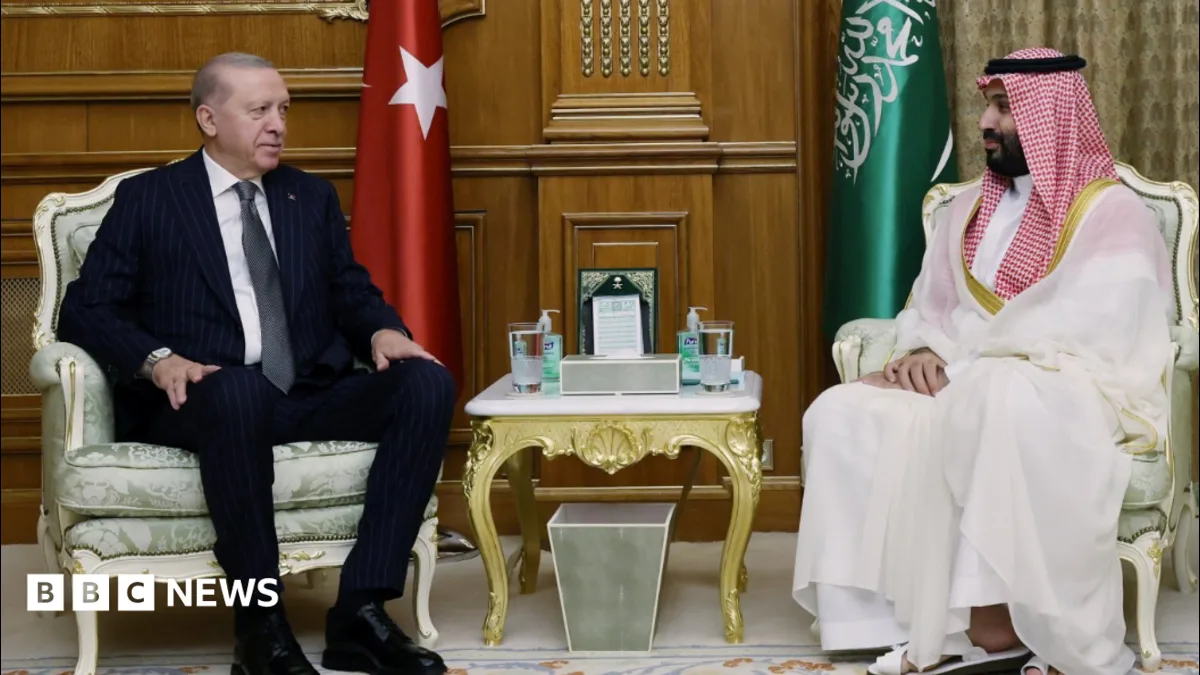
Saudi Arabia, Turkey, and Pakistan signed the Mecca Joint Defense Agreement at a trilateral summit in Mecca on August 7, 2026, pledging mutual defense against armed attacks on any of the three countries [1, 2, 3]. The pact was signed by Turkish President Recep Tayyip Erdogan, Saudi Crown Prince Mohammed bin Salman, and Pakistani Prime Minister Shehbaz Sharif at Al-Safa Palace during a summit hosted by King Salman bin Abdulaziz Al Saud [1, 4, 5].
The agreement commits the three nations to regard an armed attack on one as an attack on all. It aims to strengthen collective security, defense cooperation, deterrence, and regional stability [1, 3, 6]. Pakistani Army Chief Asim Munir accompanied Prime Minister Sharif to the Saudi meeting, signaling the military dimension of the pact [2, 7].
Saudi Foreign Minister Prince Faisal bin Farhan described the agreement as reflecting "the depth of the brotherly and strategic relations among the three countries" and said it would "pave the way for a secure future in which opportunities for development and prosperity are strengthened" [8, 9]. Turkish Communications Director Burhanettin Duran called the pact a "historic step in further strengthening our shared history, deep-rooted brotherly ties and strong spirit of solidarity" [10]. Turkish Vice President Cevdet Yilmaz expressed hopes that enhanced security cooperation would "accelerate economic cooperation, particularly in connectivity, trade, finance and investment" [11].
Saudi Defense Minister Prince Khalid bin Salman said the pact establishes a long-term defense partnership to enhance deterrence, coordination, and integration among the three nations [9]. The agreement is defensive in nature and not directed against any specific country. It also is open to other regional countries wishing to join [3, 10].
The pact builds on longstanding historical ties, Islamic solidarity, shared strategic interests, and prior Saudi-Pakistan defense cooperation [2, 6]. It comes amid regional turmoil driven by the ongoing US-Iran conflict, attacks on Saudi Arabia, and disruptions to key shipping routes in the Strait of Hormuz and Red Sea [1, 2, 6]. Analysts see it as signaling a regional security realignment and expressing doubts about the US as a reliable security guarantor [12].
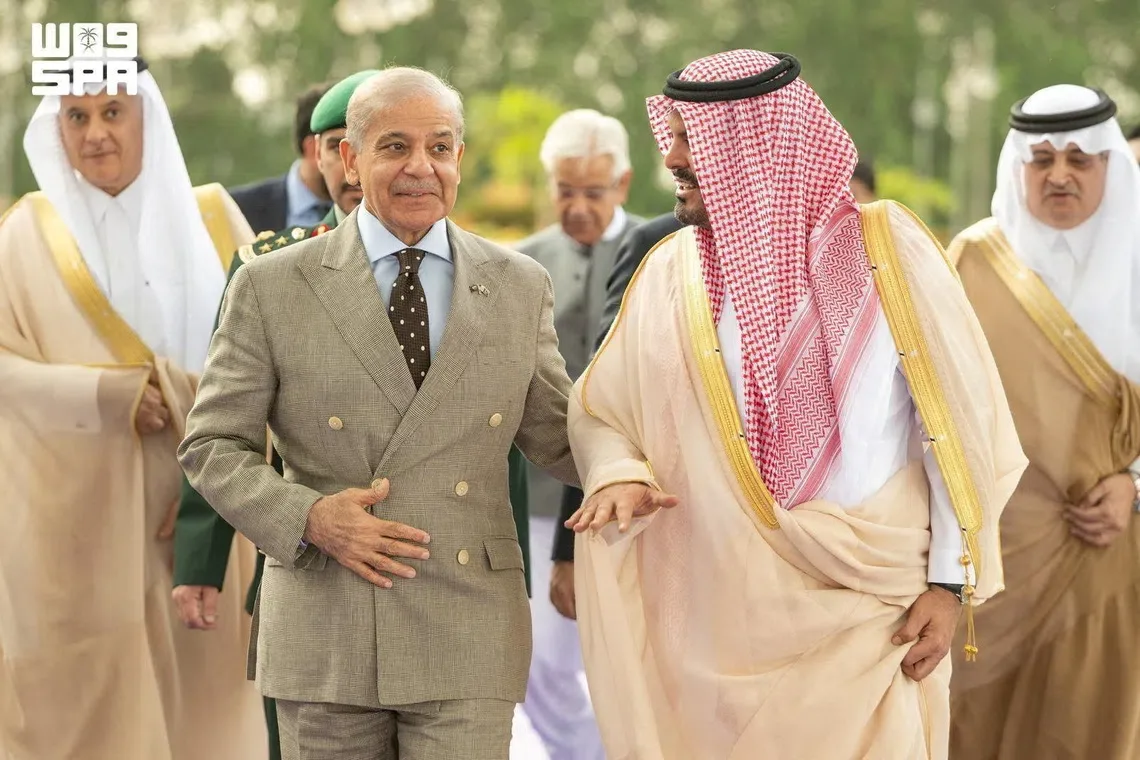
Negotiations for the trilateral defense pact began in October 2023 soon after the Hamas attack on Israel, accelerating alongside the wider US-Israel conflict with Iran [6]. Pakistani Prime Minister Shehbaz Sharif and Army Chief Asim Munir arrived in Saudi Arabia on August 6 and performed Umrah ahead of the signing [7, 6].
The pact is expected to boost economic cooperation in addition to defense ties, especially in trade, finance, and investment [11]. The next key stage will be implementation of joint defense measures and possible expansion of membership to other regional states.