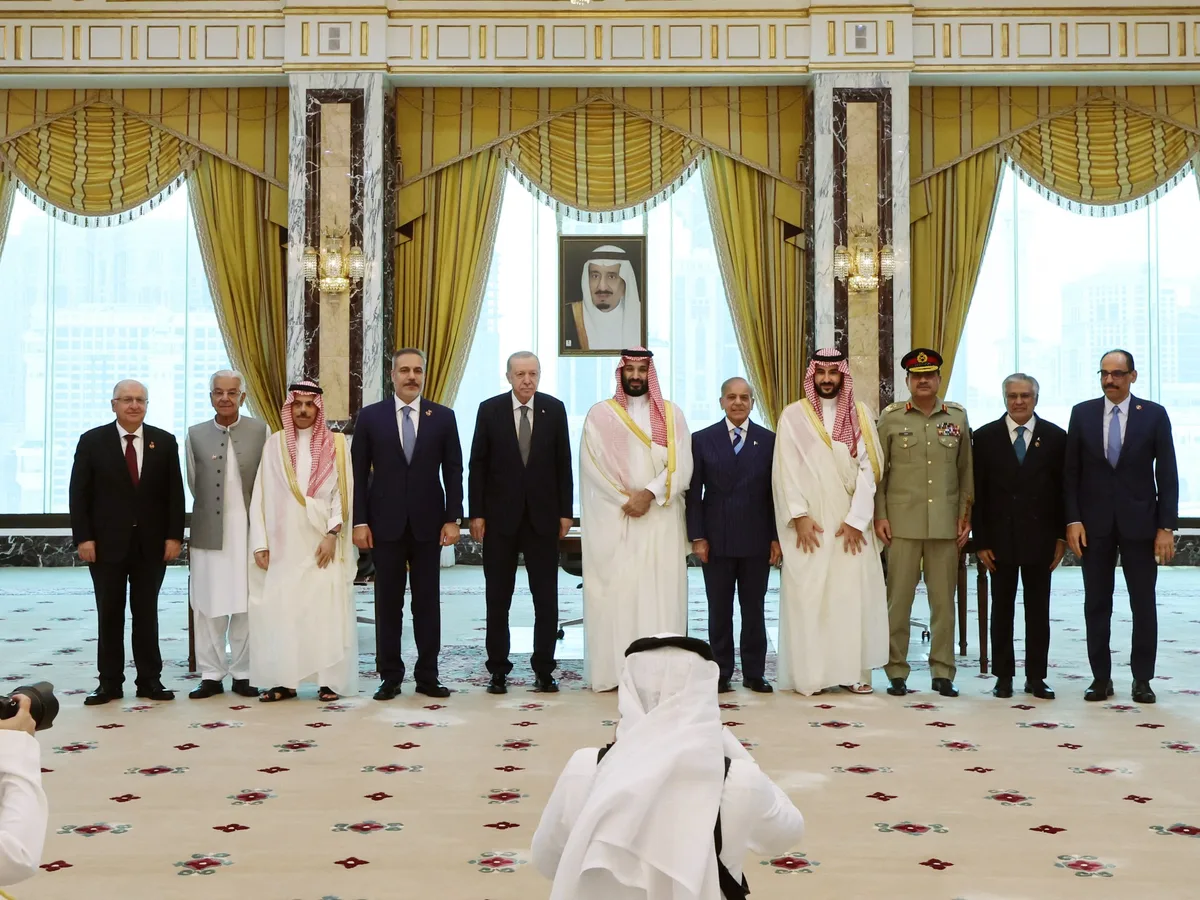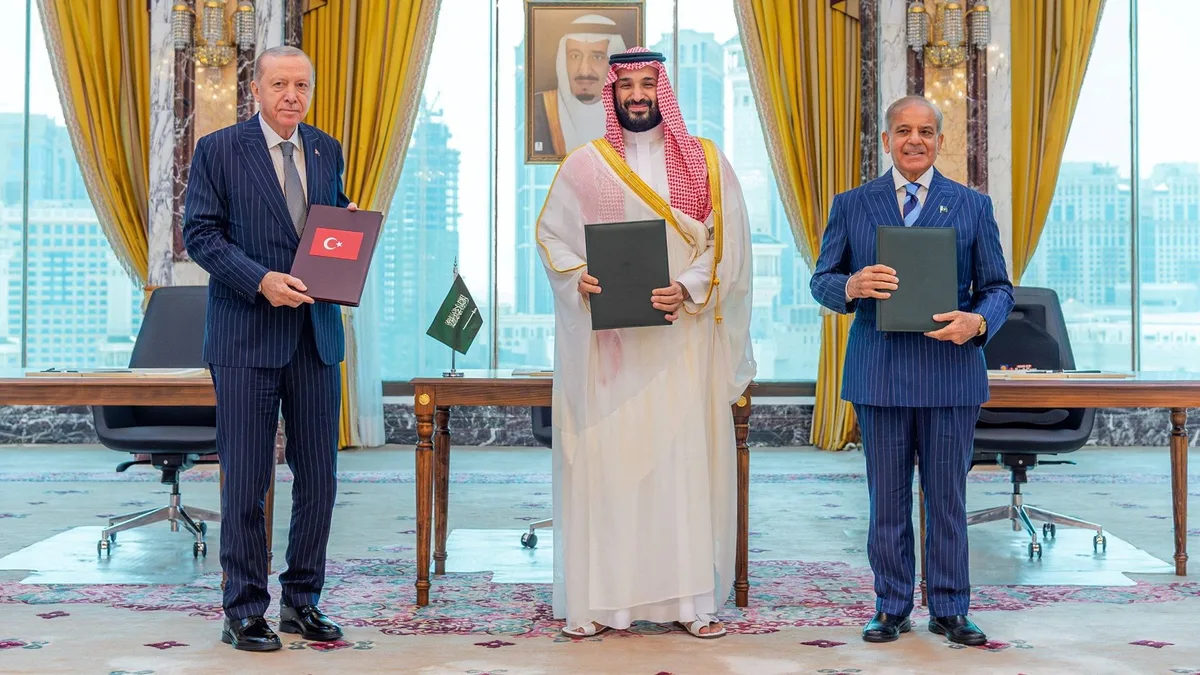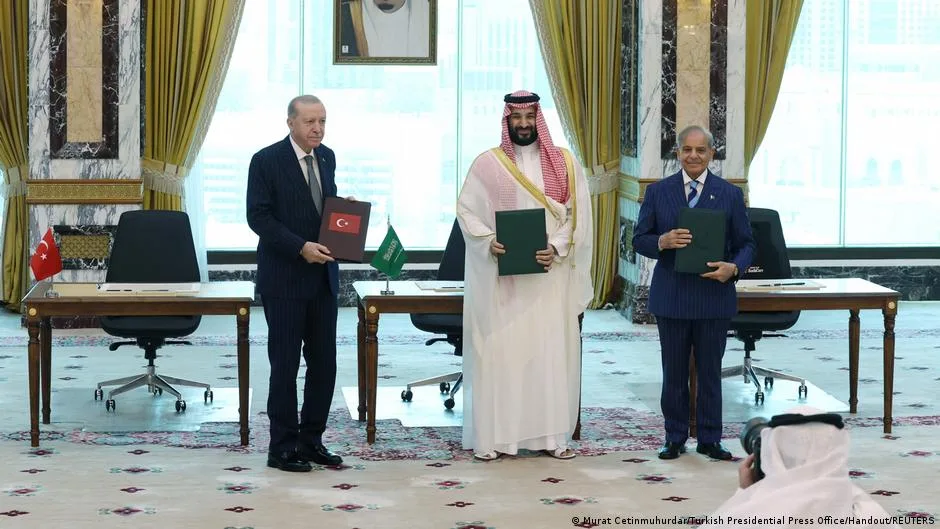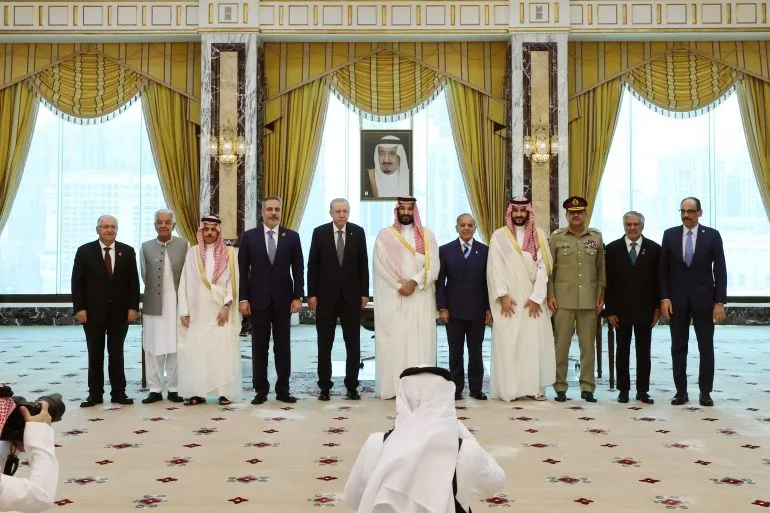
Saudi Arabia, Turkey and Pakistan signed a trilateral joint defense pact in Mecca on August 7, 2026. The agreement commits the three countries to regard any armed attack on one as an attack on all, establishing a collective security framework among the three states [1, 2, 3, 4].
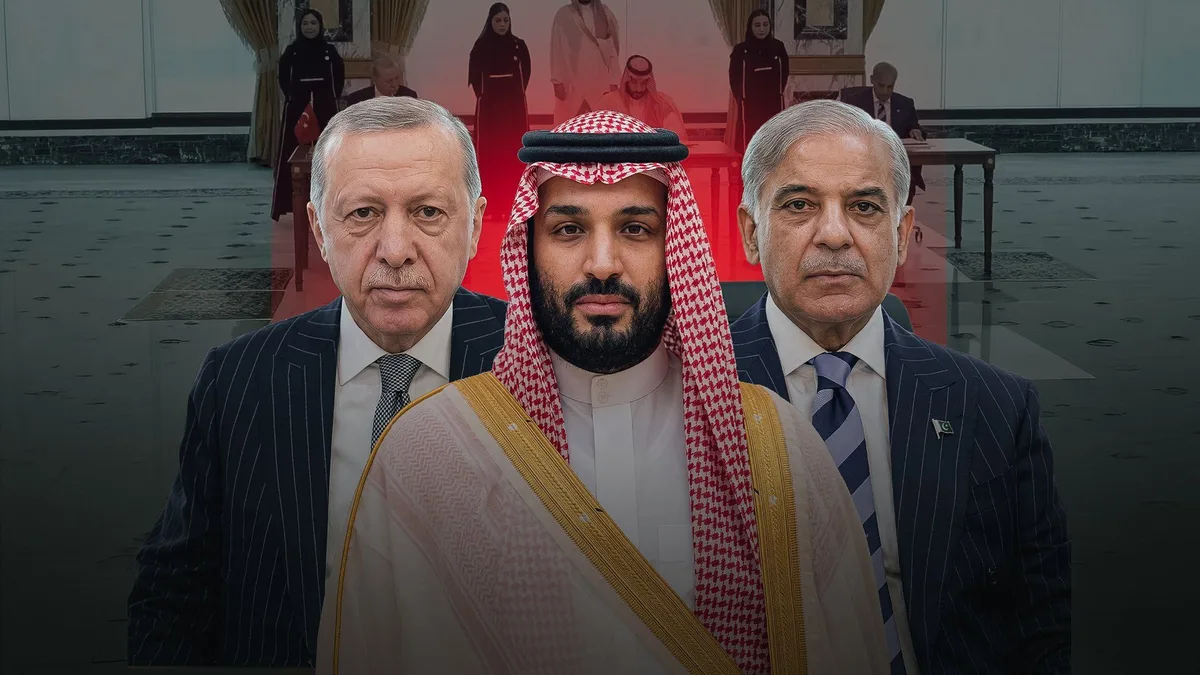
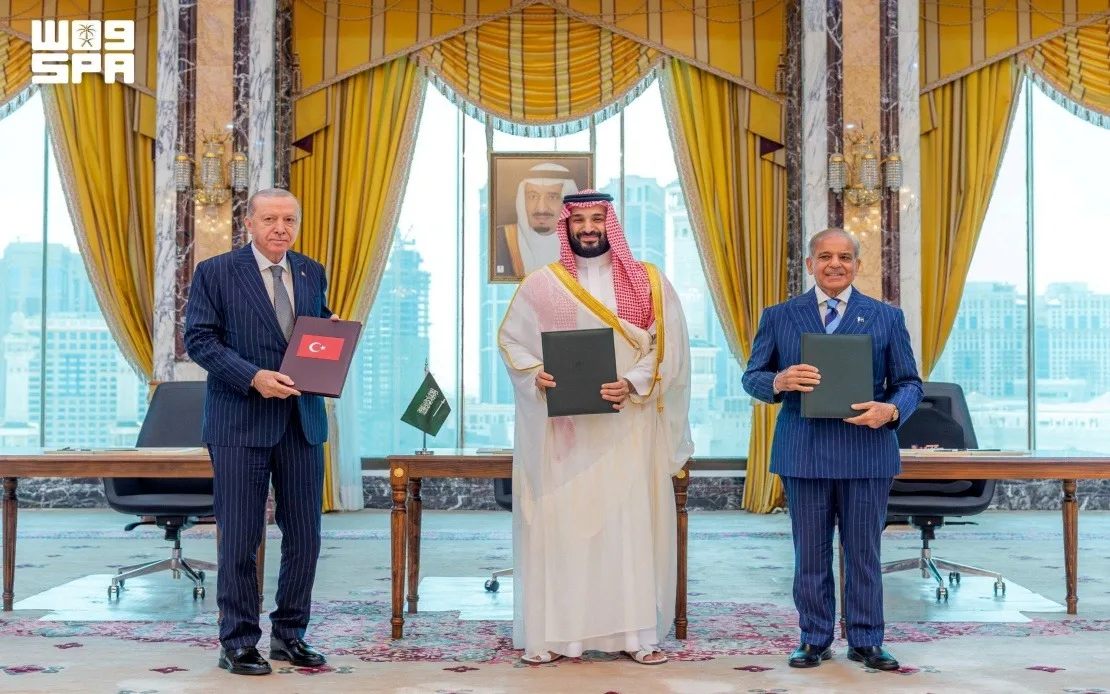
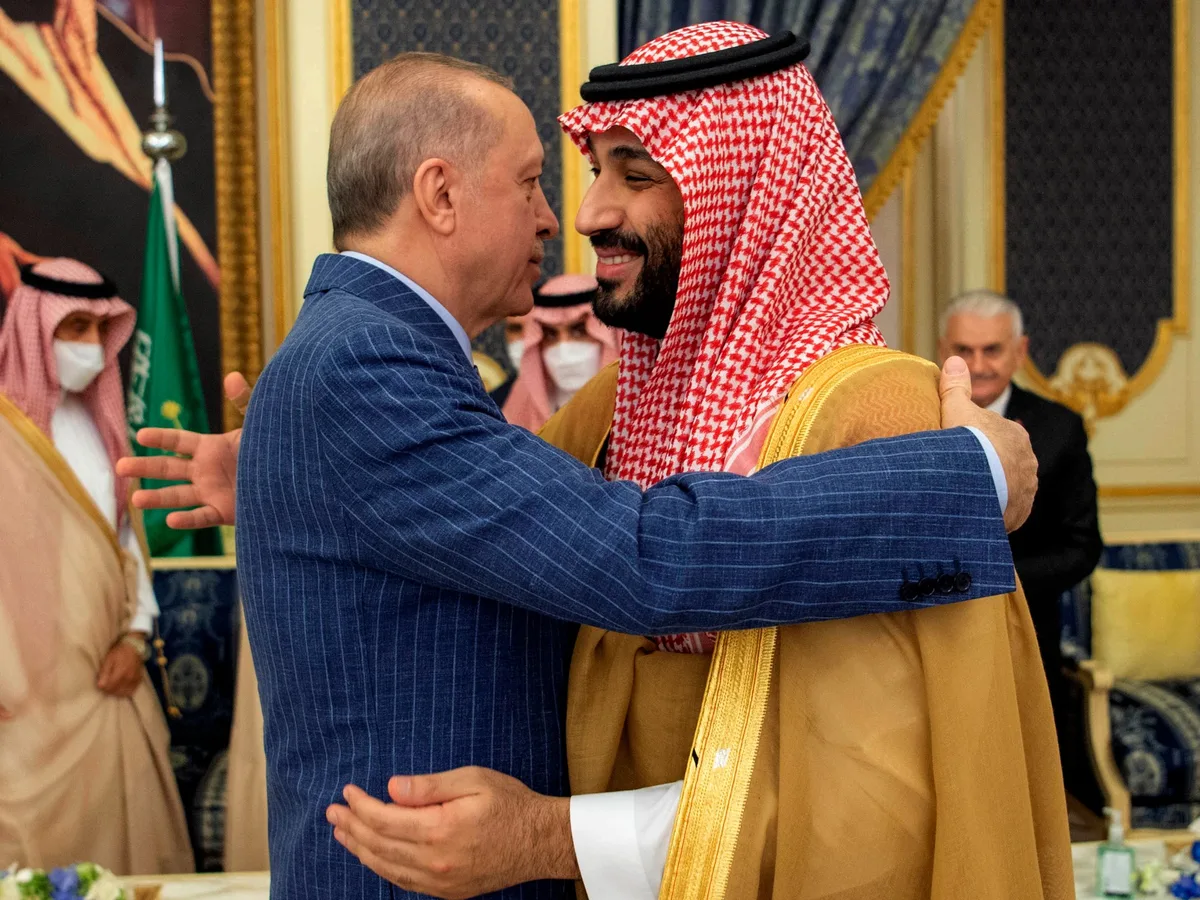
The pact aims to strengthen deterrence against aggression and enhance defense cooperation. Saudi Crown Prince Mohammed bin Salman, Turkish President Recep Tayyip Erdogan, and Pakistani Prime Minister Shehbaz Sharif were present to sign the accord [1, 3, 5].
The alliance will create political and military committees, a secretariat based in Saudi Arabia, and include joint military training, intelligence sharing, logistics coordination, and defense-industry collaboration [6]. It builds on existing close ties, as Pakistan and Saudi Arabia had signed a bilateral Strategic Mutual Defense Agreement in September 2025 that treated an attack on one as an attack on the other [3, 7, 8].
Turkish Foreign Minister Hakan Fidan said the pact resembles NATO’s Article 5 collective defense clause, but added that support would depend on circumstances and a formal request from the attacked country. He noted, "There is no common threat that we have put in writing. Countries that do not attack the signatories would not be considered targets." [6]
Saudi deputy public diplomacy minister Rayed Krimly said the pact allows the three countries to "develop joint defence capabilities, strengthen strategic deterrence, enhance readiness, and jointly address any threats to their safety and security." He emphasized it does not threaten other regional countries nor escalate tensions [3].
The trilateral agreement follows regional tensions including the ongoing US-Israel conflict with Iran and repeated attacks by Iran-aligned Houthi rebels on Saudi Arabia [1, 9, 7]. While Turkish officials stress the pact is not aimed at Iran and identifies no common threat, analysts widely interpret it as a deterrent against threats including those emanating from the Iran conflict and aligned groups [1, 4, 6].
Iranian officials have expressed concerns about the pact and warned Saudi Arabia against relying on the new alliance for security [6].
Pakistani Prime Minister Shehbaz Sharif arrived in Saudi Arabia on August 6 for a three-day visit including talks with Saudi and Turkish leaders. Turkish President Erdogan also made a one-day working visit to Saudi Arabia on August 7 for the meetings leading to the pact signing [9, 10, 7, 11, 5].