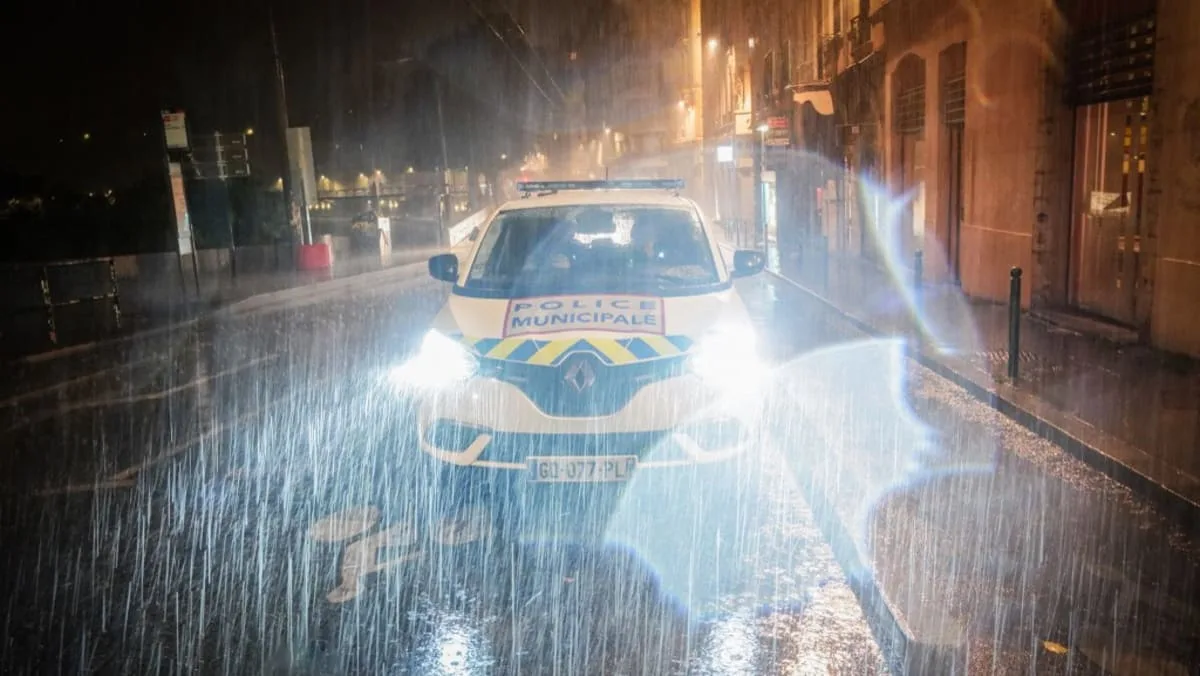
Severe thunderstorms swept across France overnight on July 16-17 following weeks of intense heat, killing two people and leaving tens of thousands without electricity [1, 2, 3].
A woman died in Saint-Victurnien, Haute-Vienne, after a tree fell on her during the storm [1, 2, 3]. In Dolomieu, Isere, a man was found burned to death after a lightning strike ignited a workshop fire [1, 2, 3].
The storms disrupted power for around 53,000 households, mainly in the Auvergne-Rhone-Alpes and Nouvelle-Aquitaine regions [1, 2, 4, 5, 3]. On the morning of July 17, about 25,000 customers in Auvergne-Rhone-Alpes and 20,000 in Nouvelle-Aquitaine remained without electricity [5, 3]. Some 13,000 households were also affected by outages in Sarthe on July 16, with around 6,000 still without power the next day [6].
Strong winds, large hail, and intense lightning caused widespread damage. Roofs were damaged, trees fell, and vehicles suffered damage [5, 3]. Regional train service between Lyon and Roanne was disrupted. Firefighters in the Loire department carried out 422 emergency interventions related to storm damage [5, 3]. In Haute-Savoie, a house caught fire after being struck by lightning [5, 3].
High winds forced the cancellation of a concert at the Lovely Brive Festival in Correze [5, 3]. Around 3,000 lightning strikes were recorded across the Limousin region over 24 hours [5, 3].
After the storm passed, Météo-France lifted all remaining orange thunderstorm warnings on July 17 across Southeastern France [1, 2, 5, 3].
The storms followed weeks of extreme heat, dry conditions, and major wildfires that have affected large parts of France [1, 5, 3]. The next weather update will determine if more storms could impact the region in coming days.