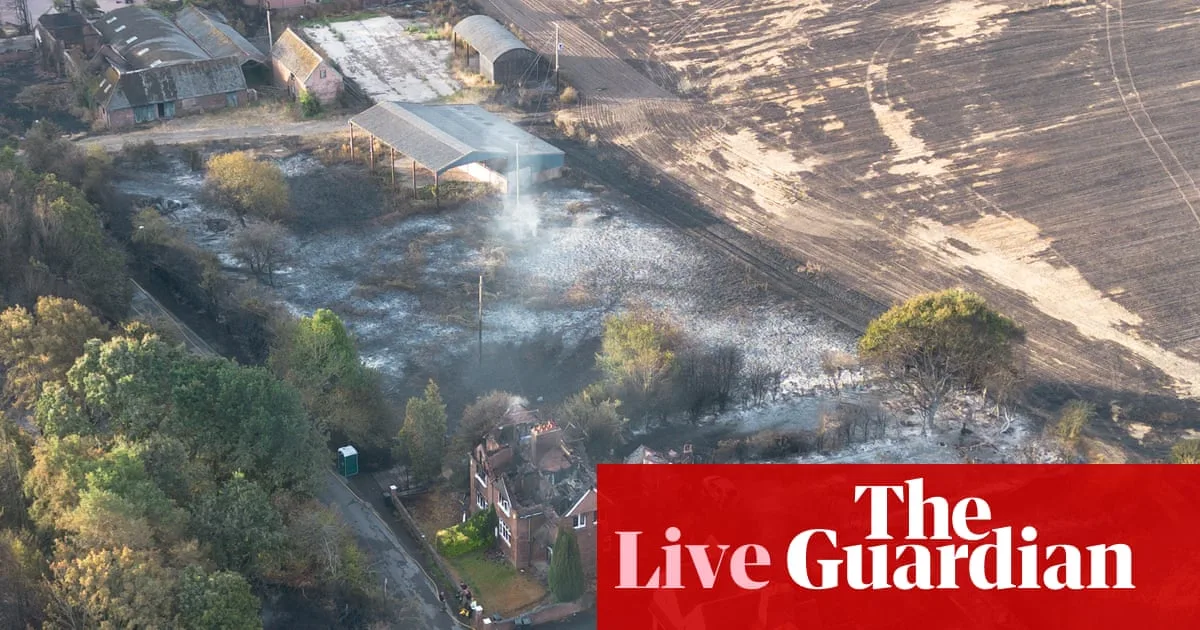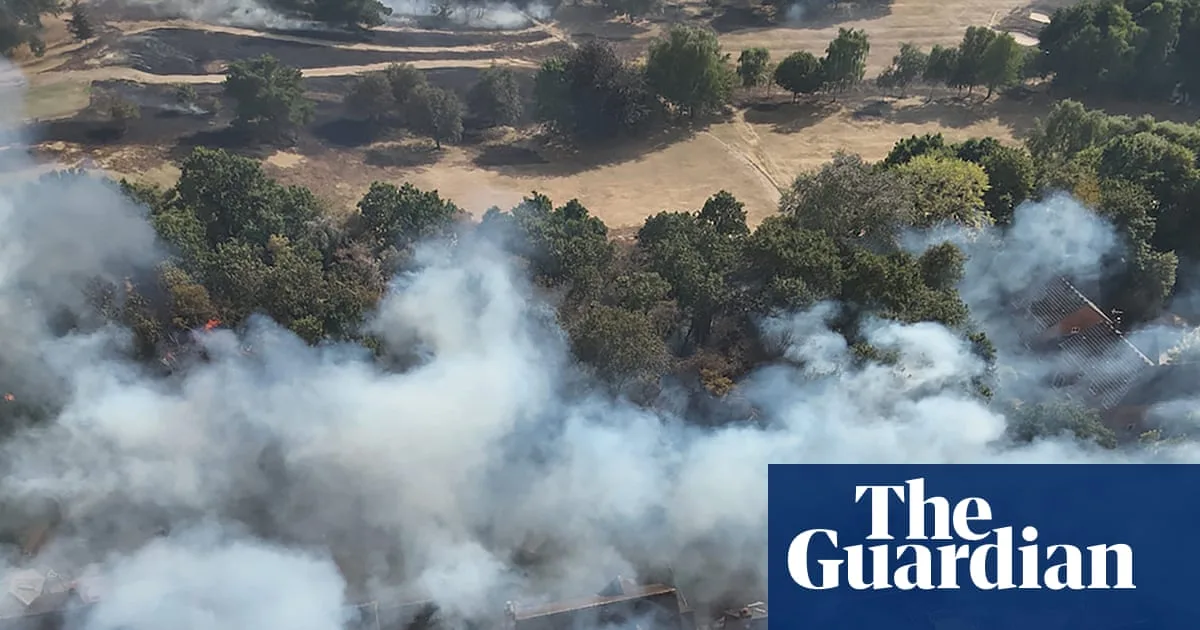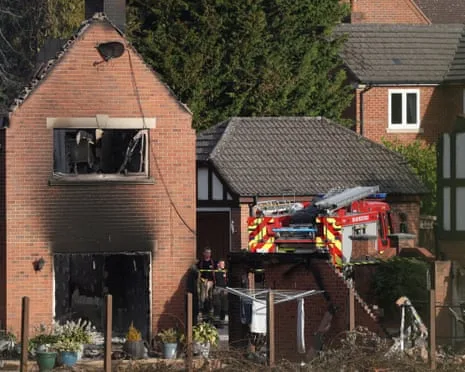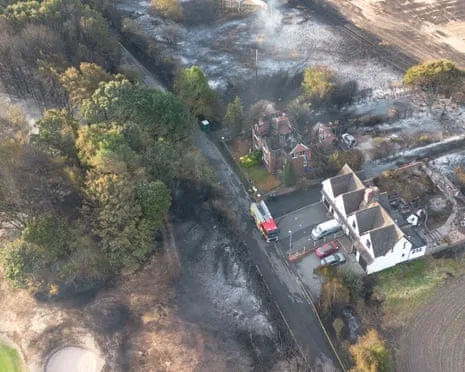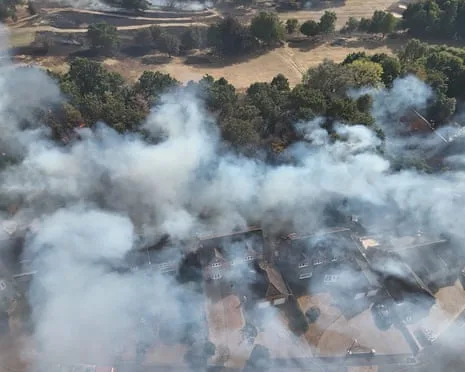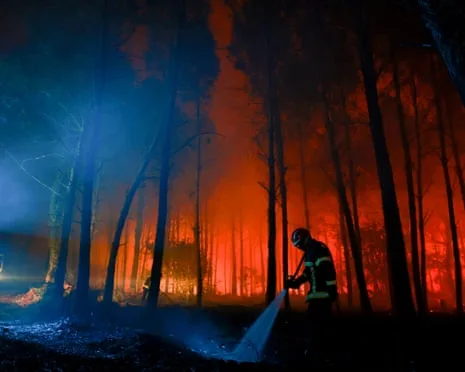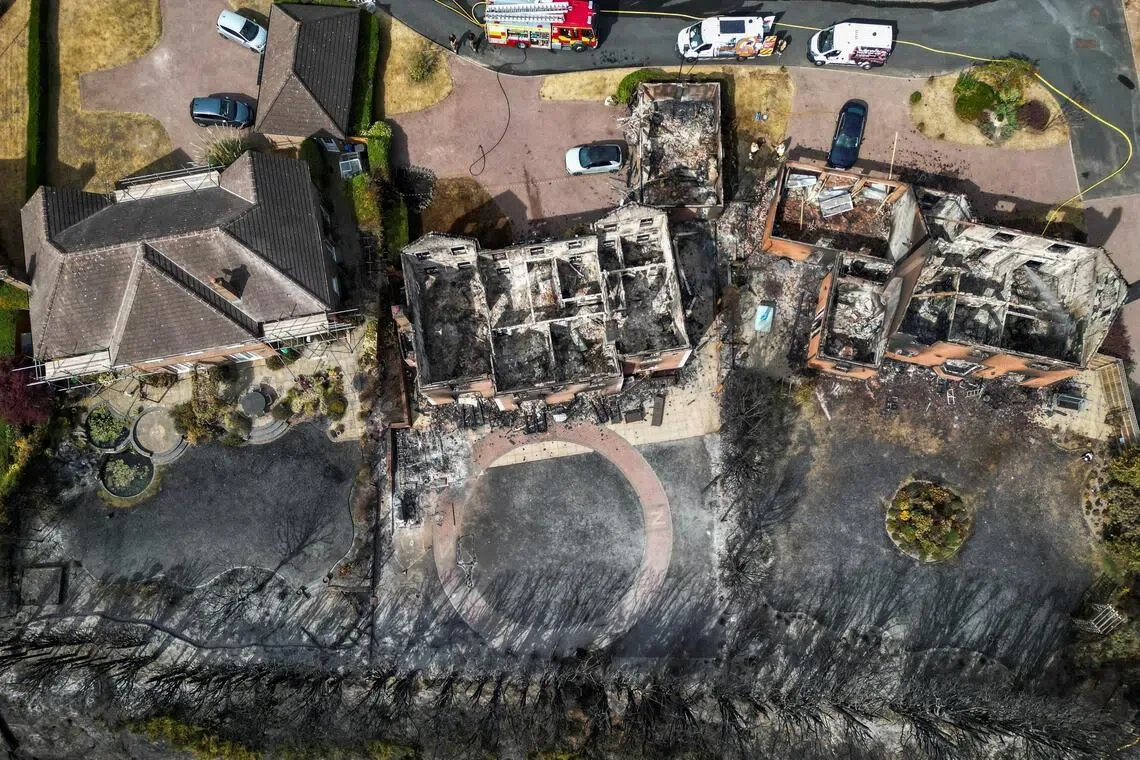
A major grass wildfire broke out near Stourbridge in central England on August 13, 2026, directly affecting at least six homes and spreading over 40 acres of land. Around 60 firefighters and 12 fire engines responded to the blaze, battling one of the most significant incidents faced by the West Midlands Fire Service in recent years [1, 2, 3, 4, 5].
The fire occurred on the hottest day of the year for the UK, with temperatures reaching approximately 38.1C (100.6F), while the West Midlands and much of England were experiencing drought conditions that increased fire risk [2, 6, 4, 5]. Multiple points of origin were reported, with some fires deliberately started in grasslands before spreading rapidly [4].
Authorities said two people suffered heat and smoke effects and received emergency treatment, while three firefighters and a child were hospitalized due to the incident [1, 2, 7, 6, 3, 4]. The fire forced widespread evacuations, including residents of care homes, and a town hall was designated as an emergency reception center [2, 6].
Local rail services were halted due to safety concerns, and some nearby properties experienced power outages. "Some local rail services have been stopped for safety reasons. Two people had been affected by heat and smoke," a fire service spokesperson said [1, 2, 3, 5].
Reports vary on the extent of the damage. While initial accounts confirmed six homes directly affected, one source indicated at least 19 houses were completely destroyed and 18 others damaged in Stourbridge [1, 2, 3, 5, 6]. Chief fire officer Simon Tuhill described the incident as "one of the most significant" the fire service has handled, adding, "The devastation is extensive" [4].
UK Prime Minister Andy Burnham visited Stourbridge on August 14. He praised firefighters and linked the disaster to climate change, stating, "I’ve never seen scenes like this in Britain, where you just see a whole house gutted, smouldering. We have to face up to the changing climate... there’s no point denying where we are. We need to face up to it. We need more clean energy." [7, 6, 4]
Phil Garrigan, Head of the National Fire Chiefs Council, noted that firefighters "have been on the front line of climate change for a number of years" and commended their efforts to protect communities [4]. Following the fire, the UK government banned the sale of disposable barbecue equipment to reduce fire risks in dry conditions [6].
Firefighters made progress containing the blaze by August 14, but multiple hotspots remained, with the fire chief warning of continuing challenges in fully extinguishing the wildfire [7, 4].