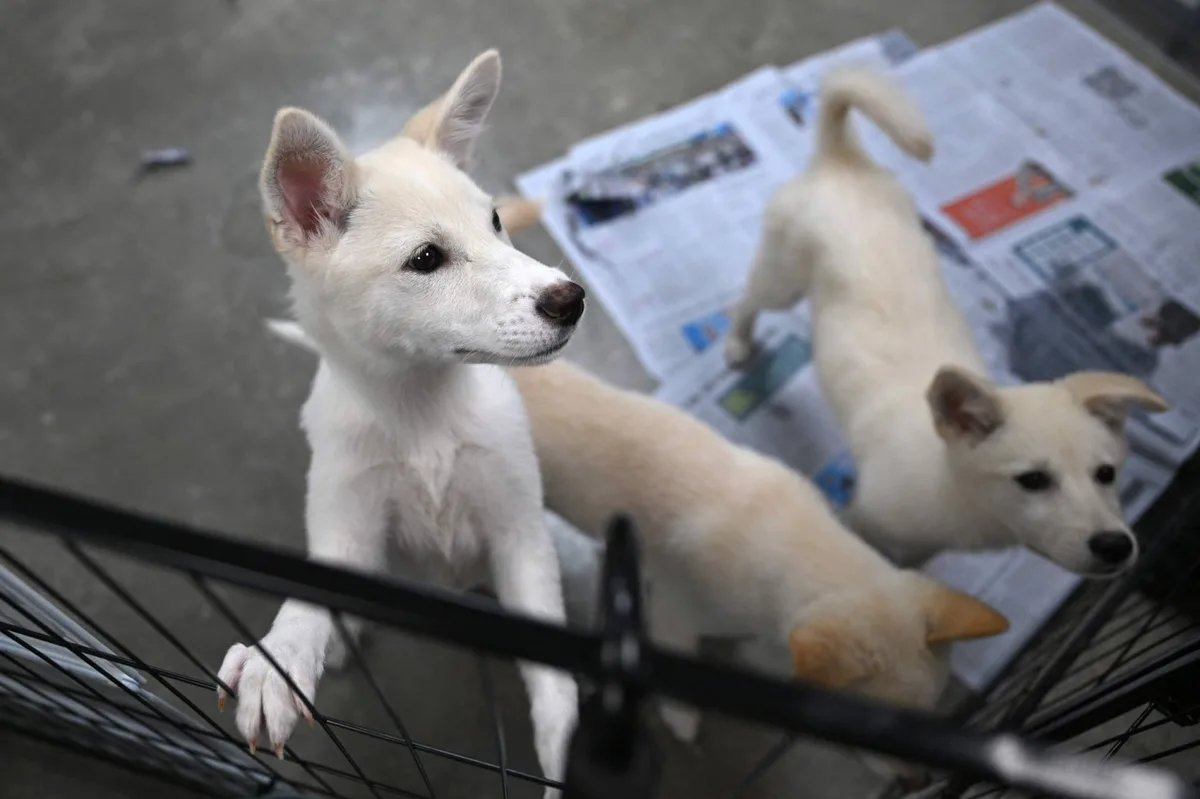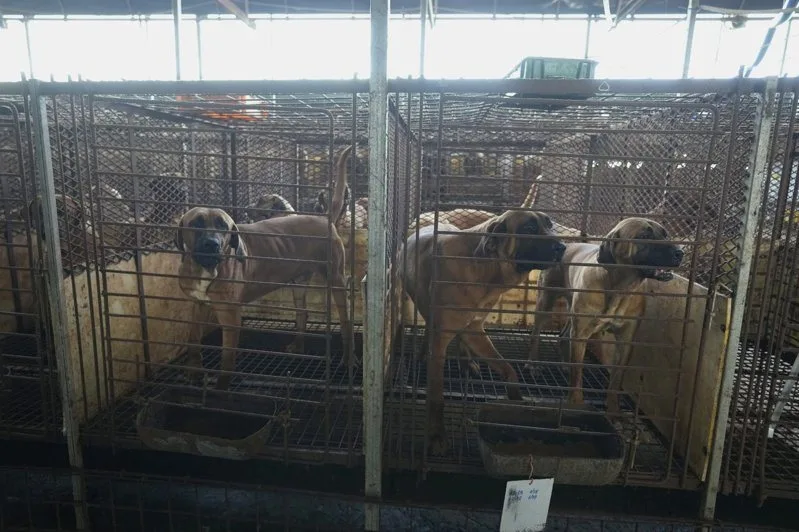
South Korea passed a law in January 2024 banning the breeding, slaughter, and sale of dogs for meat. The ban will take effect nationwide in February 2027, with violators facing up to three years in prison [1, 2, 3, 4, 5].
Government data showed that between 400,000 and 450,000 dogs were raised for meat in 2024. By mid-2026, only about 20,000 dogs remained on farms, with 82 percent of dog meat farms—1,265 out of the total—having applied to close by May 2026 [1, 2, 3, 4, 5].
The government has offered compensation of up to 600,000 Korean won (about US$390) per dog to farmers who removed their dogs from farms [1, 2, 3, 4, 5]. Despite these programs, as of February 2026, only 623 dogs had been adopted and fewer than 500 had been sent to shelters. The fate of most of the remaining hundreds of thousands of dogs remains unknown and is suspected to be predominantly slaughter before the ban’s enforcement [1, 2, 3, 4, 5].
Kim Young-hwan, a representative from animal rights group CARE, said, "If large numbers of rescued dogs had entered adoption programmes, animal groups like us would know about them." He added in Mandarin, "這樣的可能性令人憤怒,但現實是國內動保團體缺乏資源,難以救援更多犬隻," indicating the challenges faced by local welfare groups due to limited resources [1, 2].
CARE has rescued and rehomed about 2,500 farmed dogs over two decades. Many have been sent overseas because large breeds typically raised for meat, such as the Nureongi or Korean Yellow Spitz, are less preferred as pets in South Korea [1, 4].
Former dog farmer Ju Yeong-bong acknowledged the scale of missing dogs, stating, "I think those missing dogs have likely already been eaten." He also criticized the policy as politically enforced without meaningful consultation or sufficient livelihood protections for farmers [2, 3, 4, 5].
South Korea historically did not classify dogs as livestock, so dog meat farms were not subject to animal welfare and humane slaughter laws. The industry is shrinking rapidly as many farmers seek to transition to other livestock, though government processes for such transitions have been slow [2, 3, 5].
The dog meat ban will officially come into effect in February 2027, criminalizing dog meat-related activities nationwide and marking an end to the legal trade after a multi-year phase-out period [1, 2, 3, 4, 5].