South Korea announced plans to train 500,000 military personnel across all branches to operate drones, aiming to make drones a “second personal firearm,” Defense Minister Ahn Gyu-back said on June 26, 2026 [1, 2]. Officials said the program responds to recent conflicts in Ukraine and the Middle East, as well as concerns over North Korea's growing drone capabilities. Notably, North Korean drones breached South Korean airspace in 2022, including one over the presidential office, exposing critical security gaps [1].
The South Korean military will procure about 11,000 commercial drones by the end of this year, increasing to 60,000 by 2029. It also plans to acquire more than 20,000 low-cost disposable combat drones by 2030 [1]. South Korea is fast-tracking development of the domestically produced long-range loitering munition K-Lucas, modeled after the U.S. Lucas drone, which was reverse-engineered from the Iranian Shahed-136 drone [1, 2].
China escalated export controls against Japan on June 29, adding 20 Japanese entities to a blacklist and 20 more to a watchlist affecting dual-use technologies. Blacklisted groups include the National Institute for Defense Studies and subsidiaries of Mitsubishi Electric Defense and Space Technologies. A Chinese Ministry of Commerce spokesperson defended the action as legal and justified for national security but said it would not disrupt normal trade with Japan [3, 4, 5, 6].
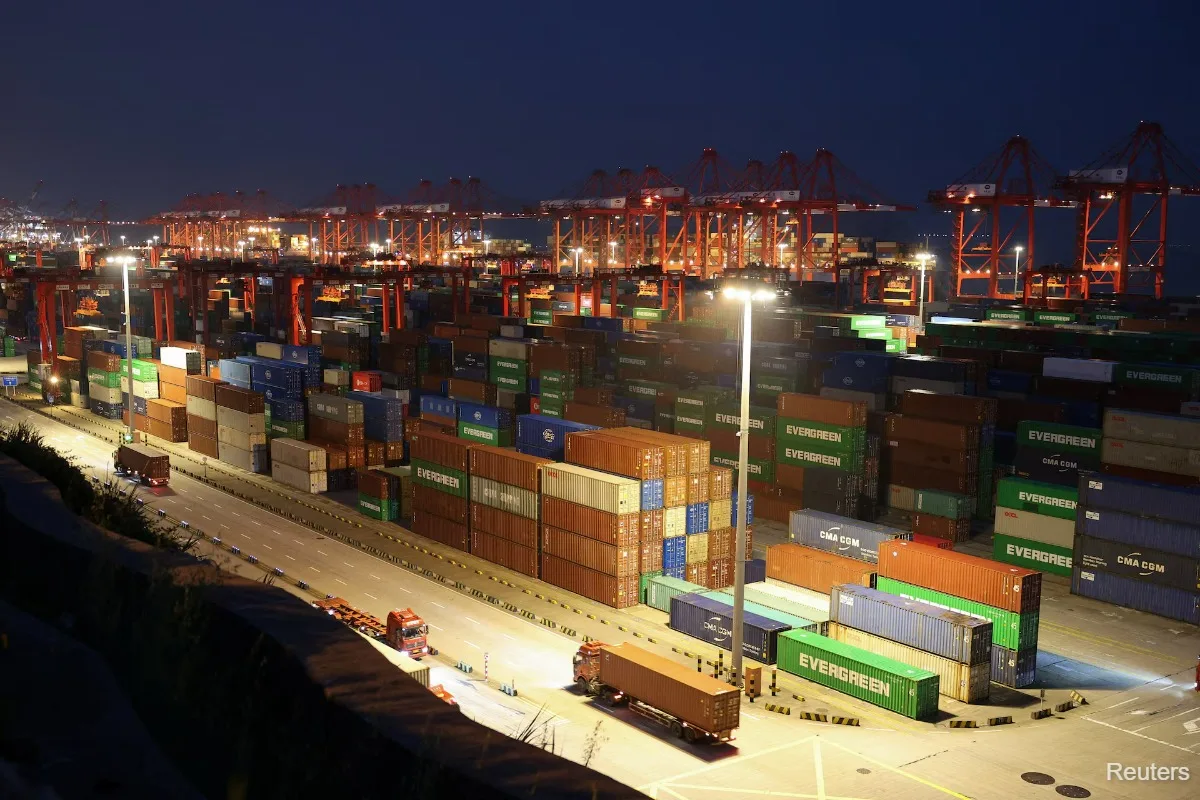
Meanwhile, South Korea’s exports surged 70.9% year-on-year in June 2026 to US$102.25 billion, marking the strongest monthly growth since 1978. Semiconductor exports nearly tripled to US$44.8 billion, contributing heavily to South Korea becoming the fourth country ever to surpass US$100 billion in monthly exports [7, 8, 9, 10, 11]. Exports to China and the U.S. rose 92.1% and 78.6%, respectively, while exports to the Middle East declined 8.4% [7, 8]. This growth helped South Korea record a monthly trade surplus of US$36.15 billion in June, pushing the first-half 2026 surplus to US$138.3 billion [7, 8].
Analyst Park Sang-hyun of iM Securities said, “Exports will remain robust in the second half, led by semiconductors. There is no sign of the chip boom waning anywhere, so it won't easily cool down next year either.” [8]
South Korea’s large-scale drone training effort is underway while drone procurement and development plans continue through 2030. China’s export blacklisting of Japanese defense-related firms took effect in June. The country’s export boom driven by AI chips and semiconductors shows no signs of slowing as Seoul adapts its military and economic posture amid regional tensions.